
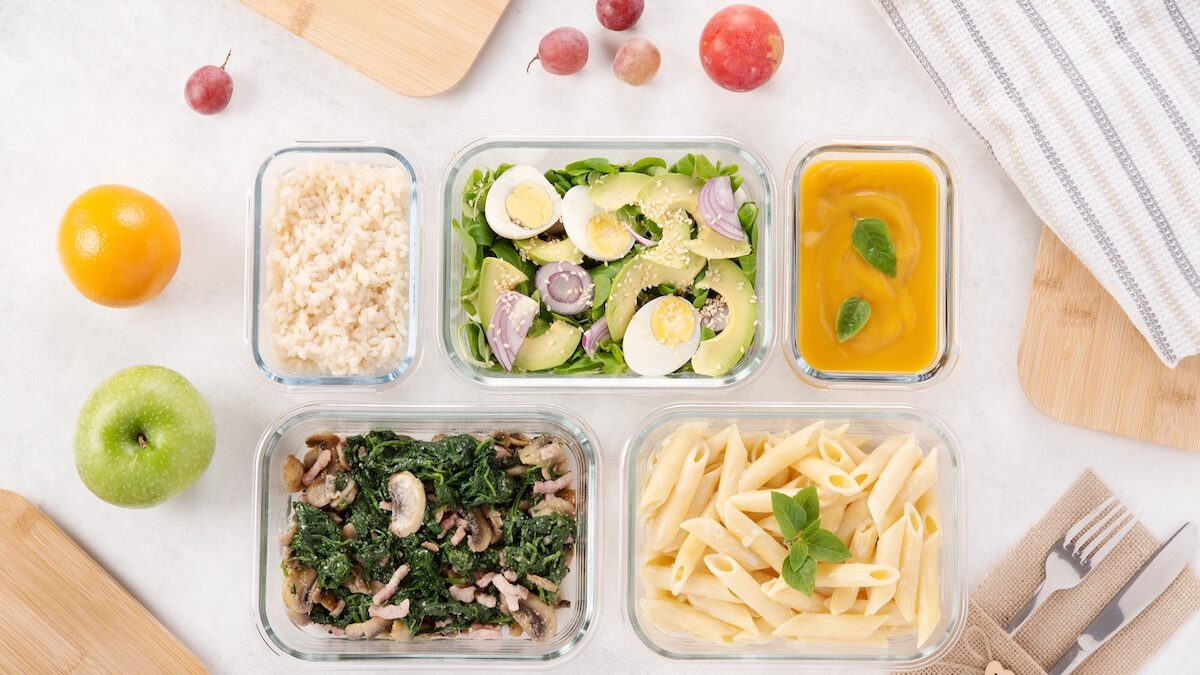
Batch cooking has won over many homes: a few hours in the kitchen on Sunday, and meals ready for several days. A practical, economical and often more balanced organization. But behind this method there is also an often underestimated point: food preservation.
In his newsletter At Microb’tock on Substack, dedicated to the subject, virologist Océane Sorel insists on a simple principle: a cooked dish is not automatically “safe” for a whole week, even in the refrigerator.
Temperature, container, freezing or reheating… several rules help prevent the proliferation of bacteria responsible for food poisoning.
Fridge or freezer: the 3-day rule applies
Once all your preparations are ready, and preferably poured into glass containers, the storage stage quickly comes. And there is a priority rule:
Cooked meals intended to be consumed within three days can remain in the refrigerator. Beyond that, head to the freezer.
Another key tip: store dishes directly in individual or family portions. “Reheating a large dish several times increases bacterial proliferation cycles and therefore health risks.
The specialist also reminds that a dish that has already spent three days in the refrigerator should not then be frozen. “Shelf lifes do not add up,” she explains in her newsletter.
In the freezer, bacteria no longer proliferate, but…
Good news for your meats, for example: at -18°C, in the freezer, bacterial growth is stopped. Frozen meals therefore do not become dangerous if the cold chain is respected.
On the other hand, the taste quality can deteriorate over time. Texture, taste or appearance may change.
Once you want to use your frozen portions, also be careful: one of the most common mistakes is letting a dish defrost at room temperature on the counter. “This is precisely when bacteria can multiply rapidly on the surface of food.”
The safest method is slow defrosting in the refrigerator the day before the meal. If you forget, the microwave in defrost mode or direct cooking can be used.
Eggs, cream… What to do with so-called “fragile” ingredients
Storage also depends on the type of ingredients you are considering for your week. Preparations containing raw eggs are among the most sensitive.
Homemade mayonnaise, chocolate mousse or tiramisu must be consumed within 24 hours maximum.
Same caution for quiches, gratins or cakes prepared raw in advance before cooking: with raw eggs, it is better not to stay in the refrigerator for more than a day.
Raw vegetables also have their storage rules
But mixed salads also require some precautions. The ideal remains to keep the different ingredients separately before assembly: starchy foods, cooked vegetables, proteins or sauces.
Raw vegetables such as green salad, tomatoes, avocado or cucumber should be prepared at the last moment to avoid humidity, oxidation and loss of texture.
Reheating your dishes correctly is essential
Finally, when the day comes, reheating also plays a key role in food safety. Dishes must be reheated “thoroughly”, that is to say very hot all the way to the center, in order to destroy bacteria which could have developed during storage.
In the microwave, the heat is often uneven, the scientist recommends covering the dishes, waiting for good steam to escape and stirring between two passages to even out the temperature.
The truth about storing rice and pasta
Finally, contrary to some popular ideas on social networks, rice and pasta can be reheated without danger.
The real problem comes when they sit at room temperature too long after cooking. Some bacteria like
Bacillus cereus can then produce heat-resistant toxins.
To limit the risks, the virologist advises quickly cooling rice or pasta after cooking, keeping them cool and only reheating the necessary portion.
To find all the detailed advice, shelf life and practical tables, Océane Sorel refers to her complete newsletter on Substack, dedicated to batch cooking and food safety.