
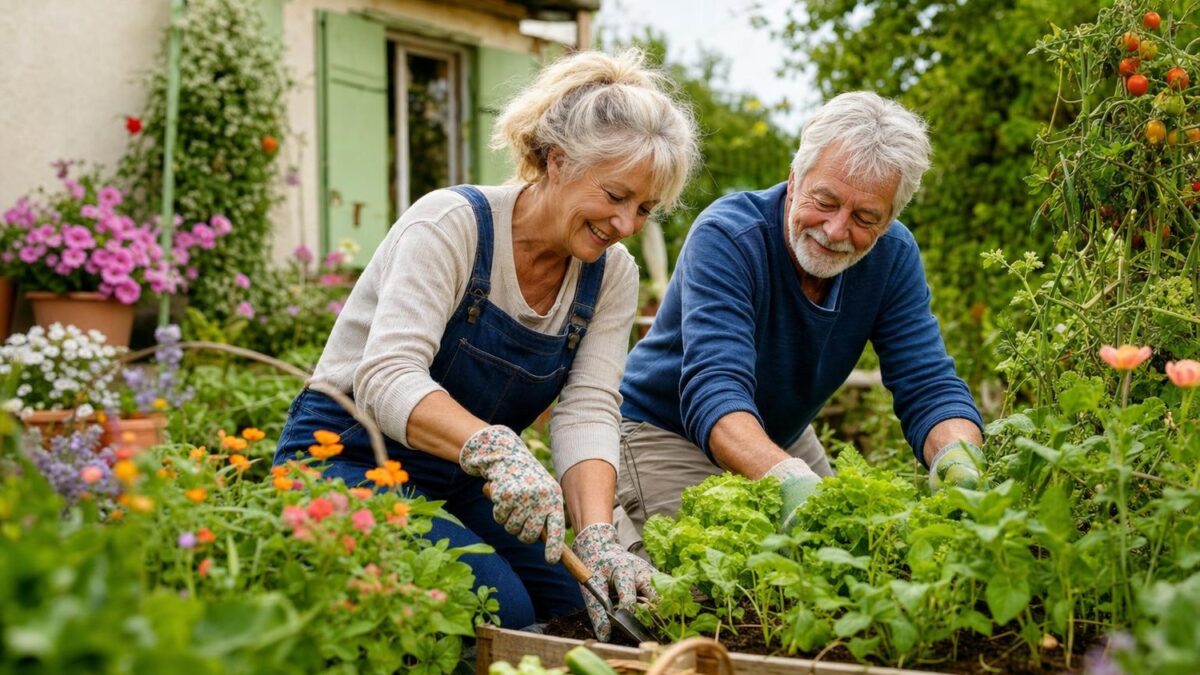
There are more elderly people than ever: according to the World Health Organization, one in six people will be over 60 in 2030 and the planet will have 2.1 billion seniors in 2050. Doctors are therefore looking for simple levers to age better. A very ordinary leisure activity stands out, associated with better morale, easier walking and 22% lower risk of death: gardening.
To test this link, psychologist Janie Corley used the Scottish Lothian Birth Cohort 1921: 475 people born in 1921, questioned around age 79 about their gardening frequency then followed medically until age 90, with a death register over 25 years. Their study associates gardening often with a better quality of life, faster walking, increased autonomy and telomeres that shorten more slowly.
Among seniors, gardening and well-being go hand in hand
At age 79, participants who reported frequent gardening had a better overall quality of life than non-gardeners, a parameter measured by the World Health Organization’s WHOQOL BREF questionnaire. They also reported fewer symptoms of anxiety and depression, assessed on the HADS scale. These differences remained present after accounting for numerous social, medical, and lifestyle factors.
On a physical level, frequent gardeners had more efficient lung function, higher grip strength and, above all, higher walking speed at age 79, three key markers of healthy aging. Between ages 79 and 90, their loss of walking speed remained slower than among those who never or rarely gardened, which translated into greater autonomy for everyday activities.
Slowed aging and reduced risk of death
Researchers also observed that seniors who gardened often had longer telomeres, wearing out more slowly between ages 79 and 90. For survival, the team calculated that frequent gardeners had, after adjusting for overall physical activity and several social and medical factors, a 22 percent lower risk of death over twenty-five years compared to non-gardeners.
“Our results suggest that gardening could promote well-being and longevity, with potential implications for keeping older people at home“, conclude Janie Corley and her colleagues, in other words that gardening could support well-being and longevity, without this being enough to prove a cause and effect relationship.
Why this result matters for the daily lives of older people
These findings support “healthy aging” and “aging at home” strategies, which seek to preserve seniors’ independence in their own homes for as long as possible. Gardening, inexpensive and adaptable to individual abilities, can be practiced near the house.
For families, encouraging a garden corner, a raised bed or a shared garden can support both the morale and the mobility of seniors. A gentle and accessible activity,
elderly gardening appears to be a promising complement to traditional care.