
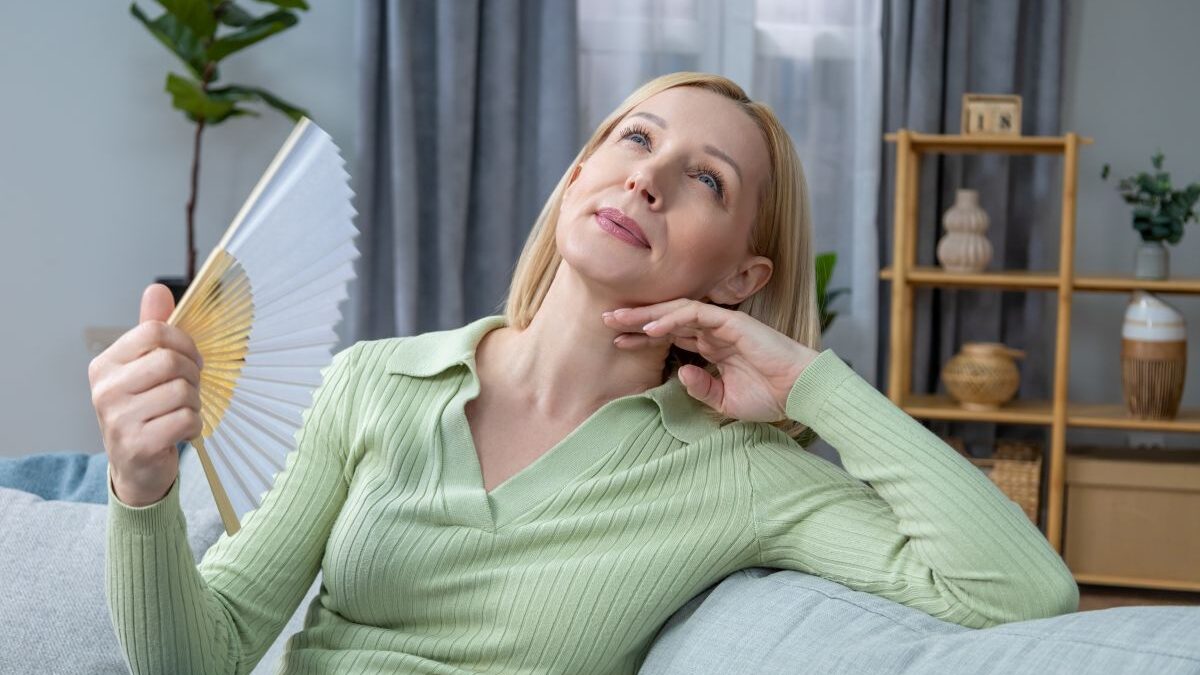
Sleeping with a fan pointed at you, opening the windows at dawn, taking more cool showers… During heatwaves, many menopausal women have the impression that their body is no longer keeping up. Hot flashes become more frequent, nights are more complicated and fatigue sets in quickly.
For gynecologist Odile Bagot, this worsening is far from being a simple feeling. External heat disrupts an organism that is already more sensitive to temperature variations during menopause. And the consequences can weigh heavily on daily life: irritability, sleep problems, palpitations or feelings of unease.
Why hot flashes explode during heatwaves
The main symptom accentuated by high temperatures remains hot flashes. “Tolerance of hot flashes may be less good“, explains the gynecologist. “The risk of having more hot flashes is real“.
To understand this phenomenon, Odile Bagot recalls that everything happens in an area of the brain called the hypothalamus, which acts like an internal thermostat. Normally, this system triggers mechanisms to dissipate heat when the body temperature increases slightly.
But during menopause, this setting becomes extremely sensitive. “Outside of menopause, the hypothalamus will send signals to dilate the vessels when the body temperature varies by approximately 1°C. In menopause, this threshold increases to 0.1°C” she explains. Result: the slightest rise in temperature can trigger a hot flash in an inappropriate way.
With a heatwave, body temperature naturally increases faster. The body then triggers even more reactions: redness, sweating, a feeling of sudden heat or palpitations.
Fatigue, irritability, sleep: when heat exhausts the body
Nights are often the hardest to bear. Between night sweats and the heat accumulated in the accommodation, sleep becomes lighter and fragmented.
“When sleep is impaired, the mood the next day will not be at its best“, summarizes Dr Odile Bagot. Irritability, fatigue, headaches or feelings of exhaustion can then set in quickly.
The gynecologist also observes more physical consequences linked to heat. “With vasodilation, we can observe drops in blood pressure, palpitations or discomfort in the women concerned.
During periods of extreme heat, she also noticed that “her patients had much lower blood pressure than usual”.
Some women may also experience the appearance or worsening of rosacea with very red cheeks and dilated small blood vessels. Others suffer more from vulvovaginal discomfort.
“Heat and perspiration promote maceration, which can increase the risk of yeast infections in postmenopausal women, whose vaginal flora is already more fragile.” reports our expert.
Advice from the gynecologist to better tolerate the heat
Faced with these episodes of heat, Odile Bagot especially insists on simple but essential measures. “The advice we can give is the advice we give to everyone.”
she recalls.
Hydration remains the top priority. “You need to hydrate sufficiently. It’s very important“. The specialist also advises wearing light, breathable clothing, particularly in cotton or linen, and avoiding going out during the hottest hours as much as possible.
“We must also remain cautious”she emphasizes, recalling that after the age of 50, the vascular risk naturally increases and that extreme heat can further weaken the body.
To limit discomfort, the gynecologist also recommends protecting the interior of the home from heat, ventilating the rooms well and favoring cool showers in the evening. Fresher bedding can also help you sleep better.
In terms of diet, she advises “eating light and rather cold”, with more salads and easy-to-digest meals. Finally, during extreme heat, an intake of electrolytes can be useful to compensate for losses linked to perspiration.
When should you consult?
In the majority of cases, the symptoms remain mild but distressing. On the other hand, Dr Odile Bagot recommends consulting quickly in the event of significant discomfort, a feeling of unusual weakness or a severe drop in blood pressure.
To avoid getting to this point, she especially insists on common sense: staying in the shade, avoiding physical exertion during the hottest hours and listening to the signals sent by your body.