
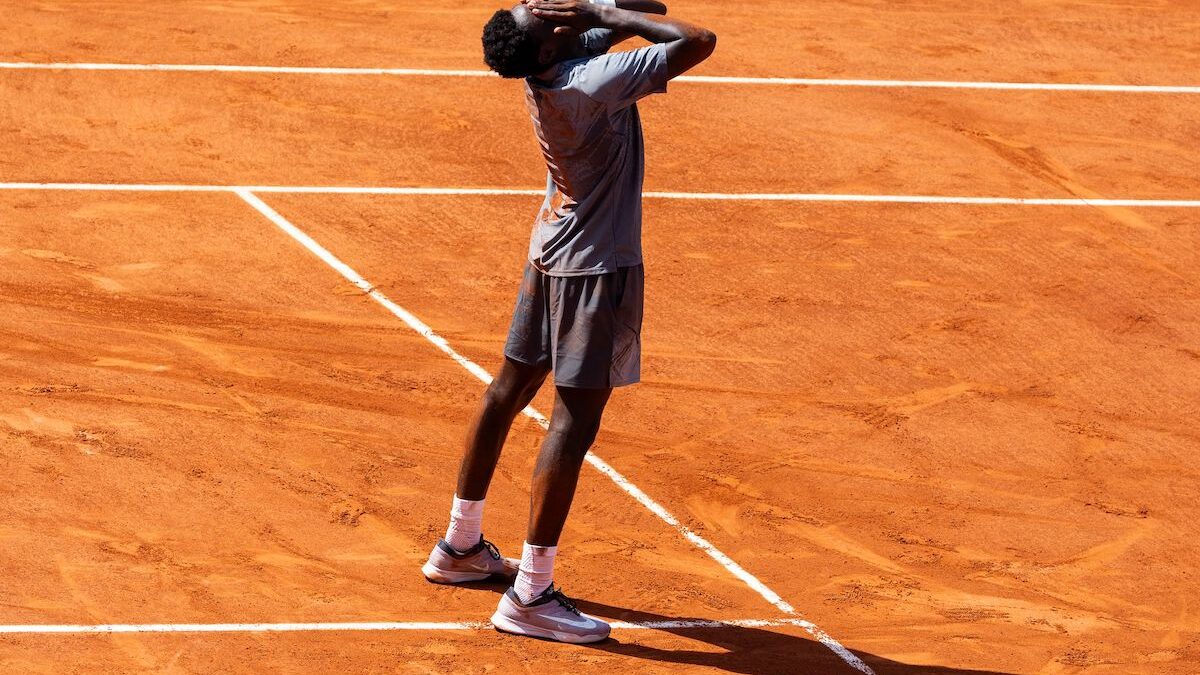
It only took two matches for Moïse Kouamé to create a real “Kouamé mania” and become the new sensation of Roland-Garros. Thursday, on a packed Suzanne-Lenglen court, the Frenchman, only 17 years old, impressed the public with his level of play… but above all with his extraordinary mentality.
Under crushing heat, after almost five hours of combat and a super breathless tie-break against the Paraguayan Daniel Vallejo, the young player held on when many would have given up. Result: he becomes the youngest player to reach the third round of Roland-Garros since Michael Chang in 1988.
But how do some athletes manage to remain lucid in moments when the brain, exhausted, would normally fail? In sport, this ability has a name: “clutch”.
What exactly is “clutch”?
Widely used in American basketball, the term “clutch” refers to the ability to be decisive in the most critical moments of a match: the last shot, the last ball, the point that changes everything.
In other words: succeed when the pressure is maximum.
Contrary to what one might believe, clutching does not rely solely on technical talent. At this level, all athletes are excellent. What makes the difference is the mental capacity to remain lucid despite fatigue, stress and the challenges.
In these moments, however, the brain is subjected to an enormous overload: physical fatigue, increased heart rate, rise in cortisol, fear of failure, public pressure… Everything normally leads to losing precision or making bad decisions.
“Clutch” athletes manage to do exactly the opposite.
“Talent is not just physical”
For those who have followed the journey of Moïse Kouamé, this mental strength owes nothing to chance.
His former coach, Liam Smith, who accompanied him for three years, says he is particularly impressed by this early mental maturity.
“Playing for five hours, in five sets, with a tie-break in the last set, and holding up physically and mentally at 17… I find that extremely impressive“, he explains. “Talent isn’t just physical or technical, it’s also mental.”he confirms about the young player.
Because in the last moments of a match, the body is no longer enough. It is then the abilities of concentration, emotional regulation and stress management that take over.
Why do some champions never crack?
For Amélie Boukhobza, psychologist, this psychological resistance is a common trait among very high-level athletes.
“In certain athletes – and even in certain adolescents or young adults – there is what we call a form of early maturity. Not just cognitive, but emotional“, explains the psychologist.
According to her, some champions develop a rare ability to self-regulate very early on.
“He knows how to channel himself remarkably well. He brings clarity where others panic. A rare lucidity about himself and about what he came to do. And it’s essential. Without this awareness, nothing holds.”
This ability allows you to not let yourself be overcome by emotion at the crucial moment. Where some athletes tense up or disperse, the “clutch” champions remain focused on the present moment.
An innate mind… or trained?
So, are we born clutch or do we become one? For Amélie Boukhobza, the answer is more complex.
“A little bit of everything at once, surely. There is an element of temperament, but sport also plays a key role. Mental preparation, above all, proves essential to survive over the long term.”
Today, more and more top athletes are working with mental trainers to learn how to better manage pressure, fatigue and emotions during competition.
But according to the specialist, there is also a more intimate, deeper dimension.
“There is this ability to know yourself. To listen to your needs. To respect your boundaries. It’s rare – very rare. But when you get there early, it changes everything.”
Because perhaps the real secret of champions is not to never doubt… but to continue to move forward despite doubt.
“All the greatest journeys begin with one step”
After his exploit, Moïse Kouamé remained faithful to this astonishing lucidity which already impresses the world of tennis. And that could also make the difference.
“All the greatest journeys start with one step. I took one. The goal, if I want to win Grand Slams, is to do it seven times.”
Seven rounds. Like the seven steps that lead to the coronation at Roland-Garros.
At only 17 years old, the Frenchman already seems to have understood what often distinguishes great champions from others: talent wins points, but mentality wins the end of the match.