
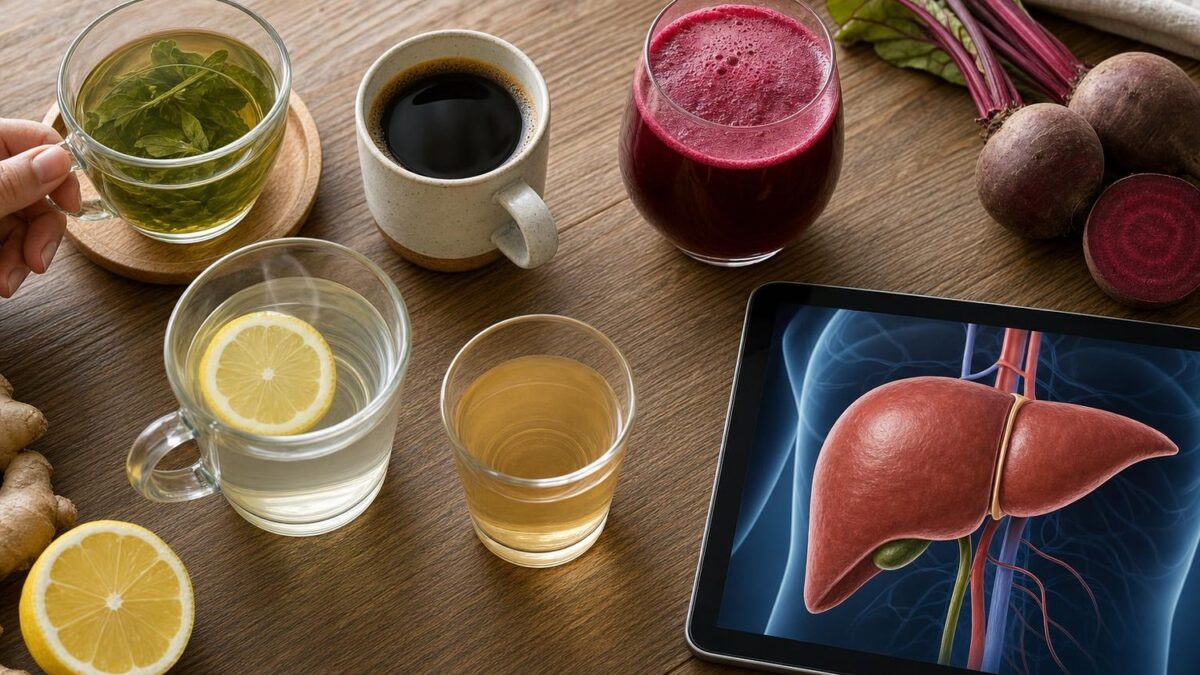
On TikTok, Instagram or YouTube, recipes for “miracle” drinks supposed to cleanse the liver are multiplying. Green tea, lemon, cider vinegar or beet juice are regularly presented as capable of making “fatty liver” disappear in a few days. But in reality, doctors are much more cautious.
Because fatty liver disease, today called fatty liver (associated with metabolic dysfunction), is above all linked to excess sugar, fats, excess weight and lack of physical activity. And no drink, on its own, can “cure” the liver.
Mayo Clinic specialists point out that treatment is based primarily on gradual weight loss, a balanced diet and regular exercise.
That said, certain drinks can actually support the functioning of the liver… provided they are integrated into a better overall lifestyle.
Green tea, coffee, lemon… the drinks most often mentioned
Among the drinks regularly put forward to help an overloaded liver, five come up very often:
- Green tea;
- Black coffee;
- Beetroot juice;
- Lemon water;
- Apple cider vinegar.
Indian media Times of India sometimes presents them as capable of “curing” fatty liver. But the more nuanced analyzes from GoodRx or ScienceInsights remind us that these are above all potential allies, and not miracle treatments.
Green tea, rich in antioxidants
Green tea is often recommended thanks to its richness in catechins, antioxidants which could support fat metabolism in the liver.
Some studies suggest that regular consumption of green tea may have a protective effect on fatty liver, especially when it replaces sugary drinks.
The Times of India recommends up to 2 to 3 cups per day, with no added sugar. GoodRx even mentions potential benefits around 3 to 6 cups daily in the form of a classic drink.
Black coffee, the most studied drink
Of all the drinks studied, black coffee is probably the one with the strongest scientific data.
Rich in caffeine and chlorogenic acid, it seems associated with a lower risk of liver fibrosis and fat accumulation in the liver.
Several studies have observed that regular coffee consumers often have better liver health than those who do not drink it.
Be careful, however: these benefits mainly concern low-sweet black coffee, and not very sweet drinks such as frappuccino or industrial flavored coffee.
Beetroot juice, interesting but still little studied
Beetroot juice also attracts attention thanks to its nitrate and betaine content.
ScienceInsights notably mentions a clinical trial in which it helped reduce liver fat, especially when combined with a Mediterranean diet. The Times of India advises drinking it a few times a week, without excess.
As with other drinks, it is not a stand-alone remedy, but a possible complement to a more balanced diet.
Lemon water: especially useful to replace sodas
Drinking warm lemon water in the morning has become a very popular reflex on social networks.
But contrary to “detox” promises, lemon does not directly cleanse the liver.
Its main interest would be mainly indirect: to promote hydration and replace drinks much richer in sugar such as sodas or certain industrial juices, known to promote fatty liver.
Apple cider vinegar: be careful with miracle promises
Apple cider vinegar is also often presented as a slimming and “detox” ally. But scientific evidence remains limited.
GoodRx points out that there are not yet enough solid studies in humans to confirm a real effect on fatty liver.
In practice, experts recommend remaining cautious and not exceeding one tablespoon diluted in water before a meal.
What really works against fatty liver
Doctors insist on an essential point: the most effective measure remains weight loss when necessary.
According to the Mayo Clinic, losing about 7 to 10 percent of your body weight can already significantly improve the fat accumulated in the liver.
The Mediterranean diet — rich in vegetables, fruits, fish, olive oil and fiber — also remains one of the most recommended dietary patterns.
Conversely, high-fructose drinks, sodas and alcohol directly aggravate the disease.
How to integrate these drinks intelligently?
Without falling into excess or “detox cures”, it is possible to integrate some of these drinks into a more balanced daily life.
For example :
- A glass of lemon water in the morning;
- A cup of black coffee for breakfast;
- One to two cups of green tea during the day;
- Beetroot juice occasionally instead of industrial juice.
However, experts warn against aggressive “detox” herbal teas or very restrictive cures, which are sometimes dangerous without medical supervision.
Because when it comes to fatty liver, no miracle drink replaces a balanced diet, regular physical activity and appropriate medical monitoring.