
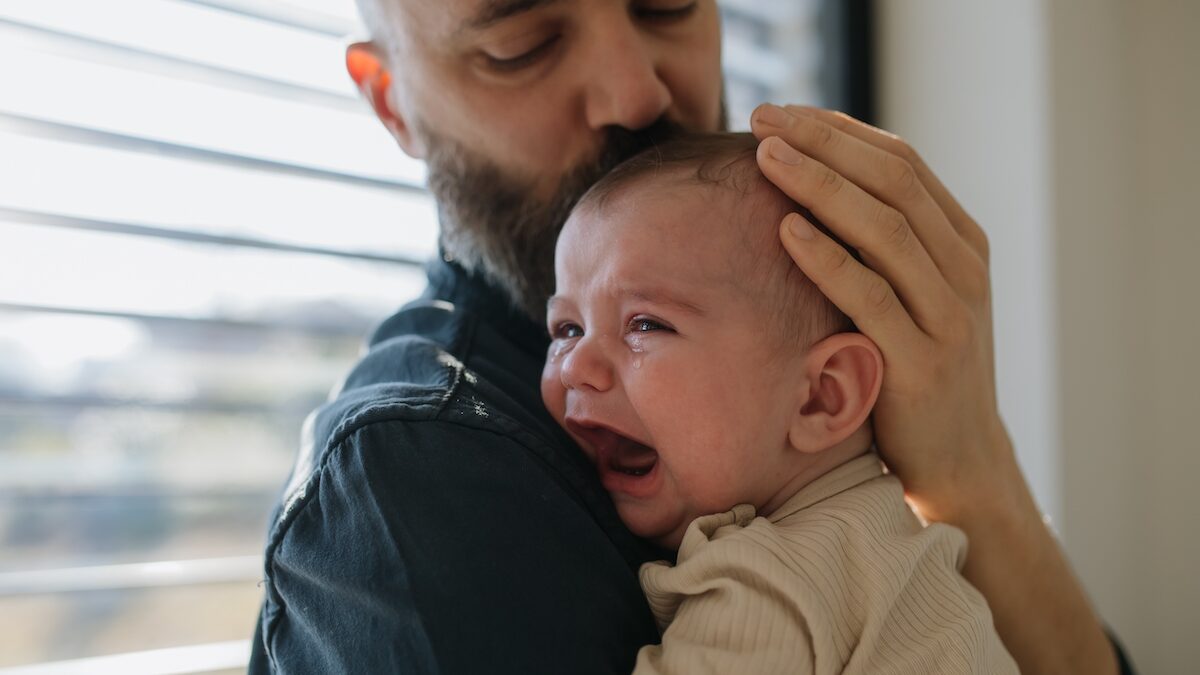
Understanding your baby’s cries is one of the most common concerns of young parents. Hunger, fatigue, need to be reassured or diaper to change: behind each crying attack there is often a very specific need. In a video published on May 27, 2026, gynecologist Samuel Salama recalls that crying is the main means of communication for toddlers. Here’s how to better decipher them, without pressure or guilt.
Crying, baby’s first language
Babies don’t yet have the words to express what they feel. Crying is therefore their main communication tool. As Samuel Salama explains: “Your baby is going to need cuddles, he’s going to need to eat, he’s going to need to be clean and sleep. And overall, to express his needs, he’s going to cry.”
An infant may cry because he is hungry, because he is tired, because he needs to be changed or simply because he is looking for comfort. Even if these manifestations can sometimes seem difficult to interpret, they are perfectly normal and contribute to building the bond between the child and his parents.
Why it’s okay not to understand immediately
Faced with the repeated cries of a newborn, many parents fear that they will not be up to the task. However, knowing how to instantly recognize each need is not innate.
As the video reminds us, “you won’t always find right away“. The first months are often a period of mutual learning. Parents learn to observe their child, while the baby gradually discovers his environment.
Over time, certain signs become easier to identify: a type of cry, a time of day or a particular attitude can give valuable clues. This knowledge is gradually established and helps to strengthen parental confidence.
When nothing seems to work: keep calm above all else
When baby cries, several solutions can be offered: feed him, check his diaper, hold him, rock him or simply speak to him gently. But sometimes none of these strategies provide immediate relief.
In these times, it’s important to remember that this doesn’t mean you’re a bad parent. Fatigue, stress and exhaustion can make the situation particularly trying.
Samuel Salama insists on an essential message: never shake a baby. If the tension becomes too great, it is best to put your child safely in bed and give yourself a few minutes to calm down before returning to your child.
Being a parent is not about making every cry stop instantly, but about remaining present and available for your child. Little by little, this relationship is built through trials, errors, moments of doubt and moments of tenderness. A reassuring reality for all parents who learn, day after day, to understand their baby.