
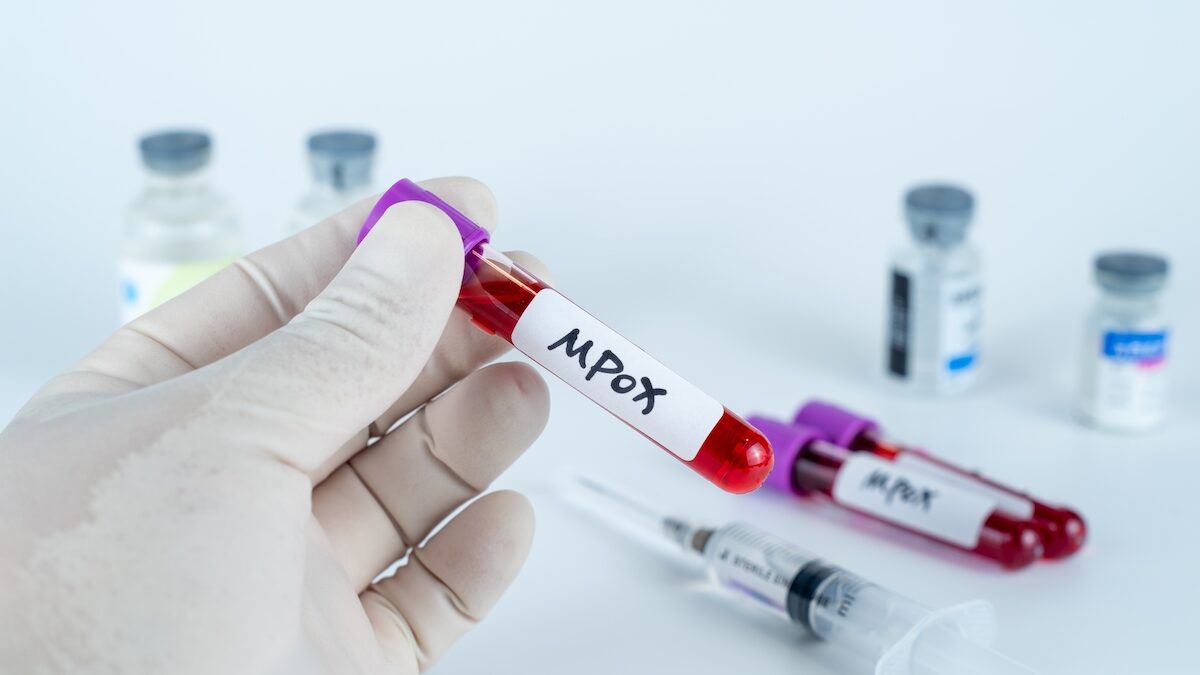
The story begins as a scientific thriller. Last January, two virologists were indicted after attempting to introduce biological material into the United States. In their luggage? The mpox virus, formerly called monkeypox, without any official transport. A matter taken very seriously by the American health authorities, in a context of increased vigilance around biological risks.
Biological samples found in researchers’ luggage
The case, revealed on June 3 by several media outlets, concerns two scientists checked in January at Detroit airport, returning from Congo-Brazzaville. The suspects are the Dutchman Vincent Munster, head of a section of a virology laboratory dependent on the American National Institutes of Health (NIH), the country’s main public medical research agency, as well as Claude Kwe, an associate researcher of Cameroonian nationality.
During a check upon their arrival on American soil, customs allegedly discovered in their luggage 113 vials containing biological material potentially linked to the mpox virus.
According to federal prosecutors, these samples were transported without the mandatory authorizations imposed by American health authorities. The researchers are suspected of not having respected the declaration and traceability procedures normally required for this type of biological material.
American authorities do not specify what the exact intentions of the two men would have been. But the two scientists are also accused of having lied to customs officers about the contents of their luggage during the check.
A P4 laboratory at the heart of the file
The two researchers work in a Montana laboratory classified P4, the highest level of biological safety available. This type of structure is reserved for the study of the most dangerous pathogens, capable of causing serious and highly transmissible diseases.
P4 laboratories normally apply extremely strict protocols: full body suits, reinforced containment systems, decontamination procedures and permanent controls of biological handling.
The fact that researchers from a laboratory of this level are now the target of a federal investigation contributes to the high sensitivity of this matter in the United States.
Why is the transport of viruses so regulated?
The international transport of potentially infectious biological samples meets particularly strict health protocols. Obviously, the aim is to avoid any risk of leakage, accidental exposure or contamination during transport. Even when it comes to samples intended for research, health authorities consider that a handling error can have significant consequences. This is why we don’t joke with protocols.
The United States has increased its vigilance after several laboratory incidents in recent years. In 2014, employees of the American Centers for Disease Control and Prevention (CDC) were notably accidentally exposed to anthrax bacteria after a handling error in a federal laboratory.
Since the Covid-19 pandemic, biological security issues have become even more sensitive across the Atlantic. American authorities closely monitor imports of biological materials deemed to be at risk.
Mpox currently remains under close health surveillance
As a reminder, mpox, long called monkeypox, belongs to the same family as human smallpox. The virus can cause fever, swollen lymph nodes and sometimes painful skin lesions. In some cases, severe complications can occur, particularly in immunocompromised people.
The World Health Organization (WHO) had triggered its highest level of alert in 2022 in the face of the global spread of mpox. More than 90,000 cases had then been recorded in around a hundred countries.
Even though the global epidemic has slowed significantly since then, several countries continue to actively monitor the circulation of the virus, particularly in Africa where some outbreaks persist.
Up to five years in prison
Why were these samples transported without greater security? The mystery remains. But the particularly large number of vials found in the scientists’ luggage contributes to the sensitivity of the case, and does not benefit the scientists. The two researchers risk up to five years in prison.
Investigators are now seeking to determine precisely the reason for this transport, the content of the samples as well as the exact conditions of their collection and transport.