
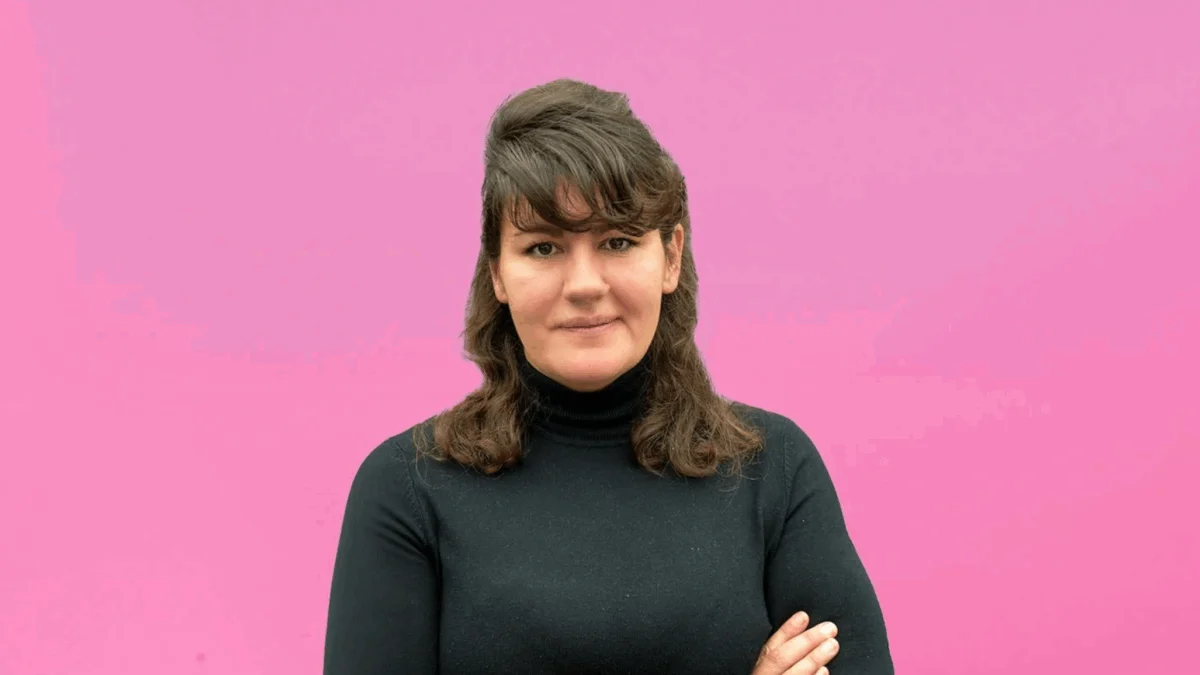
Closures of maternity wards, lack of staff, teams running out of steam… For several years, the French perinatal system has been under high tension. From 2021, the National Council of the Order of Midwives warned of the lack of staff, the insufficient time devoted to patients and the worrying deterioration of perinatal indicators. In this context, midwives have become privileged interlocutors. Anna Roy explains to us what their presence changes, concretely, in the daily lives of women.
True Medical: How has the role of midwives evolved in recent years and what are the concrete consequences of this development on the care of women today?
Anna Roy: In reality, what has mainly changed is the visibility of the profession. For a long time, midwives were very little known, sometimes even invisible, even though they already carried out many missions. They were, for example, concerned about mental health, particularly during the perinatal period, before anyone else, with discretion and humility.
“If there is a recent advance that I consider particularly positive, it is the expansion of our role in abortion, both for medical abortions and, soon, for large-scale surgical abortions. This is an important development, which is also very appreciated by women“, recognizes the author and columnist.
For the rest, I would say above all that the general public today knows the skills of midwives better. More and more women are now turning to us since they discovered that they could be monitored gynecologically.
Our exercise has always been diversified; the difference is that it is now more identified.
Many women now see their midwives well beyond the pregnancy: how does this close relationship change in the care pathway?
For my part, I find this wonderful. The main advantage is that there is no break in the continuity of care. A true relationship of trust can be built over time, which is extremely valuable.
Being able to support women at different stages of their lives, and not just during pregnancy, is a great satisfaction. This makes it possible to ensure consistent monitoring and to know them as a whole, whatever the situations they are going through.
However, it is important to remember that, like general practitioners, we work within the framework of our skills and refer patients whenever there is a pathology requiring specialized care. We therefore collaborate closely with our fellow gynecologists-obstetricians and other health professionals.
But being able to be present throughout women’s lives, in complementarity with other healthcare providers, is a real joy. And women seem to appreciate this continuity and proximity in their health journey.
Midwives are often the first to spot psychological distress after childbirth. Why has their role become central in perinatal mental health?
Concerning perinatal mental health, I believe that what must be emphasized above all is that midwives have always been, and still are today, great confidants for women. This is particularly due to the way in which they view the therapeutic relationship: a relationship based on proximity and exchange. Women therefore very easily confide in midwives, especially since we support them in some of the most important moments of their existence (pregnancies, childbirth, postpartum, miscarriages, abortion, etc.).
Of course, this work is not done alone. Midwives act in harmony with different partners: psychologists, psychiatrists, general practitioners, PMI services and other health professionals. This is explained above all by the relationship of trust that is built with the women over the course of their support.
In the current context (hospital tensions, maternity unit closures, etc.), how can we guarantee women human, personalized and secure support?
For my part, I am rather hopeful on this question. Moreover, I find it positive that the public authorities are taking it up today.
We are in a context of declining birth rates, even though the organization of perinatal care is still based on decrees dating from 1998, which notably define the number of professionals required. This demographic development opens up, in my opinion, a real opportunity: that of rethinking these standards to improve the conditions of support for women.
It is therefore perhaps the time to review the perinatal decrees in order to allow better distribution of resources and, above all, to reduce the number of patients followed by each midwife. This is how we guarantee support that is human, personalized and secure.
Ten years ago, this prospect would undoubtedly have been more difficult to envisage, given medical demographics. Today, in many territories, on the contrary, this seems entirely possible to me. This is an opportunity to improve the quality of support while giving midwives the means to devote more time to the women they care for.
Then, everything that allows the profession to be known and recognized is important. I took part, for example, in the Grand Prix Evian des Sages-Femmes a few weeks ago (I have been its sponsor for two years) and I find this initiative very interesting. This type of award really helps to promote the profession. In particular, it allows us to recognize the scientific nature of our profession and its link with research.
“Because even if the situation is improving, our profession still remains too little visible. And this type of initiative contributes to better recognition”concludes Anna Roy.