
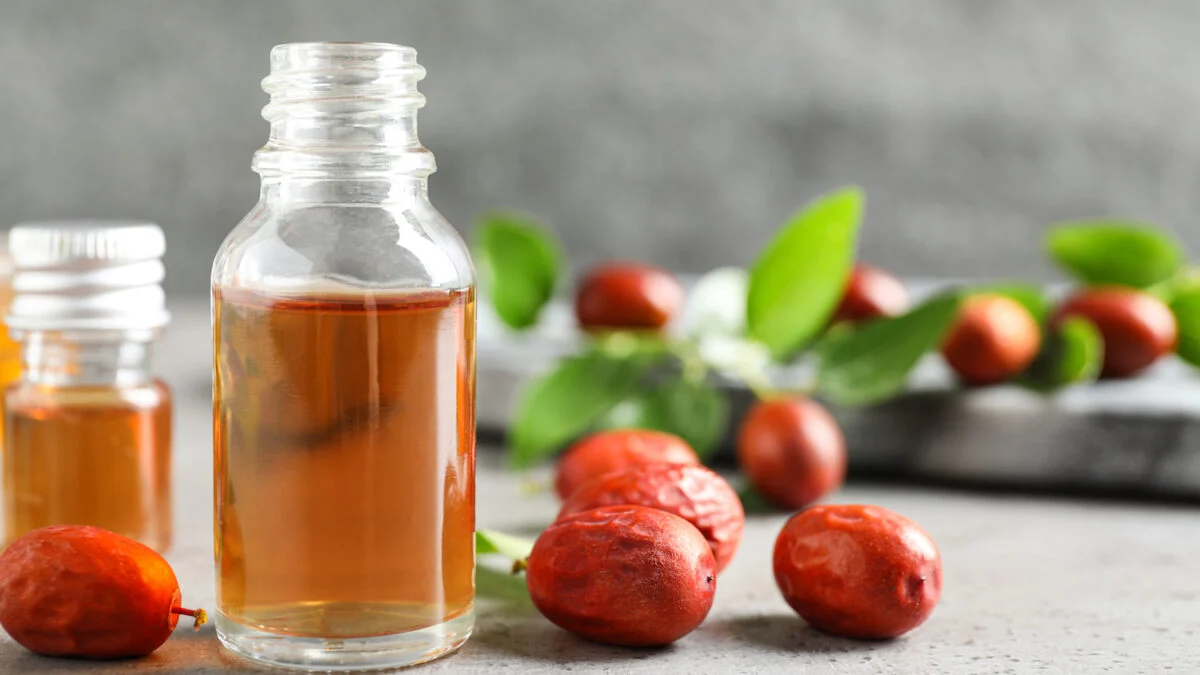
Using a compound derived from jojoba, scientists have managed to block a protein essential to the energy supply of leukemia cells. Promising results observed in the laboratory and in mice, which will still need to be confirmed in humans.
When cancer cells run out of fuel
Acute myeloid leukemia (AML) remains one of the most aggressive forms of blood cancer. Despite the therapeutic progress made in recent years, treatments often remain cumbersome, sometimes difficult to bear, and insufficiently effective in certain patients. In this context, each new understanding of the intimate functioning of cancer cells represents hope.
This is precisely what the team of Professor Paul Spagnuolo, a specialist in food sciences at the University of Guelph, in Canada, highlighted. The researchers discovered that AML cells rely heavily on a very specific energy mechanism: they get most of their energy from a particular type of fat, very long-chain fatty acids, broken down in cellular compartments called peroxisomes.
To illustrate this dependence, Paul Spagnuolo uses a particularly telling comparison: “Think of it as a fuel system. Healthy cells are hybrid cars capable of changing energy sources. Leukemia cells, on the other hand, are locked into only one type of fuel to survive.”.
This difference is far from trivial. While healthy cells can fall back on other sources of energy, including glucose, leukemia cells appear much less flexible. A dependence which constitutes their real Achilles heel.
A key protein neutralized thanks to a compound derived from jojoba
To survive, leukemia cells need a protein called ABCD1. Its role is to transport fatty acids to the peroxisomes where they will be transformed into energy. However, researchers have observed that this protein is produced in abnormally high quantities in acute myeloid leukemia cells.
This is where eicosenol, a molecule derived from jojoba developed by the Canadian team, comes in. By blocking ABCD1, this compound prevents cancer cells from using the fats they depend on. And the consequences are spectacular at the cellular level according to Paul Spagnuolo:
“When we inhibited the ABCD1 protein, the leukemia cells were no longer able to process the fats on which they depend. These fats build up inside the cells, eventually causing the cancer cells to die.”.
According to the authors of the study, healthy cells resist this blockage much better because they have energy alternatives. This difference could ultimately make it possible to develop treatments that are less toxic than certain conventional chemotherapies. Experiments carried out on animal models show a reduction in the leukemic burden as well as an extension of survival, without detectable toxicity. Even if these observations remain preclinical, they reinforce the idea that the metabolism of cancer cells could offer a new angle of attack.
Between scientific caution and hope for patients
The story is attractive: a molecule from a desert plant which manages to put cancer cells known to be formidable into difficulty. However, researchers insist on an essential point: it is not a natural remedy that could be reproduced at home. “This research does not involve dietary or nutritional changes and does not suggest that eating certain foods can treat or prevent leukemia.” specifies the researcher.
The eicosenol used in the study is a molecule isolated, purified and administered under strictly controlled conditions. Before considering clinical trials in humans, scientists will still have to optimize its formulation, evaluate its safety and confirm its effectiveness. For Paul Spagnuolo, this advance nevertheless illustrates the still largely unexplored potential of plant compounds in the development of new drugs.
“This is a great example of how research in agriculture and food science can have far-reaching impacts far beyond what we imagine. We link plant compounds to potential cancer therapies.”.
This is not the researcher’s first work in this field. His laboratory had already shown that a compound from avocado could slow the progression of certain leukemias. This new discovery reinforces the idea that certain natural molecules could serve as a starting point for high-precision treatments.
The road to a drug remains long. Between the first results obtained in animals and possible marketing authorization, several years of trials will be necessary. But for patients with acute myeloid leukemia, every breakthrough counts.