
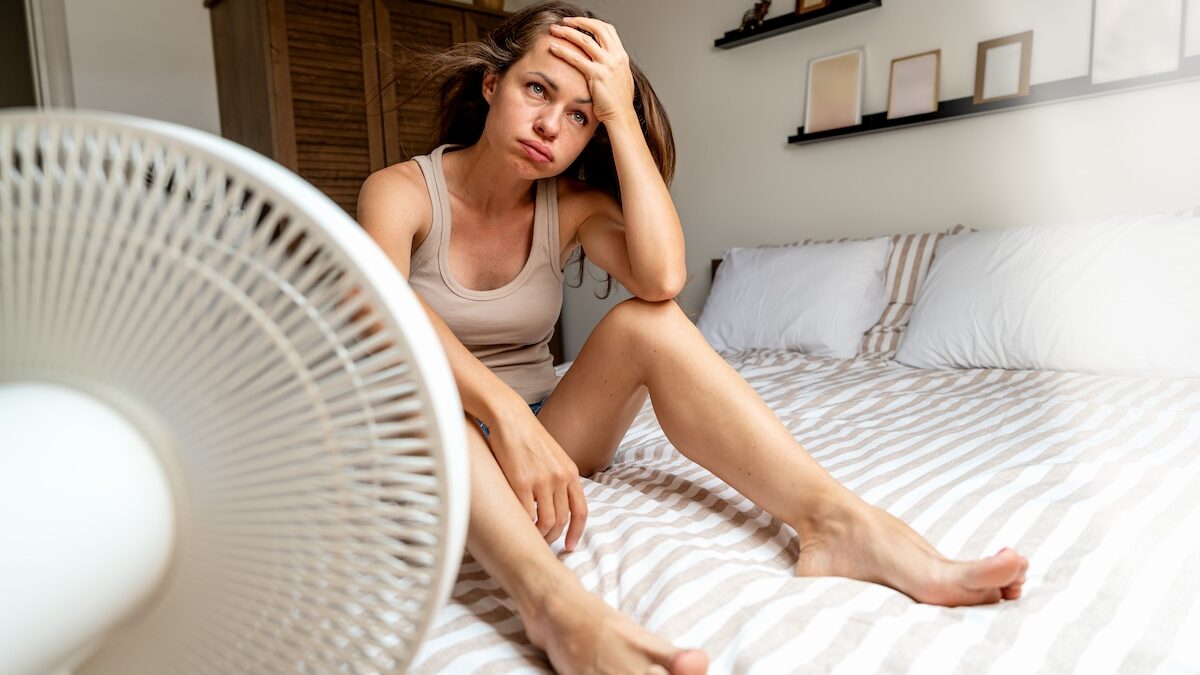
If queues or stock shortages in stores are to be believed, not a house or interior works without its fan. If it does not freshen the air in the literal sense, it at least makes it possible to endure the period by giving an appreciable draft effect. But what happens when temperatures get extreme at home? Is it really necessary to circulate too hot air?
The fan does not produce cold
First point to keep in mind: unlike air conditioning, the fan does not lower the temperature of the room. “A fan can be useful during a heatwave, but it all depends on the actual temperature of the room and the humidity of the air”explains Dr. Gérald Kierzek, emergency physician.
Indeed, “When the air is very hot, it does not create cold: it simply mixes the ambient air, which can help the body evaporate sweat, but also increase water loss.”
In other words, the device works mainly by improving the evaporation of perspiration, the main mechanism used by our body to cool itself.
Up to 35°C it can still provide relief
Good news: even in the middle of a heatwave, the fan can continue to provide comfort, provided it is used correctly.
“The fan is especially useful if the room remains moderately warm, or if it is used with other means of cooling such as wet skin, a mister or a damp cloth”specifies the doctor.
Under these conditions, “the air flow accelerates the evaporation of water on the skin and gives a real feeling of freshness”. A particularly useful solution for people who do not have air conditioning.
The specialist therefore recommends systematically combining the fan with other cooling actions.
Above 35°C in the room, its limits appear
However, when the interior temperature exceeds 35°C, the fan becomes much less efficient.
“Beyond around 35°C in the room, its protective effect decreases significantly and it may no longer be sufficient to prevent heat-related problems”warns Dr. Gérald Kierzek.
Worse, “At very high temperatures, the circulating air can even become painful, because it blows hot air onto already heated skin.”
In a home that has become stifling, you should not rely solely on this device to protect yourself from the effects of the heatwave.
Beware of the risk of dehydration
Another point of vigilance: the fan can promote water loss, especially when it operates for long hours.
“It can promote dehydration if you are exposed for a long time without drinking, especially in the elderly or fragile people,” warns the doctor.
The trap is that sometimes we feel better even though the body is losing water faster.”
Signs that should alert you include severe thirst, headaches, dizziness, unusual fatigue, cramps or even a dry mouth.
Good reflexes to cope with the heat at home
To better get through a heatwave, Dr. Gérald Kierzek recommends:
-
Drink regularly, without waiting to feel thirsty;
- Moisten the skin with a damp cloth or a mist;
- Keep shutters and curtains closed during the day;
-
Ventilate early in the morning or at night when temperatures drop;
- Avoid staying for hours in an overheated room only under the fan;
- Look for an air-conditioned or cooler place if the accommodation becomes too hot.
In summary, the fan remains a valuable ally during the heatwave, but it must be considered as an additional tool. Used alone in a room where the temperature well exceeds 35°C, it is no longer enough to effectively protect the body from heat-related risks.