
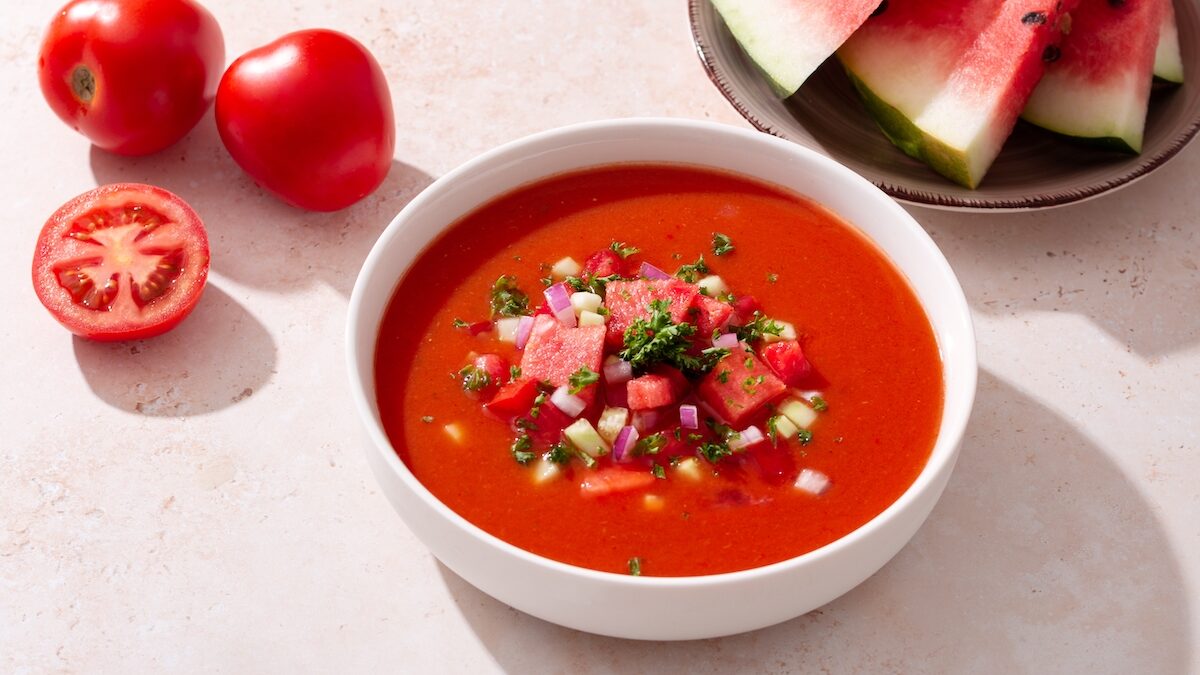
During heat waves, our body takes a beating. Hunger often becomes rarer and the risk of dehydration threatens us. So what should you put on your plate to counter this effect? Alexandra Murcier, dietitian nutritionist, shows us the ideal dish that she adopts when the weather is too hot.
Why are cold soups so interesting during heatwaves?
Gazpacho, frozen cucumber soup or cold tomato soup… These summer preparations are not only refreshing. They also meet several essential needs of the body when temperatures rise.
“Cold soups are a great option when it’s very hot,” explains Alexandra Murcier.
“They are rich in water and therefore contribute to hydration. The vegetables they contain are themselves very rich in water, but also in vitamins and minerals. However, in periods of high heat, we lose a lot of minerals through perspiration.”
Another advantage: they provide valuable antioxidants, capable of helping the body fight against oxidative stress accentuated by high temperatures.
“Depending on the ingredients chosen, we benefit, for example, from the lycopene of tomatoes or even the vitamin C contained in peppers”, specifies the specialist.
Finally, these soups can also be better tolerated than large quantities of raw vegetables. “They are particularly interesting for people who have difficulty digesting salads or excess raw vegetables.adds Alexandra Murcier.
Cold soup alone does not constitute a complete meal
But be careful: although gazpacho is an excellent base, it is not enough on its own to make a balanced dinner.
“Cold soups are not a complete meal because they usually lack protein and complex carbohydrates,” warns the dietician. “If you only consume gazpacho, you risk feeling hungry very quickly, which can encourage snacking in the hours that follow.”
To avoid this pitfall, Alexandra Murcier recommends accompanying the soup with a source of protein (eggs, fish, chicken, cream cheese, legumes, etc.) as well as starchy foods, even when served cold.
“A lentil salad, a little wholemeal bread, quinoa or cold potatoes will balance the meal”she advises.
The specialist also recommends adding a drizzle of olive oil directly to the preparation. “A little fat improves the absorption of fat-soluble vitamins found in vegetables”she recalls.
Finally, be careful with industrial products: some commercial cold soups may contain significant quantities of sugar or salt. It is therefore better to take a few seconds to read the labels before purchasing.
Two fresh recipes to try this evening
The classic tomato-pepper gazpacho
A simple recipe, rich in water and particularly interesting for stocking up on antioxidants.
Ingredients :
- 6 ripe tomatoes;
- 1 red pepper;
- 1 cucumber;
- 1 clove of garlic;
- 2 tablespoons of olive oil;
- salt and pepper.
Preparation :
Wash and cut the vegetables. Mix everything with the garlic and olive oil until you obtain a smooth texture. Season with salt and pepper and refrigerate for at least three hours before serving.
Cold cucumber-yogurt-mint soup
More original and particularly refreshing, this recipe is ideal during scorching evenings.
Ingredients :
- 2 cucumbers;
- 2 natural yogurts;
- a few fresh mint leaves;
- the juice of half a lemon.
Preparation :
Mix all the ingredients together. For an even more refreshing sensation, add a few ice cubes when mixing. Serve well chilled.
The right reflex during the heatwave
During periods of high heat, choosing light meals, rich in water and easy to digest, not only allows you to better tolerate temperatures, but also maintains a good level of hydration. Provided, of course, that you don’t forget to drink regularly throughout the day.