
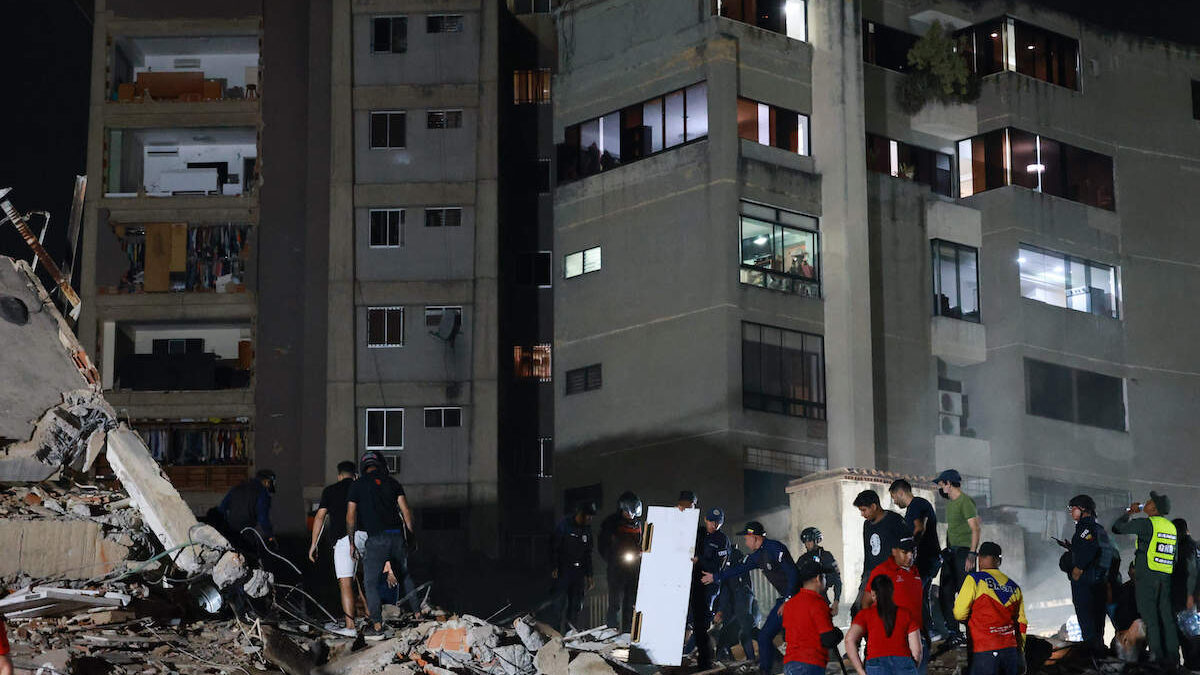
In Venezuela, in the midst of chaos, rescue workers continue their race against time after the two earthquakes which caused the collapse of numerous buildings on June 24. The latest report established by the authorities shows 235 deaths. While residents are still missing, rescue teams are trying to extract possible survivors buried under the rubble. A question inevitably arises: how long can a person survive under rubble?
The first hours are crucial
In disaster medicine, specialists agree on one point: the first 24 to 48 hours are decisive. We are therefore at the limit. During this period, the chances of finding survivors remain the highest.
But survival depends on many parameters: the severity of the injuries, the presence of an air pocket, access to water, the ambient temperature or even the victim’s ability to signal their presence.
“Some people may benefit from an air pocket, which allows them to survive”explained Dr Gérald Kierzek, emergency doctor and medical director of True Medical, during the deadly earthquake in Türkiye. “Except that not only do air pockets become smaller over time, but a person who cannot hydrate will die. The body cannot survive beyond three days without water…”
Three major threats after an earthquake
For Dr. Gérald Kierzek, several medical emergencies overlap after a disaster of this magnitude.
The first concerns people seriously injured when buildings collapse. Internal bleeding, chest trauma, multiple fractures or neurological injuries can quickly become life-threatening.
“Any respiratory, neurological or hemorrhagic distress must be treated urgently in the first hours, the risk of death is very present”underlines the doctor.
The second threat concerns victims still trapped under the rubble. Even when there are no serious injuries, lack of oxygen, dehydration or exhaustion can quickly become fatal.
Finally, people with chronic illnesses are also particularly vulnerable. “These are diabetic people who do not have their insulin, kidney failure patients who can no longer be dialyzed. All these people will also be in danger. Even if they are not direct victims, if their treatment is not accessible, they can quickly become collateral victims of this event”continues Dr. Kierzek.
Can we survive more than a week under the rubble?
Experts in disaster medicine generally consider the first week to be the most critical period. After five to seven days, finding survivors becomes rare.
However, exceptions exist. After the earthquake and tsunami that hit Japan in 2011, an 80-year-old grandmother and her grandson were found alive nine days after the disaster. In Haiti, in 2010, a teenager was pulled from the rubble alive two weeks after the earthquake.
These exceptional stories keep families and rescuers hopeful, even when the odds are dwindling.
Being saved doesn’t mean being out of danger
Extracting victims is often only the first step. People who have been trapped under rubble for a long time may suffer from “crush syndrome”.
When muscles are compressed for several hours, they release toxic substances upon release that can seriously damage the kidneys or even cause multi-organ failure. Immediate medical attention is then essential, sometimes with the need for dialysis.
“The immediate needs are mainly to find the survivors under the rubble as quickly as possible of course. There will also be a need for adapted care such as trauma and then primary health care in the most affected areas,” recalled Louise Bichet, head of the Middle East division of Médecins du Monde during the earthquake in Türkiye.
The expert also insisted on the importance of psychological support. “The need for psychological first aid is very strong in this type of very traumatic situation.”she emphasized.
Beyond emergency care, access to drinking water, food and secure accommodation also constitutes a major challenge in avoiding a secondary health crisis in the days following the disaster. The race against time is therefore more than ever underway to find possible survivors.