
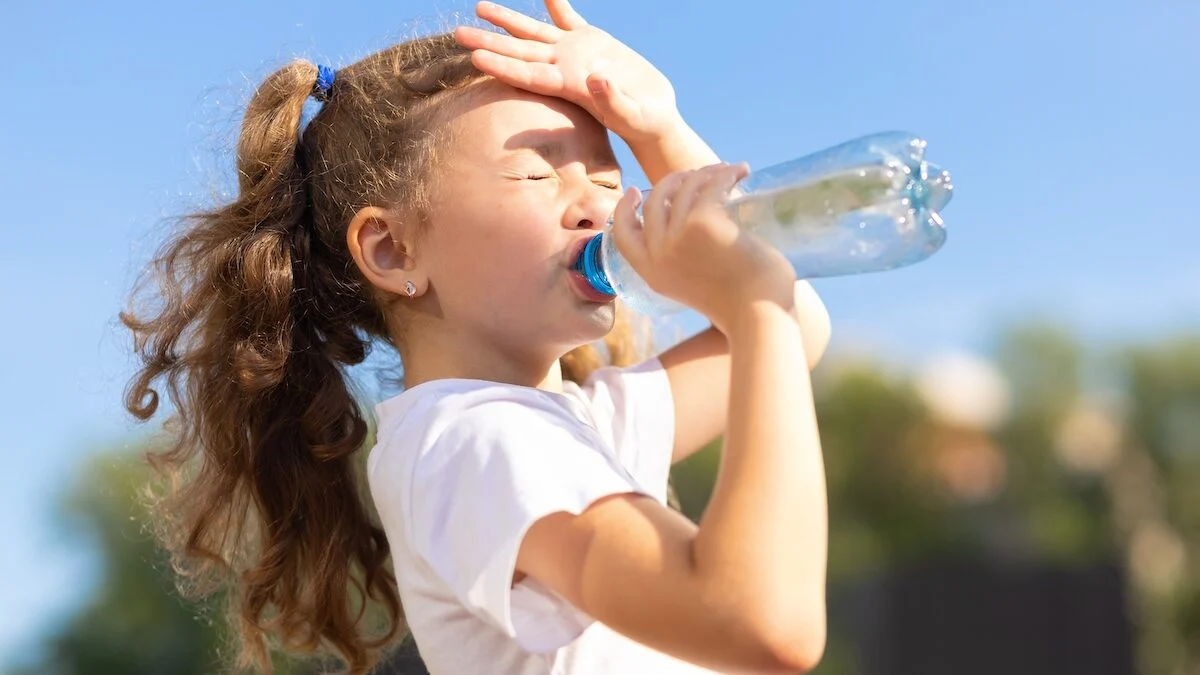
When temperatures rise, children are particularly vulnerable to the effects of heat. Dehydration, heatstroke, fatigue… the risks increase rapidly during heatwaves. Guest of the show Information mission
on June 28, 2026, Dr Jules Fougere reminds us of the essential reflexes to adopt to help young people better cope with extreme heat. Hydration, physical activity and a suitable environment: a few simple actions can make all the difference.
Hydration: do not wait until the child is thirsty
The first reflex to adopt is to regularly offer water to children, even if they do not ask for a drink. During heatwaves, the feeling of thirst is not always a reliable indicator of a good level of hydration. As Dr Jules Fougère points out, it is therefore important to encourage them to drink throughout the day.
The doctor also specifies that it is not necessary to favor very cold water. “Cool water is good, but very cold drinks give an immediate feeling of coolness, without cooling the body more effectively.“
Diet can also help maintain good hydration. Fruits and vegetables rich in water, such as watermelon, melon, cucumber or even tomatoes, provide an interesting supplement and help prevent the effects of heat.
Adapt physical activities to the cooler hours
Children can continue to move during a heatwave, but only if they adapt their habits. Indeed, physical effort naturally increases the body’s production of heat and increases water needs.
Dr Jules Fougère therefore recommends favoring activities early in the morning or at the end of the day, when temperatures are more bearable. This precaution helps limit the risks of dehydration and heat stroke while allowing children to remain active.
At school, a cooler environment is essential
Schools also have an important role to play during periods of high heat. To improve student comfort, several solutions can be put in place: using misters, fans or fans, creating shaded spaces and encouraging children to drink regularly.
Dr Jules Fougère recalls the principle of the mister: “The mist will deposit fine droplets on the skin. When this water evaporates, it takes heat with it, just like sweat.“
In addition to regular hydration and appropriate activities, these measures help to better protect children when the thermometer heats up. Throughout the heatwave period, the vigilance of parents, loved ones and educational teams remains essential to preserve their health and well-being.