
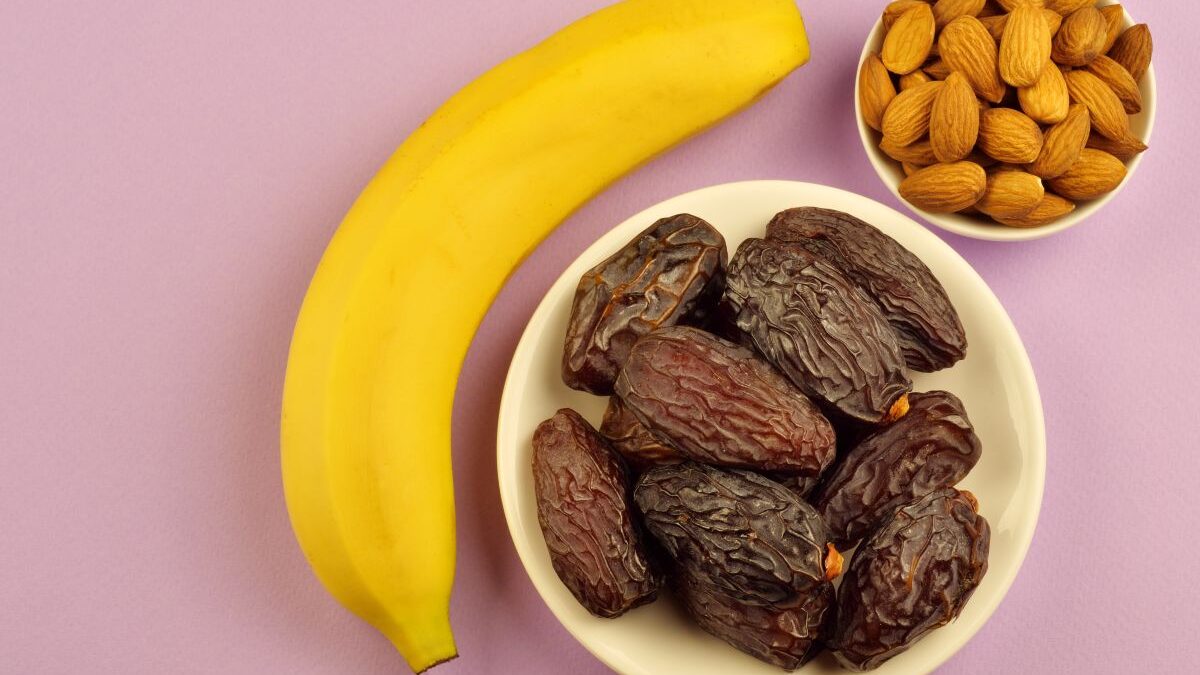
A sweet fruit does not cause the same effects on blood sugar or transit as another. However, dates and bananas are often presented as healthy snacks, both after sports, as a snack or at the office.
According to the USDA database, dates provide approximately 282 kcal, 75 g of carbohydrates and 63 g of sugars per 100 g. The banana is much less energetic, with around 89 kcal per 100 g. Despite this difference, these two fruits each have their advantages.
Dates are very rich in fiber, potassium and energy. Banana contains more water, less sugar and more vitamins C and B6. The best choice therefore depends on your goal, the quantity consumed and the time of day.
Blood sugar: banana or dates, which fruit increases blood sugar the least?
According to USDA data relayed by the Times of India, dates have a moderate glycemic index. It varies between 42 and 74 depending on the variety and their degree of maturity. Their main disadvantage comes mainly from their high sugar content. With around 63 g of sugars per 100 g, they represent a very concentrated source of energy.
In case of type 2 diabetes or prediabetes, it is advisable to limit consumption to two or three dates per day. It is best to accompany them with yogurt, oilseeds or cottage cheese to slow down the absorption of sugars.
The banana also has a moderate glycemic index. According to Healthline, it is around 42 when still slightly green and reaches between 51 and 57 when fully ripe. A medium banana provides almost 28 g of carbohydrates. Its glycemic load remains low to moderate. To limit variations in blood sugar, it is better to choose a banana that is still a little firm and combine it with a handful of nuts or another source of protein.
Intestinal health: dates rely on fiber, bananas on prebiotics
Dates are distinguished by their richness in fiber. They contain about 8 g per 100 g, almost three times more than a banana, according to the USDA. Healthline points out that a 40 g serving already provides more than 3 g of fiber.
A small study conducted in 2015 with 21 people, who consumed seven dates per day for 21 days, showed an improvement in bowel movement frequency and transit. The fibers and polyphenols in dates also help nourish the good bacteria in the intestine.
The banana acts differently. Its soluble fiber and resistant starch, especially when it is still a little green, have a prebiotic effect. Healthline also points out that ripe bananas are part of the BRAT diet, often recommended after an episode of diarrhea thanks to their good digestive tolerance.
Banana or dates: which snack to choose?
If you’re looking to better control your blood sugar, a lightly green banana with a few nuts is often the simplest choice. If your goal is to promote transit, two to three dates with natural yogurt already provide a good amount of fiber while remaining in a reasonable portion.