
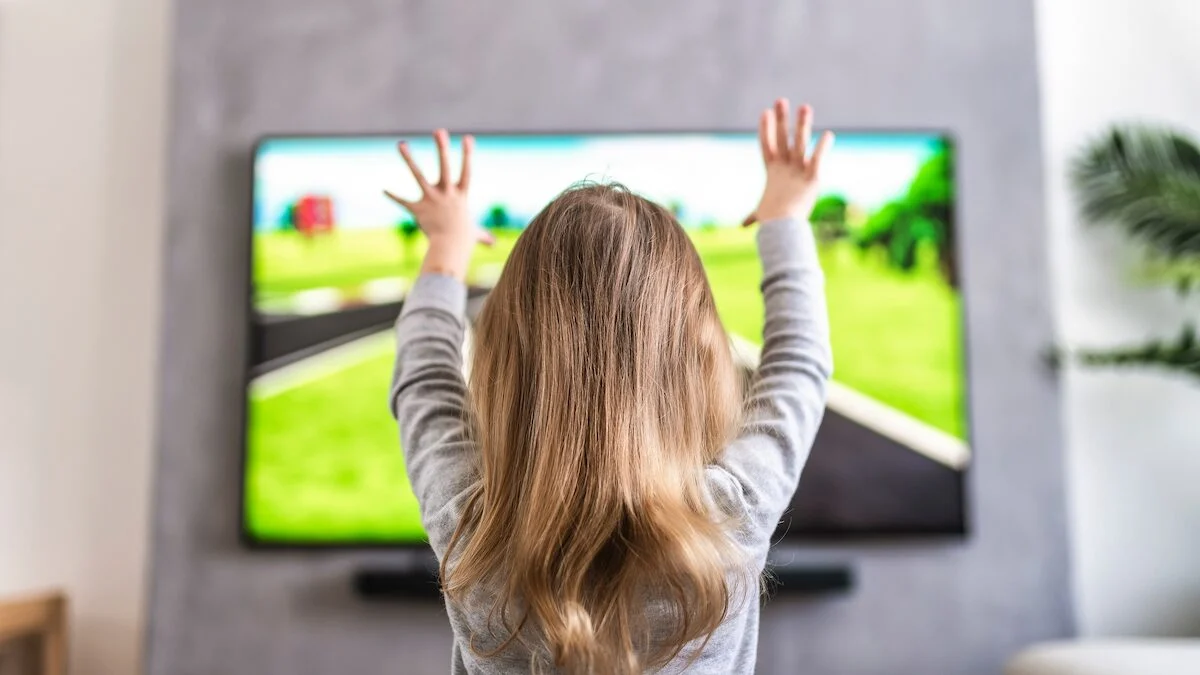
A new British study is sounding the alarm about toddlers’ exposure to screens. Its authors believe that no child under the age of 2 should be regularly and intentionally exposed to televisions, smartphones or tablets, due to their potential effects on development.
Screens from the first months: a habit far from harmless
Television on in the background, smartphone used to calm a baby or cartoon broadcast while he plays… These everyday situations could have significant consequences for toddlers. This is the main message of a UK study commissioned by the 1001 Critical Days Foundation and led by the interdisciplinary research team Action on Digital Device Immersive Conditions Team (iADDICT), which brings together researchers from Leeds Trinity University, the University of Leeds, the University of Nottingham and Aston University.
Researchers are finding that babies are exposed to screens earlier and earlier, sometimes from the first months of life. According to their observations, this phenomenon is notably linked to the digital habits of parents, who involuntarily transmit these behaviors to their children. The study also highlights that one in ten babies would fall asleep in front of a screen.
Faced with these results, academics are categorical: “no child under the age of 2 should be regularly and intentionally exposed to a screen”.
Sleep, language, interactions: several aspects of development concerned
The authors of the study highlight several potential risks associated with early exposure to screens. These include sleep disorders, vision problems, an increased risk of obesity, but also effects on language acquisition and social interactions.
According to researchers, exchanges with parents, other children or early childhood professionals could be affected when screens occupy an important place in the baby’s daily life.
In a press release, Dame Andrea Leadsom, founder of the 1001 Critical Days Foundation, believes that the conclusions of this first global study are particularly worrying. In particular, she mentions developmental delays, a link between intensive use of screens and certain behaviors observed in autistic children, as well as damage to the developing optic nerve. She also emphasizes the lack of information for families and calls on governments to act quickly to better support parents.
Researchers call for clearer recommendations
In the United Kingdom, screens are already not recommended before the age of 2, with a few exceptions, notably for video calls or certain educational content. Those responsible for the study, however, ask that these recommendations be clarified and strengthened.
Dame Andrea Leadsom also calls out technology companies. According to her, content presented as suitable for babies should not be offered to parents if scientific knowledge shows the opposite.
The study also highlights a lack of support for families: 85% of parents say they have not received any advice on screen time from midwives, general practitioners or childcare nurses.
In France, the recommendations are in the same direction
In France too, recommendations call for limiting the exposure of young people to screens as much as possible. Health authorities defend the absence of screens before the age of 3, in particular through the “3-6-9-12” method of psychiatrist Serge Tisseron, which suggests use adapted according to the age of the child.
Furthermore, in 2024, a commission of experts mandated by the Élysée on the impact of screens on young people also recommended banning the use of screens among children under 3 years old. She particularly highlighted the risks for language development, social interactions, attention and sleep.
For the authors of the British study, better informing families and supporting parents from the first 1001 days of life constitutes a priority today in order to offer children the best possible start.