
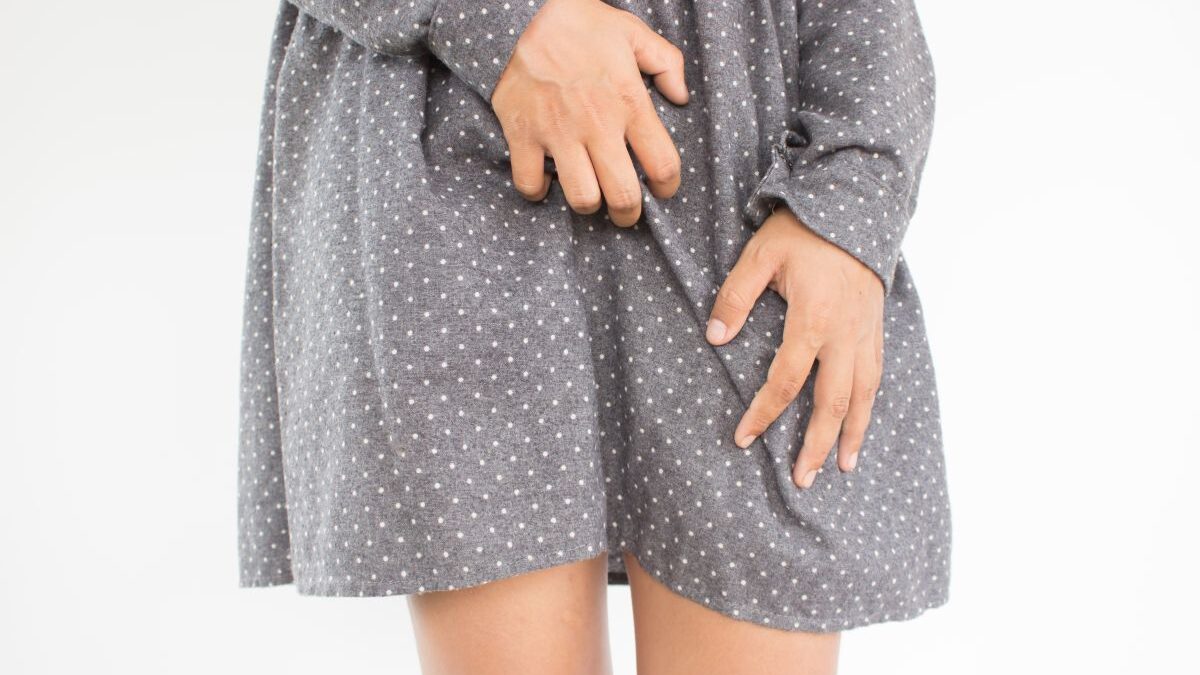
Summer is often synonymous with relaxation, beach and sun. But for our intimate flora, this period can be particularly trying. The transition to a hot and humid climate disrupts the fragile balance of the vulvar area.
Between increased sweating and holiday rituals, our body reacts. And the burning or itching sensations become more frequent. Understanding the impact of summer weather on our anatomy is the first step to effectively preventing and relieving these attacks.
Heat and maceration, the culprits of summer
The first factor triggering summer discomfort is none other than rising temperatures. It leads to increased sweating, including in the crotch. Wearing tight clothing or synthetic materials blocks the escape of this moisture. Which creates an ideal maceration phenomenon for the development of irritations.
“Intimate itching can simply be caused by heat and maceration. We sometimes observe an increase in the number of fungal infections in summer, particularly due to repeated swimming in the pool.” underlines Dr Odile Bagot, gynecologist.
This thermal and humid combination weakens the epidermis of the vulva, altering its protective skin barrier and opening the way to superficial skin discomfort, even in the absence of a real infection.
Summer mycosis, a great holiday classic
The most frequently encountered condition during the hot season remains vulvovaginal mycosis. It is generally due to the proliferation of the fungus Candida albicans. Wet swimsuits left on for too long after swimming constitute a real incubator for fungi.
Dr Odile Bagot confirms this trend. “The most common cause of itching remains mycosis. In summer, it is favored by wet swimsuits, the heat and, above all, repeated swimming in the swimming pool. This is the most frequent reason for consultation during this period.
To recognize it, it’s simple: the yeast infection manifests itself by intense and sudden itching (often overnight), a very red and swollen vulva, as well as white and thick vaginal discharge, similar to curdled milk.
If you are at your vacation spot and no healthcare professional is immediately available, you can go directly to a pharmacy.
“In this case, you can obtain treatment directly from the pharmacist if you are short of time or if you cannot find a health professional at your vacation spot. You must then ask for an egg and an anti-mycotic cream. Please note, the cream alone is not enough, it is necessary to combine an egg. This direct access treatment is, however, not reimbursed.”
specifies the gynecologist.
When heat makes eczema, psoriasis or cracks worse
Heat and humidity don’t just favor fungi. They can also exacerbate pre-existing dermatological pathologies in the intimate sphere. Skin prone to eczema or psoriasis becomes irritated by sweat, while weakened tissues can split.
“We can observe the worsening of certain dermatological pathologies. If you tend to have eczema or psoriasis, heat can sometimes accentuate the symptoms. In addition, wet swimsuits combined with heat can cause small cracks if you are prone to them.“, explains the expert.
For women suffering from identified eczema or psoriasis, occasional use of a cortisone cream (usually prescribed by their doctor) helps calm the inflammation. If the irritation is only linked to repeated contact with swimming pool water or sea water which dry out and attack the skin, Dr Bagot advises applying “a soothing and healing cream, like Cicalfate or Dermalibur for example.”
Protect fragile vulvas with water-repellent care
Certain periods of life, such as menopause, are accompanied by a drop in hormones leading to dryness and fragility of the skin in the intimate area. Faced with chlorine or salt, this thin and sensitive skin immediately suffers.
For these specific profiles, the gynecologist advises anticipating water aggression. “If you have a particularly fragile vulva, as may be the case during menopause, and it does not tolerate contact with water well, you can apply a water-repellent cream which will repel water. In this case, we can use Aquaphor ointment, simply vaseline, or even LHF Calendula ointment, which are very oily formulas.
The application of this fatty protective film shields against chemical attacks and preserves the natural hydration of vulvar tissues during swimming.
In short, when it comes to summer itching, the key lies in a good local care routine and simple preventive measures. To create a barrier to water, consider applying a fatty cream before your swims. Once out of the water, be sure to quickly remove your wet swimsuit to avoid maceration. Finally, “if the itching continues or persists over time, it is still preferable to consult for an external examination” concludes Dr Bagot. In any case, in the event of a fungal infection, do not go without treatment in order to quickly regain your holiday comfort.