
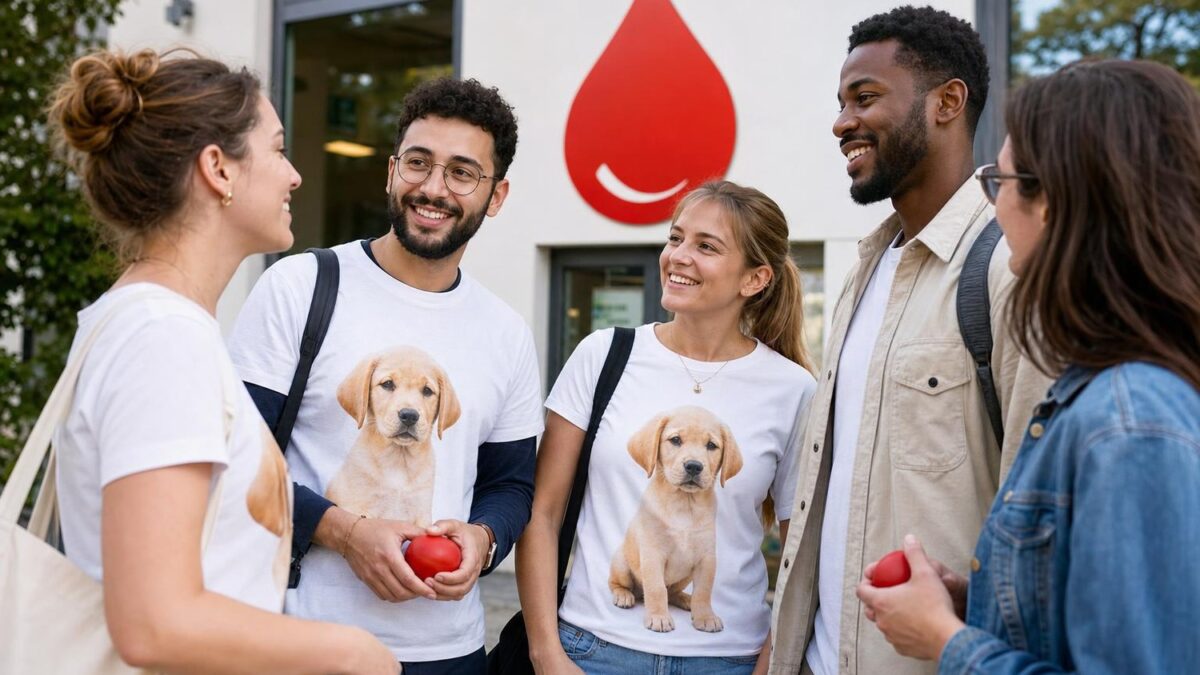
In a group of foster families raising puppies to become guide dogs for Guiding Eyes for the Blind, a scene intrigues American psychologist Nancy Darling. While only 3% of American adults donate blood each year, four of the seven volunteers we met had done so during the week. In an article published by Psychology Todayshe sees a common point: people who are committed to others often tend to multiply altruistic gestures.
For Nancy Darling, “altruism consists of acting for the benefit of others”. Whether donating blood, volunteering or raising a future guide dog, these actions follow the same logic. They benefit others, but also the person who performs them. As she sums it up, “volunteering and other forms of altruism make us feel good.” For some people, helping even becomes a deeply ingrained habit.
When volunteering relieves stress and loneliness
The effects of volunteering are not just psychological. Nancy Darling explains that the body releases endorphins, substances that promote a feeling of well-being and help reduce stress. This positive effect also helps reduce ruminations and provides a feeling of calm.
Engagement also helps strengthen social bonds. The psychologist points out that people who help others generally feel less alone and more connected to their community. These observations match those of the Belgian medical site PassionHealthwhich reports that volunteers have fewer depressive symptoms, better general health and, particularly among seniors, better physical condition.
Why do volunteers start over so often?
For Nancy Darling, volunteering meets several psychological needs: feeling useful, belonging to a group and acting in accordance with one’s values. This satisfaction explains why many people invest sustainably in several causes.
In France, this motivation is also found in surveys. According to the associative media
The Currentnearly 70% of volunteers say they give their time primarily for pleasure or because they want to support a cause that is close to their heart.
The psychologist also draws on the work of Connie Flanagan, which shows that altruism is often learned from childhood. Children whose parents are involved in their community are more likely to become volunteers themselves as adults. Associations, scouting or other organizations also offer an environment conducive to the development of mutual aid and a sense of responsibility.
Volunteering, health and longevity: a virtuous circle
Nancy Darling goes even further, saying that “people who volunteer and act altruistically also live longer.” Several studies in fact associate regular commitment with better mental health, more autonomy with age and a lower risk of mortality.
Without guaranteeing better health on its own, volunteering seems to act on several dimensions of well-being: it strengthens social relationships, reduces stress, gives a feeling of usefulness and encourages a more active lifestyle. It is perhaps this virtuous circle that explains why so many volunteers continue to get involved year after year.
- In 2025, Nancy Darling observes an astonishing proportion of blood donations among guide puppy foster families, well above the usual 3%.
- It shows how volunteering and altruism activate endorphins and social bonding, contributing to the benefits of volunteering on psychological well-being.
- Between identity construction, family transmission and effects on health and longevity, this analysis sheds light on why some volunteers seem incapable of stopping helping.