
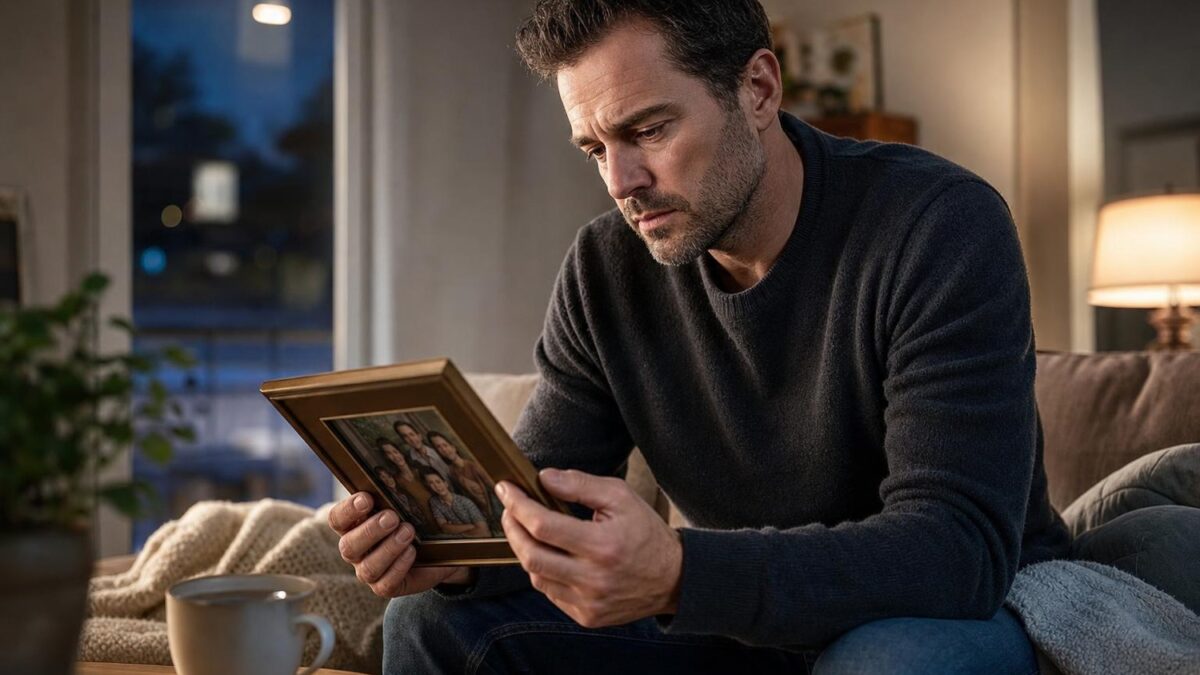
Many people today remain cut off from at least one member of their family. However, many keep this choice secret from their colleagues, using the excuse of a “very busy” parent or avoiding family questions. Turning away from an abusive father, a contemptuous mother, or a destructive brother remains shrouded in shame, as if the only right response is to endure.
What we today call family estrangement is therefore not a passing fad but the last stage of a long process. Family estrangement almost never appears without a prior history. Years of humiliating remarks, crises, broken promises one day lead to this decision to protect themselves. Behind it, a nagging question: did I betray my family or did I finally choose myself? Specialists agree on one point: taking care of yourself is not a betrayal.
Family estrangement: more than just a conflict
For Australian researcher Kylie Agllias, “Family estrangement is more serious than conflict and more complicated than betrayal.” She adds that “The termination of family relationships can be an extremely traumatic experience.” The study she comments on, carried out with more than 800 people, shows that breakups often follow years of emotional abuse, favoritism, neglect or clash of values. Broken ties range from six months to around thirty years, and they frequently last longer when the break concerns the father.
When family distance protects
For the World Health Organization, repeated violence and humiliation within the home represent a major factor in anxiety and depressive disorders. Family estrangement can be associated with increased stress, sleep disorders and this form of “ambiguous loss”: the feeling of losing a loved one who is still alive but has become inaccessible. Many people describe their decision to distance themselves as a real survival strategy in the face of relationships that exhaust them.
Interviewed by the German magazine Freundin, coach Claudia Pulla recalls that “Parents often pass on what they themselves grew up with”. She also notes: “Sometimes you need someone in a family who dares to say: ‘this is not healthy’ and who breaks the cycle.” The interview indicates that around one in four people have already lost contact with at least one loved one. Setting limits, reducing or cutting the link then becomes an act of protection, for oneself but also for following generations.
Family estrangement: living with guilt
Yet many continue to wonder if they are “bad children” or “bad parents”. Family loyalty weighs heavily: to stay was to betray oneself; leaving feels like betraying others. Psychologists encourage seeking a neutral space, therapy or coaching, to bring order to this ambivalence, assess the risks of a rapprochement and consolidate the decision made. Because recognizing the suffering of your family does not mean putting yourself in danger or giving up your own mental health.