
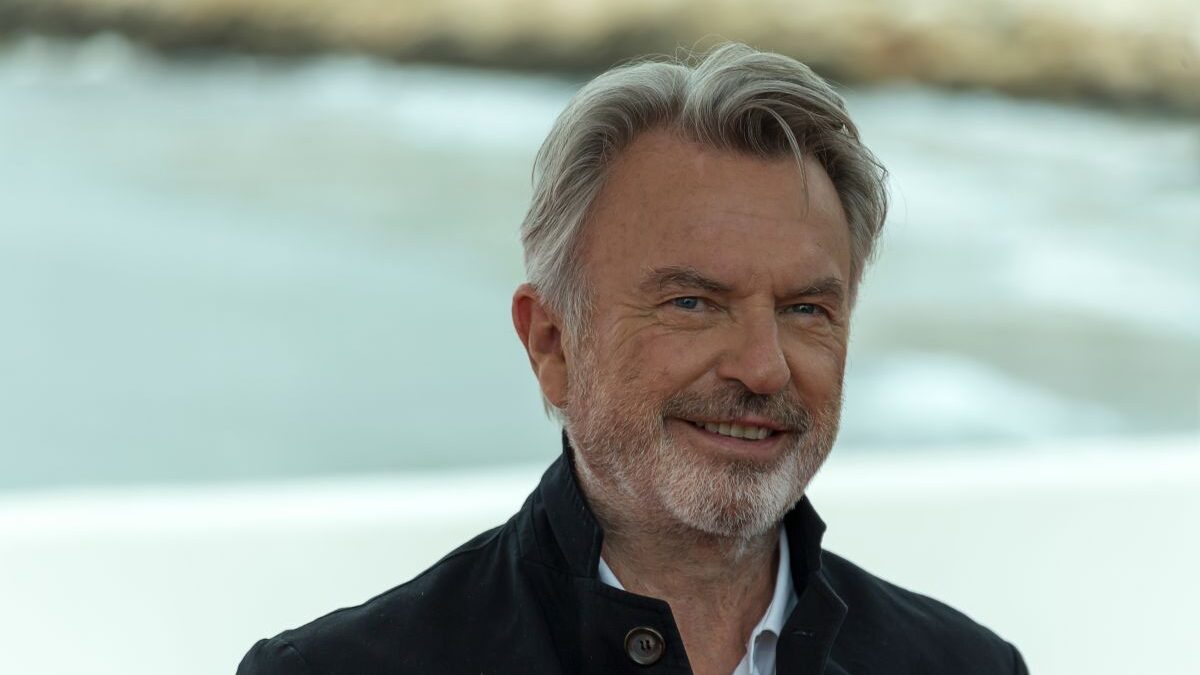
The world of seventh art is in mourning. Sam Neill, the New Zealand actor who made himself known thanks to his masterful roles in Jurassic Park, The Piano Lesson, Dead Calm and In the Mouth of Madness, died this Monday July 13, 2026.
The announcement was made directly by those close to him on social networks. “It is with great sadness that the whanau (family) of Sam Neill announces his passing this Monday, July 13, in Sydney, Australia.can we read on his official Instagram account. The legendary actor was 78 years old.
A sudden and unexpected death
The exact causes of Sam Neill’s death have not yet been clarified by those around him, who however wanted to provide some details. “Sam was surrounded by his family and left us with the dignity that defined his entire life. This death was sudden and unexpected.”
Very grateful to the medical staff, his relatives added. “We want to express our deepest gratitude to the Saint Vincent Hospital teams for their support. More details will be communicated at a later date, but for now, on behalf of the family, we ask that you respect their privacy during this time of immeasurable grief.”
A victorious fight against lymphoma
In 2022, the actor’s life was turned upside down when he was diagnosed with angioimmunoblastic T-cell lymphoma. In the face of illness, Sam Neill demonstrated remarkable philosophy. In October 2023, he declared to Australian Story magazine that he was absolutely not afraid of dying. “That doesn’t worry me. This never worried me, from the beginning. But that would annoy me, because there are things I still want to do.”
After undergoing heavy chemotherapy sessions, he benefited from cutting-edge treatment. This innovative protocol allowed him to cure cancer, a huge victory that he shared with joy last April.
“I just had a scan and there is no longer any trace of cancer in my body, it’s extraordinary”he enthused at the microphone of the Australian channel 7News. According to those close to him, this illness played no direct role in his disappearance.
When a death is “not cancer-related”: the medical explanation
The concomitance between his remission and this sudden death may therefore be surprising. However, in medicine, nuance is important. Dr. Gérald Kierzek, emergency physician, sheds light on this phenomenon.
“If the death of a person with cancer is “not cancer-related” in the strict sense, this often means that they did not die from a direct progression of the disease, but from another mechanism that occurred during its course or treatments.”
Even when the cancer cells have disappeared, the body remains deeply marked by the therapies undergone.
Dr. Kierzek recalls that a “Cancer can actually trigger or promote serious complications, for example infection, organ obstruction (occlusion), bone marrow damage, hemorrhage, cachexia, or vital organ dysfunction (post-chemotherapy cardiac damage, thromboembolic risk linked to blood hyperviscosity linked to cancer, etc.).”
In short, the doctor concludes, “in all cases, the disease and its treatments weaken the body.”
What are the direct causes of mortality from the disease?
It often happens that a patient succumbs to another pathology due to this state of generalized vulnerability. “We therefore sometimes say that the death is “not linked to the disease” when the immediate cause is different, such as a post-operative complication, an independent infection, or another medical problem, even if the cancerous cause may have weakened the person.continues Dr. Gérald Kierzek.
He adds that such an event can affect anyone. “In other words, cancer can be a factor of fragility without being the immediate cause of death. And as for everyone, sudden death (by cardio-respiratory arrest) can occur…”
Conversely, the medical profession speaks of death from cancer when the tumor process directly destroys vital functions.
“We die of cancer when the disease invades or prevents the functioning of a vital organ, or when it causes severe systemic complications”explains the emergency doctor.
Direct fatal outcomes then rely on specific processes. “The main mechanisms are mainly metastases, organ failure, occlusion, infection due to immunosuppression, bleeding, anemia or cachexia, that is to say a profound exhaustion of the body.
he concludes.
According to the latest information, Sam Neill died of pneumonia, indirectly linked to lymphoma and its treatments having probably weakened the actor’s immunity,