
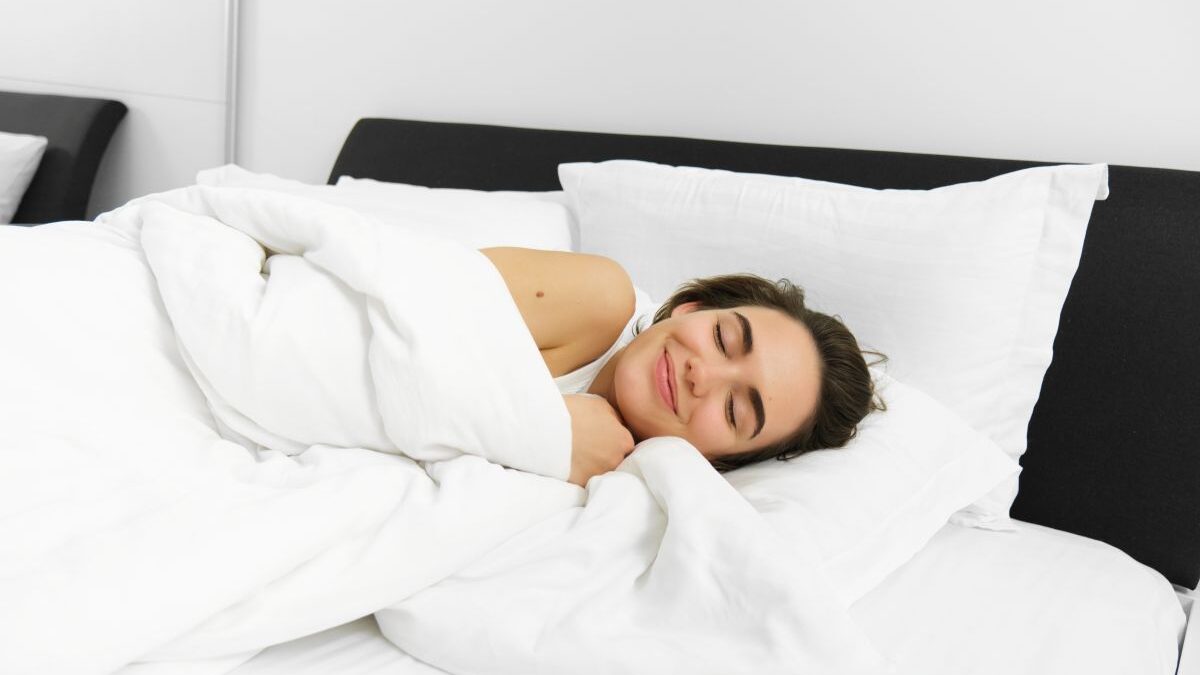
Even when the air becomes heavy and temperatures exceed 30°C, many continue to fall asleep under a duvet. Incomprehensible? Not really. Science explains why this gesture, far from being trivial, triggers a real relaxation mechanism.
The science of physiological cocooning
Sleeping with a comforter, sheet, or even a weighted blanket fulfills a deep-seated need. This involves stimulating the parasympathetic nervous system, responsible for slowing the heart rate and muscle relaxation.
In 2011, a team from the Department of Anesthesiology at the University of California demonstrated that “the gentle, steady pressure of the blankets, similar to the effect of a weighted blanket, can help relieve chronic pain and improve sleep quality.”
According to the researchers, “this feeling of well-being activates the parasympathetic nervous system, responsible for reducing heart rate, relaxation and relaxation“. This network acts as a natural brake after an intense day. It sends the body a clear signal: it is time to recover.
This pressure is reminiscent of acupressure or massage. It stimulates touch, muscles and joints, while promoting the release of serotonin, which promotes well-being, and melatonin, for falling asleep.
A reassuring ritual for the mind
Other work carried out by scientists at Flinders University and Adelaide University, Australia, shows that this habit could also be linked to personality.
Indeed, some sleepers are more sensitive to stress. They would therefore unconsciously seek this feeling of emotional security. For them, wrapping themselves in a blanket plays a key role in falling asleep. But not only that. This habit would also have an impact on maintaining deep sleep.
Additionally, the psychological effects go beyond simple comfort. In some cases, using a blanket can reduce symptoms of anxiety and depression. By what means? Quite simply by helping the body to release tension before falling asleep.
Weighted blankets, between promises and limits
Popular with parents of children with ADHD or autism spectrum disorder, weighted blankets have become a preferred tool for soothing and facilitating sleep. Their weight exerts a uniform pressure which triggers an immediate cocoon effect.
But researchers remain cautious: while some benefit greatly, others may feel discomfort or even increased anxiety.
What specialists confirm is that attachment to a blanket goes beyond the simple question of temperature. Even in the middle of a heatwave, then.