
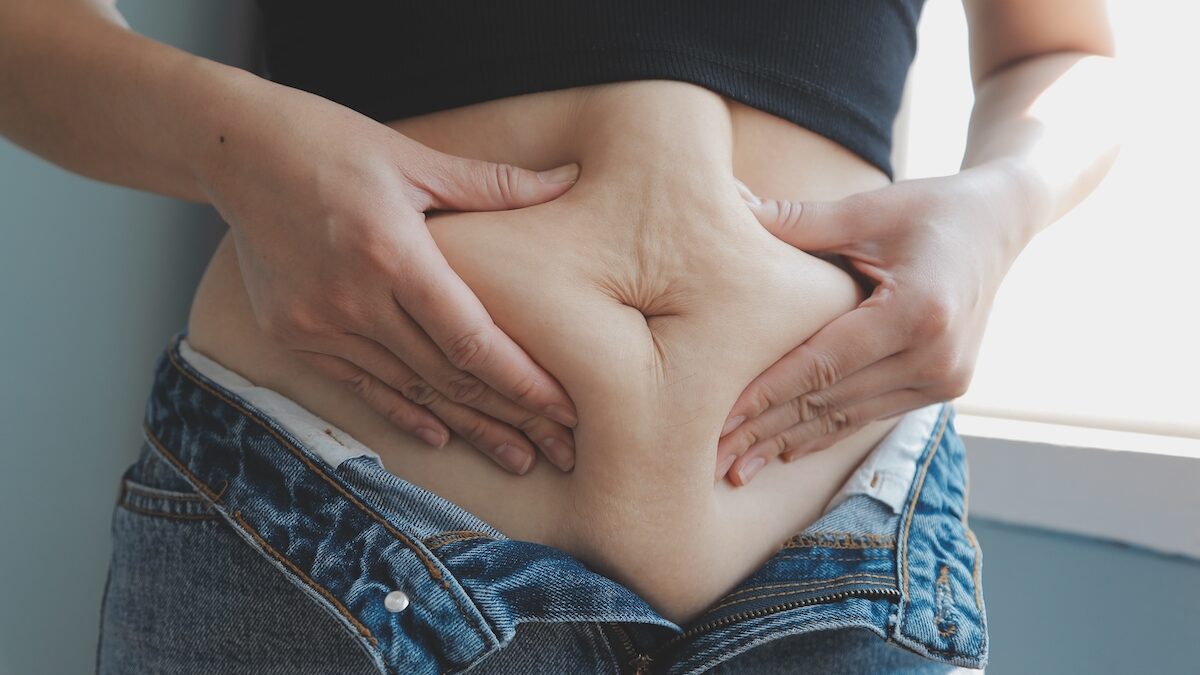
Long considered a simple reservoir of energy, fat is today recognized as a true metabolic organ, capable of influencing our health. By studying in detail the adipose tissue of people who lost a lot of weight after bariatric surgery, researchers from Imperial College London found that it returned to functioning more closely to that observed in thin people.
Significant weight loss “rejuvenates” abdominal fat cells
To reach this conclusion, scientists analyzed more than 171,000 subcutaneous fat cells taken from the abdomen in 70 participants.
Among them, 25 people suffering from severe obesity were followed before and after bariatric surgery. On average, they lost 22% of their body mass index, or nearly 25 kilos.
Using cutting-edge sequencing techniques, researchers discovered that after this weight loss, certain previously very altered fat cells found a profile much closer to that observed in people who had never been obese.
One of the most striking developments concerns a category of particularly stressed adipocytes. Very present before the intervention, they become much rarer after weight loss.
For the authors, this suggests that adipose tissue gradually regains a better capacity to store and release energy.
Aging cells shrink significantly after weight loss
The other major discovery concerns senescent cells.
These cells, sometimes referred to as “zombie cells”, no longer divide but continue to produce inflammatory substances capable of altering the functioning of neighboring tissues. They accumulate naturally with age, but also in people suffering from obesity.
The researchers observed that after surgery, the number of these cells decreased significantly. In particular, the expression of the CDKN1A (p21) gene, considered a major marker of cellular senescence, fell dramatically.
As summarized in the German scientific journal
Pharmazeutische Zeitungthis study shows that the senescence observed in several cell types of adipose tissue can be largely reversed through significant weight loss.
Good news… but not a makeover
However, researchers urge caution.
Because although abdominal fat seems to function healthier, certain signs of inflammation persist despite everything. Macrophages, immune system cells found in fatty tissue, remain partially activated after weight loss.
The authors even mention a form of “immune memory” or “immune scar”, which could explain why some people regain weight more easily after significant weight loss.
Finally, this study does not confirm that losing weight slows down the aging of the entire body. The analyzes only focused on the abdominal subcutaneous fat of people who had undergone bariatric surgery, a very specific context.
If these results open promising avenues for better understanding the links between obesity, aging and metabolism, further work will be necessary to find out if comparable effects can be obtained thanks to more moderate weight loss obtained through diet, physical activity or new treatments against obesity.