
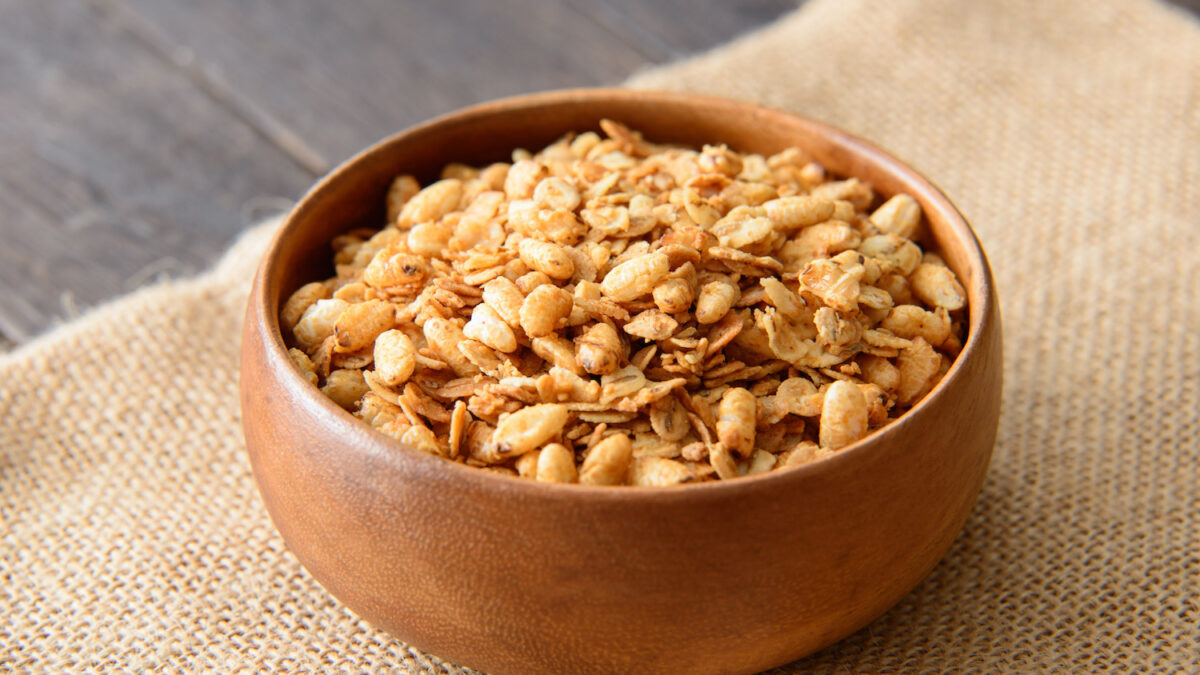
Rich in fiber and good fatty acids, granola is not a bad food. But its high energy density can quickly cause the counters to slip if you don’t pay attention to the portions and ingredients.
Why granola has such a positive image
Colorful bowl, yogurt, fresh fruit… On social networks and in advertisements, granola has become the embodiment of the “healthy” breakfast. A reputation based on very real nutritional qualities, but which only tells part of the story.
As Dr Jean-Michel Cohen recalls in a video posted on Instagram, “Granola has a super misleading health image because it’s oat flakes that are baked with honey or syrup.
In other words, there’s more to granola than just oats. Its production often involves the addition of honey, syrup or sugar in order to obtain the crunchy texture that makes it so successful.
Yes, it provides fiber… but also a lot of calories
This is where the whole paradox lies. Granola has real nutritional qualities. Oatmeal is high in fiber, which promotes satiety and can help curb cravings. The nuts it contains also provide unsaturated fatty acids, beneficial for cardiovascular health. But these advantages are accompanied by high energy density.
Dr Jean-Michel Cohen recalls that granola provides
between 430 and 500 calories per 100 gramswith a significant amount of fat and carbohydrates. He specifies: “We have lipids 12 to 25 grams, carbohydrates a little less 50 to 65 grams.
So the problem isn’t the granola itself, but how easily portions can become generous. A full bowl is often much more than the recommended amount.
The real health reflex begins at the label
Faced with a shelf where all the packages display promises of naturalness, it becomes essential to take a few seconds to read the composition.
Not all granolas are the same. Some contain more honey, syrups or added sugars, while others favor a simpler, less sweet recipe. Comparing labels also allows you to evaluate the fiber, fat and calorie content before making your choice.
Another point often overlooked: the portion. A small amount is usually enough to reap the nutritional benefits of granola, especially when combined with natural yogurt or fresh fruit.
Pleasure is not the enemy of balance
Dr Jean-Michel Cohen’s analysis recalls an essential rule in nutrition: no food is absolutely good or bad. It all depends on its frequency of consumption, its quantity and the overall balance of the diet.
Granola retains its place in a varied breakfast thanks to its fiber and good lipids. On the other hand, its image as a “light” product deserves to be qualified. Considering it as a gourmet food rather than as a limitless product often allows you to enjoy it with more serenity.
Ultimately, the best strategy is less about eliminating the foods you love than about getting to know them better. An approach that reconciles pleasure, balance and sustainable eating.