
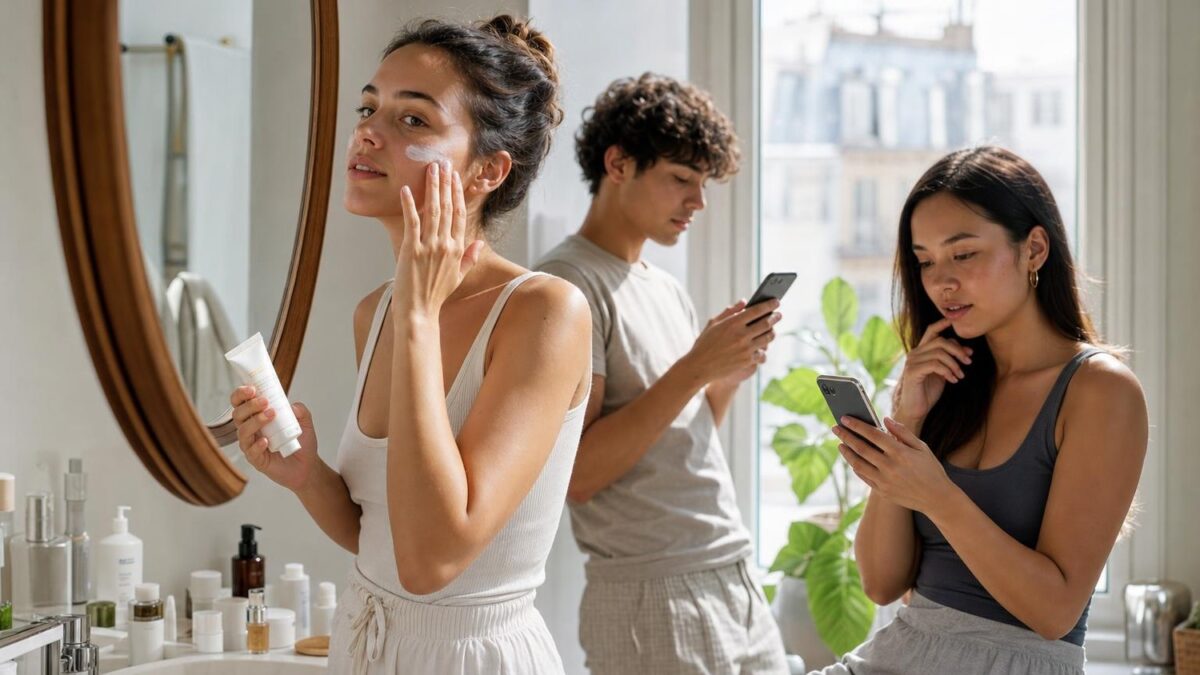
In surveys on skin protection, one figure raises eyebrows: 37% of Generation Z adults do not wear a
sunscreen only when someone insists, according to the American Academy of Dermatology. While sunburn increases the risk of skin cancer and early wrinkles, many still reserve SPF for the beach weekend. The gap between what dermatologists say and our daily actions raises the question: if the product is considered safe, why is it used so little every day?
However, the medical message is clear. Sunscreen is an essential tool to protect our skin from harmful UV rays, prevent premature aging and reduce the risk of skin cancer. The key point to remember: any sunscreen is better for your skin than no protection.” In June 2026, the Food and Drug Administration even authorized a new filter, bemotrizinol (BEMT), after lengthy tests. In short, the light is green on the safety side, but not yet on the habits side.
Sunscreen every day: closely monitored filters, not left running free
The American Academy of Dermatology recommends broad-spectrum protection against UVA and UVB, with at least one
SPF 30 and good water resistance. Mineral filters such as zinc oxide or titanium dioxide remain on the surface of the skin, so-called chemical filters (avobenzone, homosalate, etc.) penetrate a little more. According to a study, certain filters are found in the blood, which led the FDA to request additional tests, without concluding a proven toxicity for humans.
For specialists, the problem comes mainly from rumor. As concerns grow around the safety of certain ingredients, it is crucial to separate scientific evidence from misinformation. Many fears come from misunderstandings around scientific studies, sensationalist headlines and a general distrust of chemicals. People often forget that even water is a chemical – it’s all about dose and context.
Between TikTok myths, SPF makeup and apps, the real obstacles of daily life
On TikTok and Instagram, “clean beauty” messages demonize certain filters and maintain the idea that sunscreen is necessarily “toxic”. The Yuka application adds another layer: it analyzes the INCI list and gives a score out of 100. Remember that Yuka mainly evaluates the composition, not the real effectiveness of the SPF, tested in the laboratory. As a result, many are looking for the perfect formula rather than a simple sunscreen that they will want to apply every morning.
Another blockage: the belief that SPF is only useful in the middle of summer, or that a foundation with SPF is enough. Dermatologists explain, however, that we never apply enough makeup to reach the indicated SPF, and that UVA rays pass through clouds like windows. Greasy textures, white marks on dark skin and the fear of spots end up discouraging daily use, even though light formulas exist.
Making sunscreen truly “wearable” in real life
Doctors suggest a simple rule: Every day you stay outside for more than 15 to 20 minutes, or near a sunny window, a facial SPF is helpful. The ideal is to choose a facial sunscreen broad-spectrumSPF 30 minimum, adapted to your skin type. Fluids like that of La Rosée, rated 100/100 on Yuka and designed for a light texture, a makeup base and without a greasy film, respond precisely to the need for comfort in the office as well as in town.
It is important to overcome the obstacles linked to the choice of products: for sensitive skin or pregnant women, mineral sunscreens are often recommended. However, a well-designed chemical sunscreen can also be a great alternative for those looking for a lighter or more subtle texture. In practice, having a tube on hand near the toothbrush or a stick in the bag can help integrate the application of SPF into the daily routine, making it more natural and less restrictive.
Sources
- Top Health
“The best in 2026 this sun cream sold in pharmacies is rated 100 100 on yuka”