
The investigation has only just begun, but the emotion is already immense. Monday July 27, a 25-year-old young woman died in a beauty institute located in Nice, after feeling unwell during a service. According to the first elements revealed by
Nice-Morningthe client suffered respiratory distress early in the afternoon. Despite the intervention of emergency services, she could not be resuscitated.
Yesterday, Wednesday July 29, three people were taken into police custody: two women, including the manager of the establishment, and a man. An investigation was opened for illegal practice of medicine, manslaughter and administration of harmful substances.
Syringes and injectable products found on site
Officially, the salon only offered classic aesthetic services, such as nail, hair and eyelash care. No injections were among the services offered.
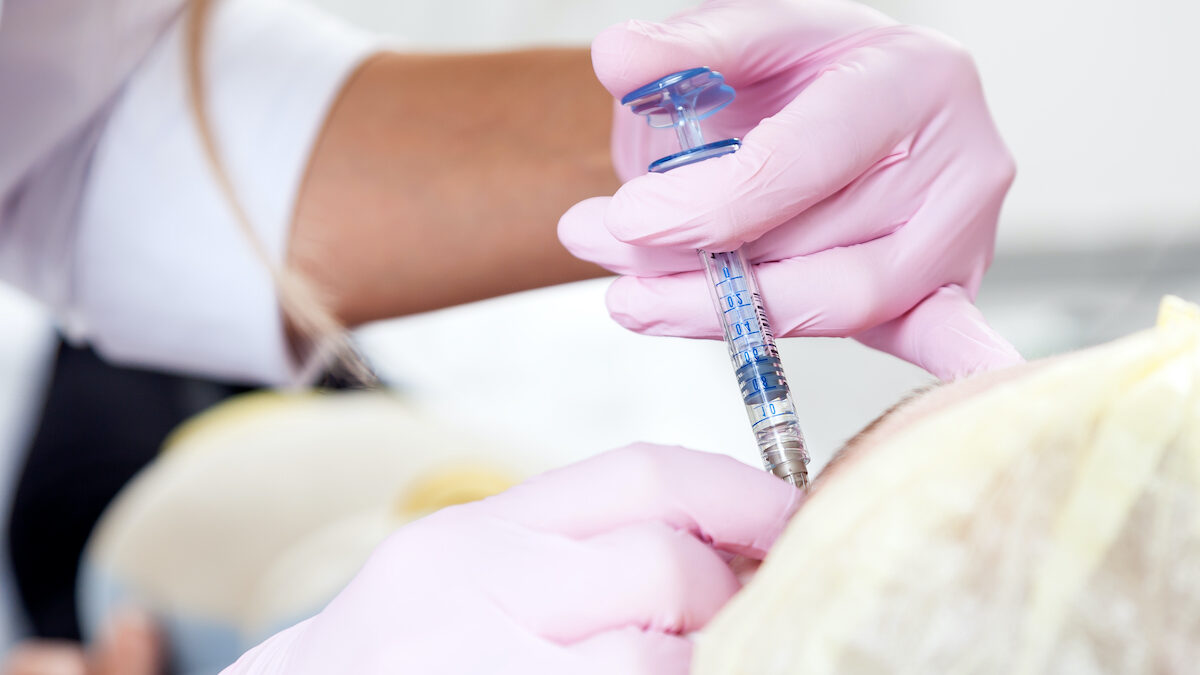
However, investigators discovered syringes, medications and various injectable products on site. According to the first elements of the investigation, the young woman came to receive a botox injection. At this stage, however, no formal link has been established between this alleged injection and his death. The results of the autopsy and toxicological analyzes will be decisive.
But for several years, health authorities and professionals have been warning about the increase in illegal injections carried out outside any medical framework, with products whose origin and quality are not always guaranteed.
“A bad injection can kill“
In a previous case, True Medical had questioned Dr. Fatya Assadi, an aesthetic doctor, as reports of illegal injections multiplied. For her, these acts cannot in any way be trivialized.
“It takes a minimum of training, and several years of study to know the anatomy, the gestures and to be authorized to perform this type of act.”
The difference between a trained doctor and someone practicing illegally does not only lie in the technical gesture, but also in the ability to react in the event of an emergency.
“An illegal injector will be completely helpless in the face of these complications, because she does not have the knowledge to react.”
However, the complications can be extremely serious.
“A bad injection will not only not give the desired effect… it can kill.”
Dr. Assadi recalls that poorly performed injections can cause necrosis, loss of vision, severe infections, septicemia and, in the most dramatic cases, lead to the death of the patient.
“We can no longer wait for new drama”
Following this new drama, Dr Éric Essayagh, co-president of the Circle of Good Practices in Aesthetic Medicine and aesthetic doctor in Nice, sent a clear message. Because this death is unfortunately not an isolated case but the symptom of a phenomenon which is growing.
“Today, we estimate that more than 40% of aesthetic injections are carried out outside the medical setting, in apartments, institutes or places that escape all control. This clandestine market has become a real public health issue.”
While recent regulatory advances are going in the right direction, they remain insufficient in the face of networks that continue to recruit on social networks. For the specialist, it is now essential to strengthen controls, dry up supply chains and allow patients to more easily identify qualified practitioners.
“Each new tragedy is one tragedy too many. We cannot wait for a third death to consider that there is a public health emergency.”
Social networks also in the viewfinder
This drama thus highlights a system much larger than a few isolated practices. Behind the injections offered at knockdown prices by people without medical qualifications hides a real organization, fueled by sometimes counterfeit products and widely promoted on social networks.
According to Dr. Assadi, this is the crux of the problem:
“On TikTok, everything looks nice and easy. Unbeatable prices, spectacular results… but that’s not the reality.”
According to her, this content mainly targets a very young audience. “You are 18 or 20 years old, you see these results, it’s quick, cheap… if you are not at least informed, you go for it.”
In medical practices, practitioners now see patients arriving every week who are victims of clandestine injections, sometimes simply disappointed with the result, but sometimes also carrying significant complications.
An expected electroshock
For Dr Assadi, this death following that of Villeurbannes last March must mark a turning point.
“These deaths are a high point. One death is a terrible thing. I hope this will lead to much more incisive regulation.”
She believes that the sanctions still remain insufficient given the scale of the phenomenon. “Even when these people are caught, the sentences are not always commensurate with the harm. All of this needs to be rethought.”
Among the levers mentioned by professionals are stricter control of access to injectable products, increased monitoring of social networks and better public information.
For doctors, the question is no longer whether these practices are dangerous, but how long it will take before they are truly curbed.