
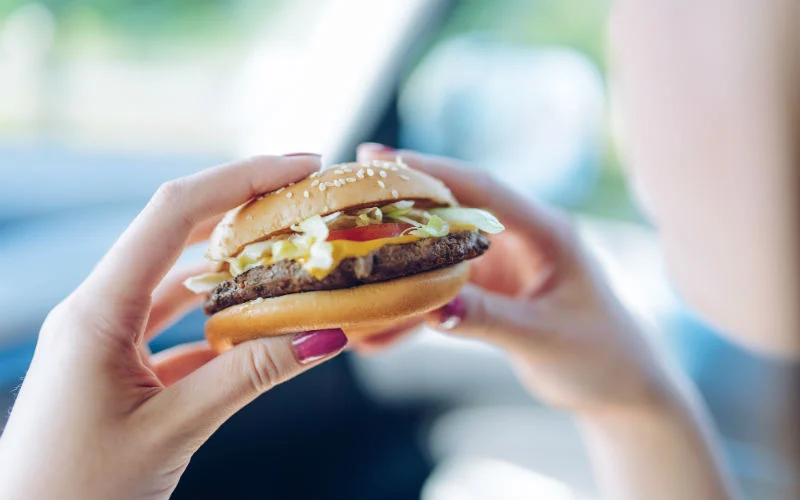
A packet of industrial biscuits slipped into the schoolbag, a burger swallowed in a hurry or a prepared meal reheated in the microwave after a long day… These habits, which have become commonplace, could have much more serious consequences than we imagine. A vast synthesis published in 2024 in the scientific journal The BMJ, associates the consumption of ultra-processed foods with 32 unfavorable effects on health. Which raises a worrying question: can these products really cause us to lose years of life?
This is precisely the alert launched by the American doctor William W. Li, trained at Harvard University Hospitals. Questioned by the Spanish media Men’s Health Spain, he affirms that “consumption of ultra-processed foods can reduce life expectancy by up to 10 years”. On his YouTube channel, he goes in the same direction: “It is scientifically proven that overindulging in ultra-processed foods reduces life expectancy by many years.” A statement that calls attention to. But what scientific data is it based on?
Why this doctor warns against ultra-processed foods
President of the Angiogenesis Foundation, William W. Li is often featured in the media as a Harvard-affiliated physician. His research mainly focuses on the links between diet, blood vessels, inflammation and certain cancers.
According to him, ultra-processed foods, often rich in refined flours, low-quality oils, sugars, salt and additives, promote obesity, type 2 diabetes and cardiovascular disease.
To support his point, the doctor relies in particular on an article from the Spanish media Men’s Health Spain, which relays the conclusions of the major synthesis published in the scientific journal The BMJ. The same article also cites researcher Javier Sánchez Perona, from the Spanish organization CSIC – Instituto de la Grasa. “This work is important because it highlights a higher health risk associated with the consumption of ultra-processed foods, regardless of the pathology studied.”
What do the studies really say?
William W. Li’s statements are indeed based on several recent scientific works. The synthesis published in 2024 in the scientific journal The BMJ brought together the results of dozens of studies relating to ultra-processed foods, defined according to the NOVA classification. The researchers found unfavorable associations for 32 health indicators, or nearly 71% of those analyzed.
The strongest links concern an increased risk of death from all causes, cardiovascular disease, overweight and obesity, type 2 diabetes and several mental health disorders.
Other works reach similar conclusions. A meta-analysis published in the scientific database PubMed shows that each 10% increase in the share of ultra-processed foods in the diet is associated with an increase of approximately 10% in the risk of death from all causes.
Along the same lines, the Harvard TH Chan School of Public Health reports that people consuming more than four servings of ultra-processed foods per day, compared to around two, have a 62% higher risk of mortality.
Can you really lose up to 10 years of life by eating this way?
An essential question remains: do these results really allow us to assert that ultra-processed foods cause a loss of up to ten years of life expectancy?
In reality, caution is required. The available works are essentially observational studies. They highlight associations between the consumption of ultra-processed foods and different health problems, but they do not demonstrate a cause and effect link and do not make it possible to precisely calculate the number of years of life lost.
Researchers from the Harvard TH Chan School of Public Health also point out that we should not put all ultra-processed foods in the same basket. Certain sugary drinks or certain prepared meals that are very high in calories seem to be of much greater concern than other industrial products, such as certain fiber-enriched breads. More than the consumption of an isolated product, it is therefore the entire diet which remains decisive for health.