
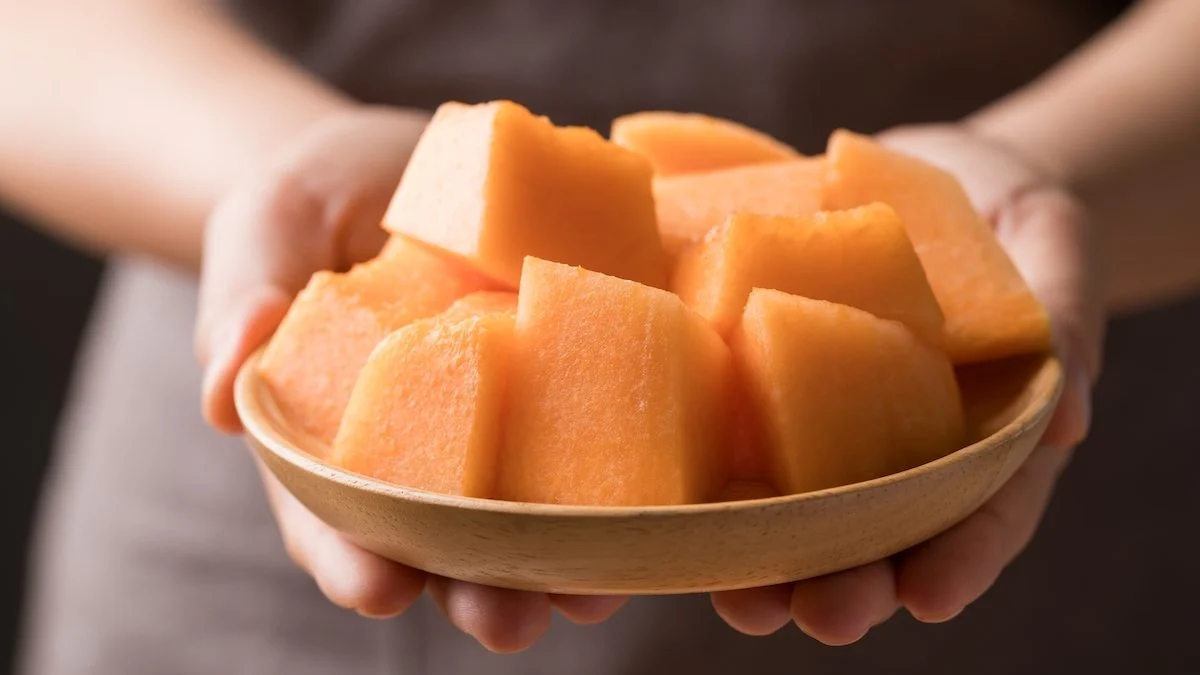
While you love melon, tragedy strikes: the one purchased earlier this morning cannot be consumed because it is not ripe. Fortunately, an easy-to-apply tip can quickly make it taste better.
Melon, a fruit bursting with virtues
Melon, particularly Charentais, is rich in water (nearly 90%), beta-carotene (provitamin A), vitamin C and potassium.
“It contributes to hydration and cellular protection, while promoting good transit thanks to its fibers. Its glycemic index (GI) is high, around 65, which means that it quickly raises blood sugar levels. Although it is low in calories, its sugar content (8 to 10 g/100 g) can accumulate when consumed in large quantities or combined with other high GI fruits,” confides Julie Boët,
dietician-nutritionist.
However, in people who are diabetic or tend to be insulin resistant, “It is better to consume it in small portions, during a meal. It is also rich in FODMAPs which can cause digestive problems in sensitive people. warns the expert.
Indeed, taken alone or at the end of a meal, especially after a rich dish, melon can ferment in the stomach and cause bloating in certain sensitive people. “It is therefore often better tolerated as a starter, or integrated into a balanced cold dish. relates the specialist.
How to choose a really tasty melon?
A few simple tips allow you to choose the sweetest melon you want.
- Weight : “of equal size, prefer the heavier one – a sign of good sugar and juice levels” ;
- Smell : “a sweet but not too overpowering scent at the base of the peduncle is often a guarantee of maturity”;
- Cracks around the peduncle: “this clue shows that the fruit came off ripe”;
- Network of “nets” well drawn on the skin: “an often reliable criterion for Charentais melons”;
- Origin : “favor French melons (Charente, Cavaillon, Quercy) in peak season (June to September), because they are fresher and picked when ripe”;
- Variety : “Yellow or green Charentais melons are the most fragrant. Avoid those with too pale flesh.
Unripe melon: how to give it more flavor?
Good news: melons continue to ripen even after being harvested.
“If your melon seems a little hard, let it ripen for 1 to 2 days at room temperature, never in the refrigerator (the cold kills the aromas). Once ripe, you can cool it for a few hours in the refrigerator before tasting. Cut, it must be consumed quickly because its high water content makes it quickly alterable.” warns Julie Boët.
On a daily basis, there are a few tips to enhance an unflavorful melon:
- “Add a little lemon juice or fresh mint to awaken its aromas”;
- “Serve it with a pinch of fleur de sel or a little pepper: this stimulates the taste buds and gives the illusion of more sugar”;
- “In a savory version, pair it with raw ham, feta or basil for an interesting contrast.”