
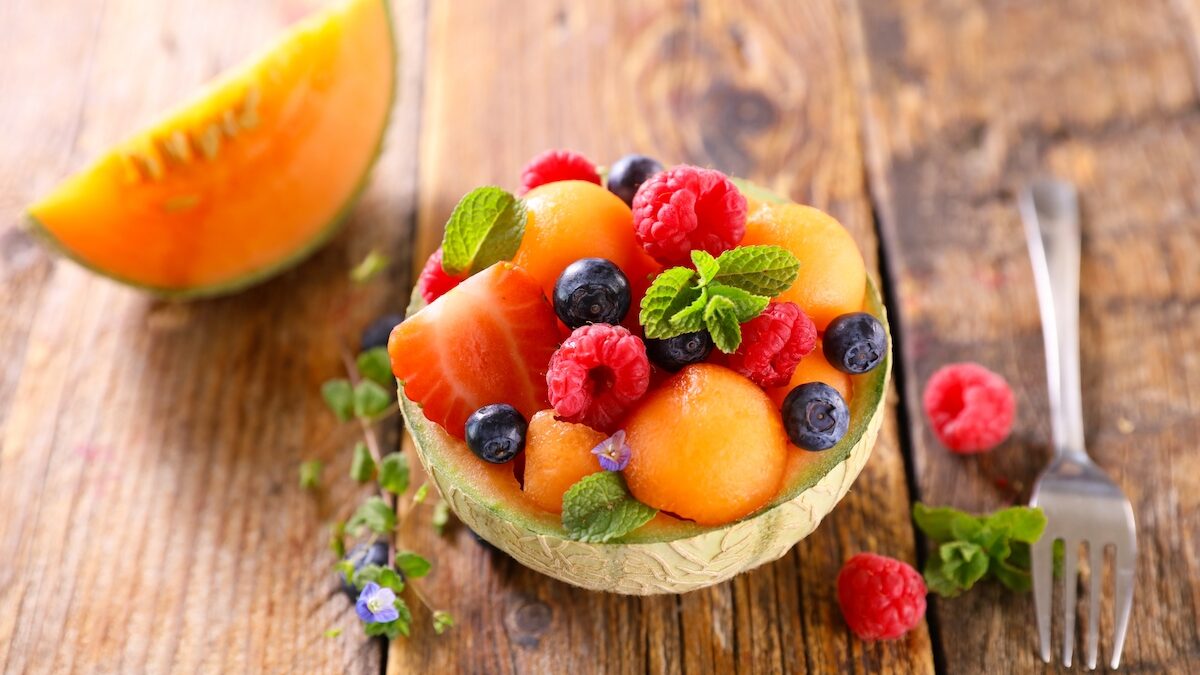
It’s hard to resist a slice of frozen watermelon or a wedge of ripe melon for dinner. But behind their image of healthy sweetness hides a less light truth: these prized fruits can disrupt the quality of sleep if they are eaten too late. For several years, nutritionists have observed a link between consumption of summer fruits in the evening and problems falling asleep. The reason: their fast sugar content and their high glycemic index. Alexandra Murcier, dietitian-nutritionist, enlightens us.
Summer fruits and sleep, a not always ideal duo
Watermelon, melon and peach are rich in so-called “fast” sugars. The latter are assimilated almost as quickly as those of a soda, with the effect of stimulating the production of insulin and generating additional energy which is not compatible with the relaxation necessary at bedtime. Result: increased alertness, more restless nights, poorer quality sleep.
Some people, including children, adults with sensitive blood sugar levels, or those with insomnia, are more vulnerable to these effects. For them, late consumption can be enough to disrupt the sleep cycle.
Watermelon, melon, peach… why they can disrupt the night
Nutritionists point out that these star fruits of summer have a relatively high glycemic index. A spike in blood sugar levels in the evening contradicts the body’s natural preparation for falling asleep. The body, busy regulating sugar, delays the rest phase and sometimes creates nocturnal awakenings.
Alexandra Murcier, however, qualifies: “I think it’s a shame to put fruit and soda on the same level. Indeed, certain fruits have a high glycemic index, but much less than a soda, and above all they provide very interesting nutrients such as vitamins, minerals, antioxidants, etc.“.
She emphasizes the importance of the evening meal: “If we have hypoglycemia that wakes us up at night, it is not the consumption of fruit that is the problem, but rather an unbalanced evening meal.“.
How to better choose your fruits in the evening?
The key lies not in the ban but in the right timing. Consuming these fruits at midday or as a snack limits their impact on sleep. Eating fruit at the start of a meal, combined with protein or fiber, also slows the absorption of sugar.
For a more peaceful evening dessert, choose fruits with a low glycemic index: plum, apricot, cherry, red berries or apple. Combined with natural yogurt or a handful of dried fruits, they guarantee a gourmet pleasure without compromising rest. As Alexandra Murcier summarizes: “To avoid this, you must compose your plate correctly for the main course: proteins, whole-grain starchy foods if possible and vegetables and in this case you can eat fruit without any problem.“.