
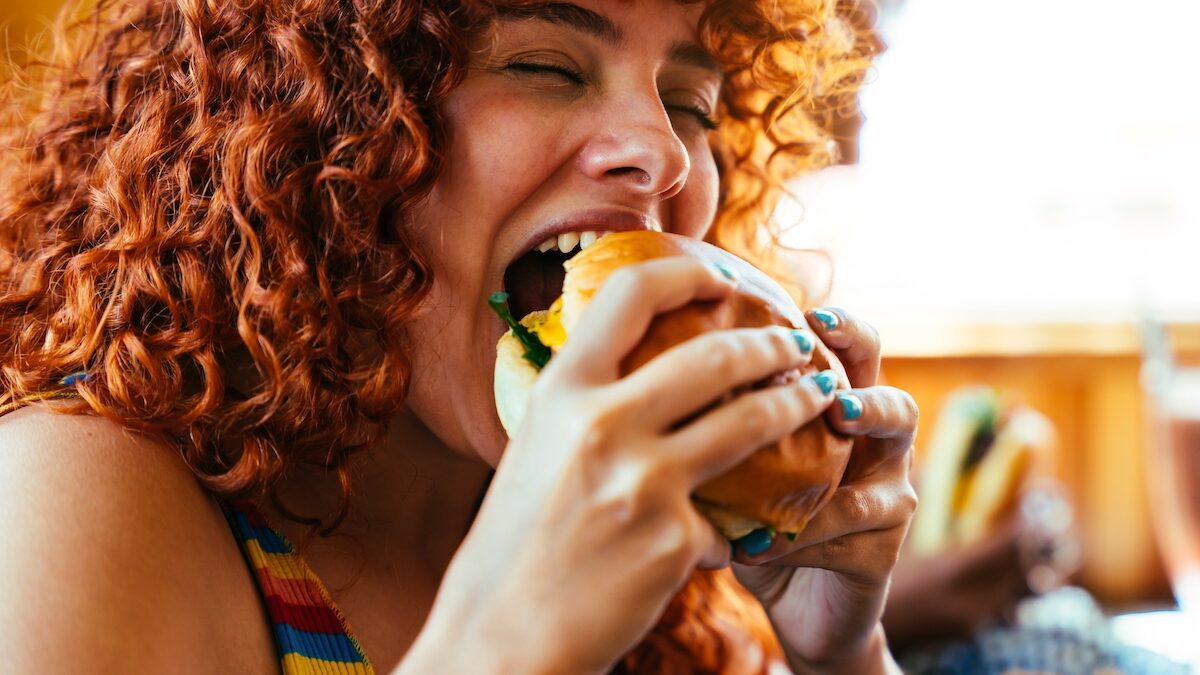
We knew about “food” influencers, who test a new recipe, discover an address or reproduce the latest culinary trends. But another category of content has established itself on the networks: videos which feature increasingly rich, generous and spectacular dishes.
XXL tacos, fried chicken, overloaded pizzas, burgers crumbling under melted cheddar… Here, the more there are, the more it must arouse desire. A particularly effective trend to attract attention, especially among younger people.
“The fatter it is, the more tempting it is“
“On TikTok and social networks, certain food content is enjoying impressive success: burgers dripping with cheese, ultra-dressed pizzas, XXL sandwiches, desserts overflowing with cream or crispy fries”observes Julie Boët, dietician-nutritionist.
But why do these images work so well? Because they are specially designed to stimulate our senses.
“Food pleasure begins well before the first bite. Sight plays an important role in appetite: the colors, the textures, the crispness that we imagine, the cheese that stretches or flows… The sense of smell, the sounds and the memories associated with food also participate in this experience.”
On the networks, all these codes are pushed to the extreme. A pizza with cheese stretching several centimeters or a burger dripping with sauce will necessarily look more spectacular on screen than a plate of roasted vegetables. Result: fat, crispiness, tenderness and XXL portions become real visual arguments.

The risk: ending up associating pleasure and junk food
Be careful, reassures the dietician: occasionally eating a burger, a pizza or a very rich dessert is not problematic. “Once in a while, no problem: eating a very rich dish because you want it is an integral part of a balanced diet.”
The problem may arise more when these images become omnipresent.
By seeing very fatty, very sweet, very salty or very processed foods presented on a daily basis as particularly desirable, we can end up integrating the idea that food pleasure necessarily involves these types of products.
“This can gradually reinforce a misleading association: fatty, generous and very rich would be synonymous with pleasure, while a balanced diet would be synonymous with restriction or unenjoyable meals”explains Julie Boët.
A representation that she also finds in her practice.
“Some patients think that a “pleasure” meal must necessarily be very rich and that eating a balanced diet means giving up indulgence.”
Eating balanced does not mean eating sad
However, this opposition between a balanced diet and indulgence has no reason to exist.
“A well-seasoned homemade pasta dish, a homemade pizza, a vegetable gratin, a beautiful colorful salad or a simply prepared dessert can be just as satisfying”recalls the nutritionist.
In other words, a dish doesn’t have to be overflowing with cheese or sauce to be enjoyable.
A plate can be crispy, tender, fragrant, colorful or generous while relying on nutritionally interesting foods.
“In consultation, I explain to my patients that it is important to regularly enjoy eating mindfully, to enable them to achieve their goals.“, she continues.
And “forbidden” foods sometimes become even more attractive
Another phenomenon to take into account: restriction can strengthen attraction.
“The more we repeat to ourselves that a food is bad and that we should definitely not eat it, the more it can occupy our mind and become attractive,” explains Julie Boët.
The gourmet videos that appear repeatedly in our news feed can then maintain this desire. This obviously does not mean that a burger video alone will cause a food compulsion.
But our environment plays a role in our desires, our habits and our representation of pleasure.
Should junk food videos be banned?
There is no question of demonizing burgers, pizzas or processed products.
“A burger, a four-cheese pizza or a very indulgent dessert can perfectly have their place in a balanced diet. What matters is their frequency and the place they occupy in the overall diet”underlines the dietitian.
And also be careful not to put all processed foods in the same basket. Being transformed does not automatically mean being unhealthy. Canned vegetables, bread or certain dairy products are also processed and can fit perfectly into a balanced diet.
The challenge is therefore rather to diversify our representation of food pleasure.
Pleasure should not be reserved for very rich foods
A nice plate of roasted vegetables, pasta with tomatoes and herbs, a well-seasoned fish, a mixed salad or a homemade dessert can be just as delicious.
“A balanced diet can be generous, colorful, crispy, melting, fragrant and very delicious. It is entirely possible to enjoy eating homemade dishes based on raw foods, without needing to systematically make them extremely rich so that they appear appetizing“, recalls Julie Boët.
The message is therefore not to feel guilty in front of an XXL burger video. Nor do you remove pleasure foods from your diet. But rather keep in mind that TikTok only shows a very spectacular version of delicacy (which influencers sometimes pretend to taste before spitting out off camera… thanks for the editing). And fortunately, food pleasure is not limited to dripping cheese, XXL portions and fried foods.
“In consultation, I try to get out of this opposition between “eating healthily” and “treating yourself”
says Julie Boët. “A very rich meal can have its place occasionally, without guilt or compensation. But if food pleasure is systematically associated with XXL portions, dripping cheese or ultra-generous desserts, it can be interesting to remember that this is only one representation of pleasure among many others.”
With a strong idea: food pleasure is not limited to junk food.