
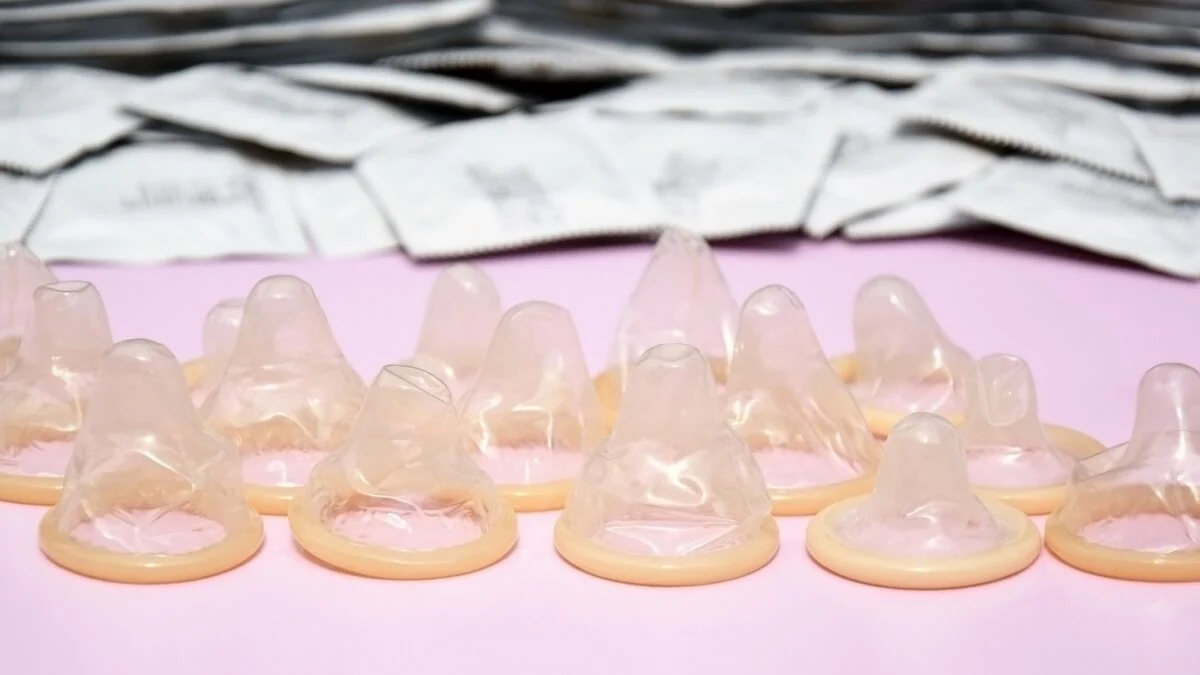
Nearly 300,000 male condoms sold in France are in the sights of health authorities. The Directorate General for Competition, Consumer Affairs and Fraud Control (DGCCRF) and the Directorate General for Health (DGS) describe products that are either defective or completely outside European standards. At the heart of the alert, more than 40,000 non-compliant condoms have already been purchased by French consumers.
In recent weeks, checks carried out in pharmacies, specialized stores and on large marketplaces such as Amazon have revealed around thirty references in question, according to press releases relayed by
ReminderConso. Some do not display any CE marking, others, although certified, present a risk of tearing or perforation. The authorities are therefore asking the French to check their boxes and adopt new purchasing habits.
Non-compliant condoms: what the DGCCRF discovered in France
According to the DGCCRF, around a thousand boxes, or “more than 40,000 non-compliant condoms”, were sold on the Internet, “mostly” by “Asian” distributors. These products, lacking CE marking or European conformity assessment, were sold largely without instructions in French, which further complicates information for buyers.
In store, laboratory tests revealed two references that were CE marked but considered dangerous. The DGCCRF mentions a “risk of bursting” for one and “the presence of perforations” for the other, which led to the recall of approximately
260,000 units between the end of May and the beginning of August 2026. These batches mainly concern the brands My Lubie, Friday Bae, Okamoto (two references) and Sagami Original 002, sold in pharmacies, sex shops or brands such as Monoprix and Passage du Désir.
Risk of pregnancy and STIs: why these condoms are worrying in France
For the health authorities, these defects are not trivial. The DGCCRF and the DGS remind that non-compliant condoms can “present serious risks to the health and safety of users: sexually transmitted infections, unwanted pregnancies“. In the event of bursting or micro-perforations, the barrier supposed to retain sperm or secretions can disappear without the couple realizing it, with a risk of STIs or unplanned pregnancy.
Two situations therefore overlap: condoms sold online without prior inspection, and batches CE certified but recalled afterwards. In practice, a purchase in a pharmacy remains more regulated than an order on a marketplace, without completely excluding a defective batch. To date, authorities say they have not received any incidents linked to these references, while calling for STI screening and a pregnancy test in case of late periods.
Buying condoms in France: reflexes to avoid risky batches
The DGCCRF and the DGS are precise: when purchasing online, you must pay attention to “the identity and reliability of the seller”, “the presence of the CE marking affixed by the manufacturer” and “a user manual in French”, but also to “the condition of the packaging and the expiry date”. Damaged packaging, an unknown brand or a poorly detailed product sheet on third-party sellers should alert the buyer.