
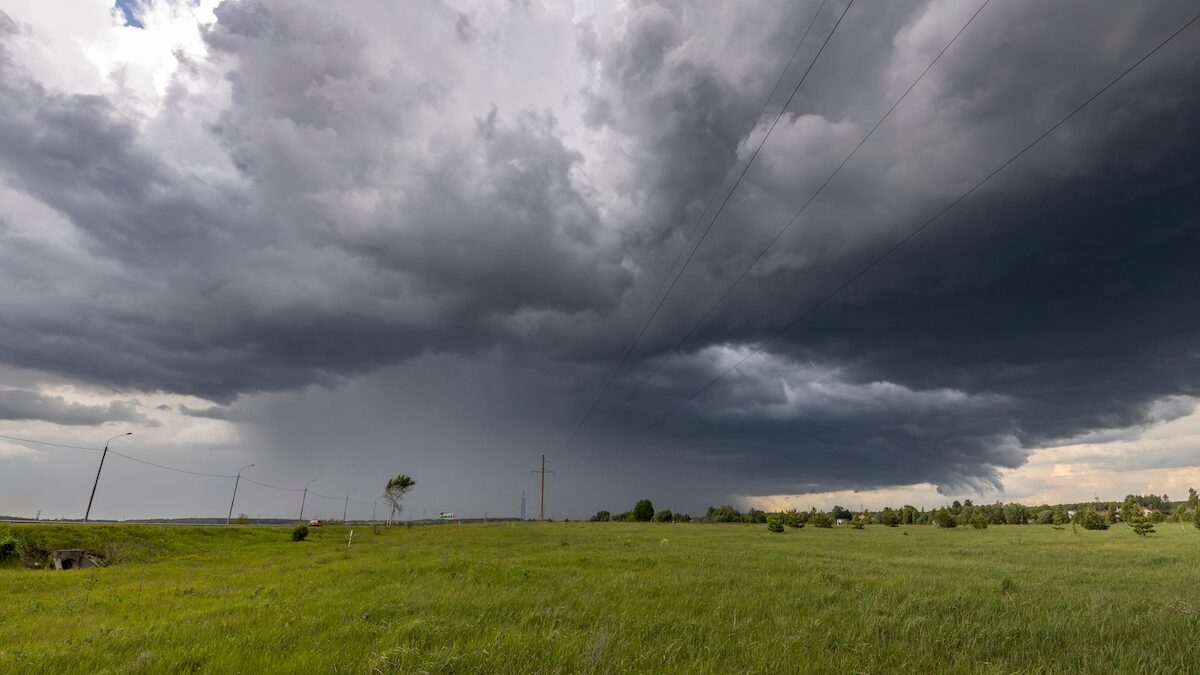
The tornado which partially destroyed the village of Pomas, in Aude, and left around forty injured on August 24, 2026 is a reminder of the violence that sudden winds can reach. When faced with a storm, what should you prepare, what trips to avoid and how to react at home or outside? Dr Gérald Kierzek, emergency doctor and medical director of True Medical, details the actions to take before, during and after the episode.
A violent storm in Aude
A strong stormy deterioration hit the south of France on Monday August 24, with 20 departments placed on orange alert by Météo-France. Violent rain, hail and gusts of up to 130 km/h accompanied several whirlwind phenomena, including tornadoes reported in Aude and Hérault.
In Pomas, near Carcassonne, a tornado tore off roofs and caused significant damage, while 2,800 homes were deprived of electricity.
Before the storm, things to do at home
For the doctor, protection begins well before the first gusts. “Storms and strong winds can have disastrous consequences if you and your loved ones are not prepared. Consider making an emergency plan in advance.“
It is therefore necessary to anticipate everyone’s movements and plan the behavior of the whole family if the situation deteriorates.
“Make sure everyone knows where to go, what to take, and how to get to safety. To avoid panic, you must plan in advance where everyone will take refuge.“
Dr Gérald Kierzek also insists on the need to designate in advance a place where loved ones can meet. “Set up a rally point where the whole family will come together during a storm. Choose the safest place in your home“. The choice of this piece should not be left to chance.
“Avoid caulking on upper floors because winds can destroy roofs and cause chimneys to fall. Also pay attention to basements if there is a risk of flooding.“
What numbers and contacts should you provide in the event of a storm?
A storm can also complicate communications and temporarily separate members of the same family. The doctor therefore advises preparing the necessary information before you need it.
“Make a contact list with the details of emergency services, your insurance, relatives you can contact in the event of an emergency, as well as the school and work numbers of each member of the family.“
He also recommends knowing where to go in the event of an evacuation. “Know where the nearest reception and rescue centers are, especially if you live in a risk area.“
“Generally, schools, gymnasiums, town halls or social centers are used. These places will have medical care and provisions for survivors or evacuees.”
The emergency kit to prepare before the arrival of strong winds
When time is short, searching for equipment in a hurry can become complicated. Dr Gérald Kierzek therefore advises building up your reserves in advance.
“Don’t forget to bring an emergency kit which should at least include water and food, a first aid kit, flashlights and batteries.“
Important documents also need to be protected before the storm arrives. “Finally, don’t forget to take important documents such as your family’s identity papers in a safe place.“
The first step is to plan for what may become difficult to find or use if conditions deteriorate quickly.
“The first thing to do is to stock up on basic necessities (drinking water, food, lamps, batteries, candles)…“
To monitor the evolution of the situation, the doctor also recommends: “Bring a battery-powered radio to keep you informed of the situation outside and tune into local radio stations.“
What to do just before a storm arrives?
Preparation also takes place outside the house. Certain elements can be weakened by the winds and become dangerous for the occupants or the home.
“You can make your home safer by pruning trees that may fall on your house. Also remember to cut dead branches.“
The doctor also recommends:Clean gutters, drains and downspouts“. Before the weather deteriorates, you must finally check the housing coverage: “Finally, make sure your roof is in good condition.“
Weather alerts sometimes make it possible to anticipate the arrival of a dangerous episode, without always being able to precisely determine its strength. “Storms are often the subject of weather warnings, but it is difficult to accurately predict the intensity of the winds.“
Dr Gérald Kierzek therefore invites us not to wait. “It is therefore more prudent to act and prepare your home as soon as the alert is given“. The time available may be very short: “Know that you only have a few hours to secure everything and save as much property as possible.“
What objects should be sheltered before strong gusts?
Before the winds arrive, several actions can help limit the dangers around the home:
- Unplug electrical appliances;
- Secure or shelter anything that can be easily blown away by the wind and could injure someone (garden furniture, flower pots, etc.);
- Put your vehicle under cover;
- Close the doors and windows of your home.
Before the storm, where should your loved ones and pets be?
When the weather threatens to change, knowing where your loved ones are avoids having to search for them when conditions become dangerous. Animals must also be protected before the winds become too violent.
“Reunite your family or find out where exactly they are.“
In case of absence, the doctor advises asking for help from those around you: “If you are away from home: contact your neighbors and ask them to secure your home as much as possible.“
During the storm, what to do to stay safe
When a storm hits, the general rule is to avoid travel. “During a storm, the authorities strongly recommend not to travel and to remain confined to safe places.“
Dr. Gérald Kierzek still considers the case where travel cannot be avoided or when the weather deteriorates while you are already on the road.
“Report your movement to a loved one and drive slowly and listen to a radio to keep yourself informed.“
Storm on the road, areas to absolutely avoid
The diversions put in place must be respected. “Be very careful and respect the diversions put in place. Above all, do not take a submerged route.“
The doctor also advises:Avoid driving near homes as much as possible because objects are likely to fall on your vehicle.“. Two other areas should be particularly avoided: “Avoid forests and the coast.“
Should you pick up your children from school during bad weather?
The desire to go pick up your children can be immediate when the weather becomes worrying. However, Dr Gérald Kierzek relays the authorities’ recommendation: “The authorities recommend not taking the risk of picking up your children from school in the event of severe weather.“
“Children will be taken care of by educational teams and emergency services in school or after-school settings. Ask your child’s establishment for more information.
What to do if the storm surprises you outside?
When the gusts start while you are outside, you must quickly seek protection. “If you are outside, immediately take shelter in the nearest building or in your car with the windows closed tightly.“
People staying in a campsite or mobile home must also go to a suitable building. “If you are on a campsite or in a mobile home, head to the nearest secure building. These places do not offer optimal protection.”
“If you are on land and have no shelter, lie down as close to the ground as possible and cover your head.
What to do during a storm when you are at home?
Once sheltered, do not go out to inspect the damage or attempt to move objects. “Do not go out because you could receive projectiles which could injure you.“
Inside, the doctor also recommends: “Stay away from bay windows.“
The phone should be used sparingly. “Don’t overuse the phone! Leave the lines free for emergency services and conserve your battery as much as possible. If there is an outage, you will not be able to charge it.“
Why should we follow the instructions of the authorities?
“Depending on the severity of the situation, the authorities may ask you to evacuate your home. Listen to them and follow their directions.”
In other circumstances, staying at home may on the contrary represent the safest solution. “Conversely, they may authorize you to stay there for your safety or health.“
After the storm, precautions to take before going out
The apparent end of the strongest gusts does not necessarily mean that all danger has disappeared. “To begin with, never leave your shelter until the storm is completely over and remain extremely vigilant.”
“If you notice debris still flying or moving, stay indoors. Do not stay sheltered near objects that may fall or under a tree.”
Cables that have fallen to the ground must also be kept out of reach: “Do not touch electrical cables that have fallen to the ground.”
How to inspect the damage without putting yourself in danger?
Once the storm has passed, damaged buildings should be approached with caution. “Inspect the damage with caution… Do not enter a building that is excessively damaged and likely to collapse.”
Dr Gérald Kierzek also advises: “Use a flashlight instead of candles. The storm may have caused gas leaks.
Electrical installations also require special attention: “Take precautions with electricity meters and cables, especially if they are damaged.”
How to help victims after a storm?
Not all injuries require the same actions. “Some injuries do not necessarily require emergency services. Take care of minor injuries using your first aid kit.
“When faced with a person stuck in rubble or injured, notify emergency services immediately and only perform actions for which you are qualified. Report injuries or victims by calling for help.
The doctor also warns against unnecessary travel: “Do not move them, unless there is an immediate risk of walls, trees, roofs falling, etc.“.
If you are not injured and your home remains sufficiently safe, other help may become necessary around you. “If you are unharmed and your home has not suffered too much damage, help your neighbors or people in difficulty who may be in shock.”
In Aude, accommodation centers are available: the Salle multipurpose in Pomas and the Tuilerie in Limoux. The Red Cross is on site as well as 115 firefighters including 14 specialists in urban search and rescue, supported by a dog unit.