
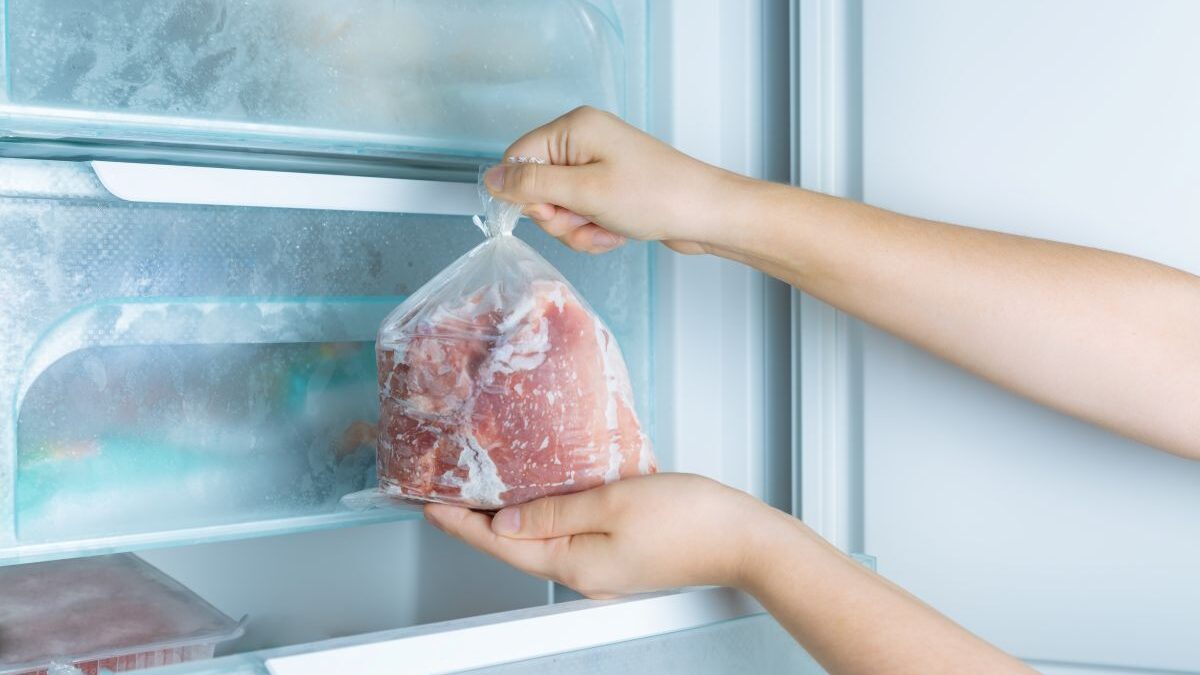
We’ve all already saved a steak in an emergency by putting it in the freezer. However, a poorly adjusted device can turn this good idea into a risk offood poisoning. Temperature too high, bin full to bursting, meat frozen the day before its use-by date (Best-by date)… The errors pile up. In a viral video, a French butcher reminds us that there is a very simple rule number 1 to respect.
This professional is the butcher from Boucherie Jumeaux, who shares his advice on Instagram @boucheriejumeaux, relayed by Marmiton. For him, the priority is to freeze meat at -18°C minimum, and only when it is still very fresh. He summarizes: “The lower you go in temperature, the better it will be for the meat.”
Rule #1: freeze meat at -18°C
The butcher reminds us that the freezer is a device with very specific rules. His first instruction: set the thermostat to -18°C and check that the “very cold” mode really works. Below, the meat remains stable; above, each opening raises the temperature.
According to ANSES, “almost half of domestic refrigerators in Europe have a temperature above 6°C, which is above the 4°C recommendation for optimal food preservation“.
ANSES also emphasizes that a “temperature below +4°C considerably slows down the growth of micro-organisms“. Dr. Gérald Kierzek, emergency physician and medical director of True Medical, recalls for his part that “theThe cold chain is essential to avoid food poisoning.
In his video, the butcher also insists on filling: if the device is more than 75% loaded, the ventilation no longer circulates. Cold air goes bad, some packages thaw slightly then refreeze, which spoils the meat.
To keep this cold, the craftsman recommends a little cleaning every six months. We empty the drawers, defrost, then wash the walls with white vinegar. It’s a bit tedious, but the result follows: “Your freezer will smell good and be perfect” he assures.
A clean appliance freezes faster, makes less ice and maintains temperature better, which protects the texture and taste of the meat.
Meat that will expire: the DLC, a false good deal
The second rule is just as firm: forget the last minute “rescue”. “Once thawed, the bacteria will grow even more. And then it’s food poisoning”warns the butcher.
Freezing meat the day before its expiry date means putting already numerous bacteria to sleep. The Ministry of Agriculture explains that after thawing, their number can be multiplied by 1,024 in certain cases. Freezing therefore does not reset the counter, it only freezes it.
To stay calm, it is better to decide when shopping what will be eaten fresh and what will go in the freezer. We only freeze meat that is still appetizing, without odor or questionable liquid. The pieces intended for frozen food are immediately put in closed bags, dated, then stored in a dedicated drawer. We limit waste and we know what we eat.
Cold chain and defrosting in the fridge
Finally, on this point, the butcher is categorical: “If you do not respect the cold chain and you freeze a product, you may have meat that will be less tasty, or even worse, you may have food poisoning.”
He then recommends slow defrosting in the refrigerator, for about 24 hours, rather than at room temperature. Respecting the cold chain from the store to the plate remains the best protection against unpleasant surprises.