
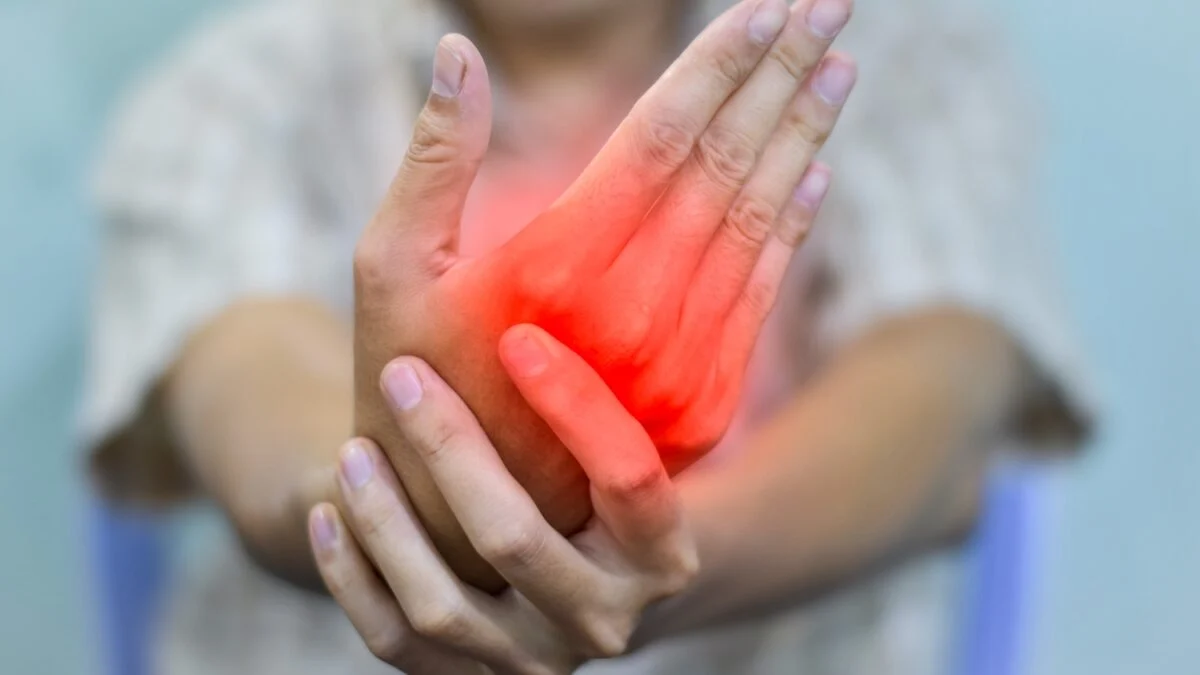
For years, their treatments were not enough. Biotherapies and targeted drugs have followed one another without succeeding in lastingly controlling the disease.
At Charité – Universitätsmedizin Berlin, six patients suffering from a particularly severe form of rheumatoid arthritis accepted a radically different approach: their own immune cells were collected, modified in the laboratory and then reinjected in the form of a CAR-T therapy targeting B lymphocytes.
After a single infusion, the results of this first phase are striking: all six patients saw their disease activity decrease and three were in prolonged remission without treatment up to a year after the intervention.
When the immune system itself maintains the disease
Rheumatoid arthritis occurs when the immune system attacks the joints. The inflammation causes pain and swelling and can ultimately impair mobility.
Most patients today can be relieved by treatments that slow down this reaction. But some remain unsuccessful despite several therapeutic lines. The six study participants, three women and three men aged 31 to 69, had received between three and eight biological or targeted treatments. Their disease remained very active, with DAS28-CRP scores between 4.7 and 6.4 (a standardized score to assess disease activity, number of affected joints, inflammation, etc.)
Berlin researchers took the gamble of attacking a particular population of immune cells:
memory B cells. They can persist in the body and continue to produce antibodies that attack the patient’s own tissues.
“One possible reason could be pathogenic B cells, memory cells of the adaptive immune system that can survive in lymph nodes, bone marrow or joint tissue after infection, where they produce harmful antibodies against the body’s own tissues and continually reignite inflammation.explains Professor David Simon, from the rheumatology and clinical immunology department at Charité.
The objective: to eliminate them sufficiently deeply to allow the immune system to start again on new bases.
CAR-Ts want to erase the “memory” of the disease
Already used against certain blood cancers, CAR-T cells are made from the patient’s T lymphocytes. These are genetically modified to recognize a specific target: here, the molecule CD19present on the surface of many B lymphocytes.
“The surface molecule CD19 is the distinctive marker of many B cells, whether pathological B cells in blood or lymph cancers or defective B cells in rheumatoid arthritis; it could be compared to an identification tag. To enable CAR-T cells to detect and eliminate the cells responsible for the disease, we provide the patient’s immune cells with this precise information: a sort of sensor that recognizes the CD19 molecule.”explains David Simon.
After a short preparatory chemotherapy, the CAR-T cells are reinjected. They then look for cells carrying CD19 and eliminate them, including in the lymph nodes, bone marrow and joint tissues.
Analyzes show a profound reduction in targeted B lymphocytes and a drop in autoantibodies characteristic of the disease. Then, when the B cells reappear, their profile appears different.
“When the B cell system subsequently recovered, it was mainly naive B cells, which had not yet been shaped by the disease, which returned“, explains David Simon. “In contrast, previously present B cells directed against the body’s own tissues were initially undetectable in almost all treated patients, indicating that treatment can effectively reset failing immune memory“.
Protective antibodies acquired through previous vaccinations, particularly against chickenpox and tetanus, remained detectable.
Three patients in remission, but caution remains in order
At week 36, five of six patients had achieved at least one ACR20 response, corresponding to at least a 20% improvement in disease endpoints. Four achieved an ACR70 response, an improvement of at least 70%. Three were in remission according to the DAS28-CRP score.
All had fewer painful and swollen joints. And three were able to go up to a year without medication for their arthritis.
“Disease activity markedly decreased in all six patients. (…) Three patients were in prolonged remission without any medication for rheumatoid arthritis“, reports Professor Gerhard Krönke. “This is particularly notable given that none of the established treatments had previously been able to sufficiently relieve their symptoms“.
But it would be premature to talk about healing. One patient relapsed after an initial remission and responses were variable. Above all, this phase 1 only concerns six people and does not include a control group.
Safety nevertheless constitutes an encouraging signal. All six participants presented with cytokine release syndrome, a known inflammatory reaction after CAR-T, but mild to moderate and controllable. No serious ICANS-like neurological syndrome or severe infection was observed. Three patients developed neutropenia related to preparative chemotherapy.
What happens next will be decisive: phase 2 of COMPARE must include ten additional patients and compare CAR-T to a treatment already used against B lymphocytes in rheumatoid arthritis.
If these results are confirmed, the strategy could change in nature: instead of indefinitely slowing down inflammation that returns, it might become possible, in certain patients in therapeutic impasse, to attack the immune memory which maintains the disease.
For now, this is just a hypothesis. But for those who have exhausted therapeutic options, it opens a new perspective: no longer just extinguish the inflammation, but try to erase the mechanism that reignites it.