
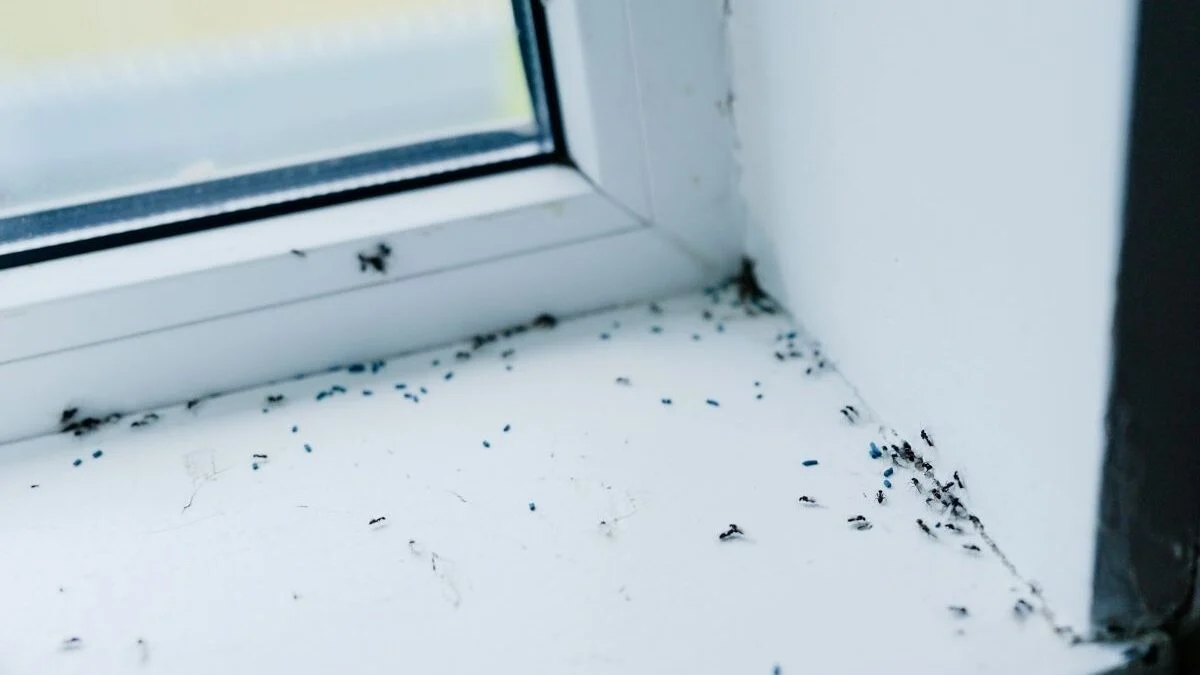
In several French regions, the ant invasion has taken a dramatic turn.
The invasion of “supercolonies” of Tapinoma magnum ants becomes a daily ordeal
In Tournon-sur-Rhône, in Ardèche, residents of the “Les Cerisiers” housing estate are facing “supercolonies” of a particularly aggressive species: the Tapinoma magnum.
This black ant, measuring 2 to 5 mm and giving off an odor of rancid butter when crushed, has spread across the continent from the Mediterranean basin. Residents can no longer even enjoy their garden or terrace.
A similar phenomenon affects Maine-et-Loire, in Corné. Households are seeing the massive intrusion of these pests even inside their homes. Ants manage to infiltrate behind baseboards, through electrical outlets and even into bedrooms. Capable of forming interconnected colonies extending over several hectares and counting several queens, they make traditional individual treatments completely ineffective.
Damage, nuisance, health: what are the risks?
The prolonged establishment of these colonies causes considerable inconvenience. By digging complex underground galleries, ants end up destabilizing the land, lifting terrace slabs or weakening exterior structures. Inside, the constant search for food, water and heat pushes them to invade the cupboards, depreciating the quality of life of the occupants who no longer dare to receive loved ones or use their outdoor spaces.
In addition to material damage, repeated bites and stings spoil daily life.
“In France, ants mainly represent a nuisance, rarely a medical danger“, reassures Dr Gérald Kierzek, emergency doctor and medical director of True Medical. The doctor specifies that local species “are not considered common vectors of human disease, unlike mosquitoes or ticks.
The main risk remains a local skin reaction accompanied by temporary pain.
Bites and hygiene: medical precautions to adopt
If stung, symptoms include redness, itching, slight swelling or a small blister.
“The risk is greater in the event of numerous bites or stings, damage to the face or mouth, known allergic conditions, swelling which spreads rapidly or secondary infection linked to scratching”warns Dr. Kierzek. If a severe reaction occurs (breathing difficulties, facial swelling, dizziness), you should immediately dial 15 or 112.
On the health front, “however, they can mechanically transport dirt or microbes on their legs if they move between waste, soil and food.”he also recalls. While emphasizing that it is above all a “food hygiene problem”. If you are bitten:
- Move away from the anthill immediately;
- Wash the affected area with water and neutral soap;
- Apply a cold compress wrapped in a clean cloth;
- Avoid scratching the lesion to prevent any secondary infection;
- Ask a pharmacist for advice before applying a medicated cream or antihistamine.
Anti-infestation tips: stopping the proliferation
To prevent and slow down the progression of ants in your home, several barrier measures and targeted treatments must also be implemented quickly:
- Secure the food. Store all your dry foods in airtight containers and do not leave any dirty dishes or damp work surfaces;
- Maintain strict hygiene. Empty and clean your trash cans regularly. Vacuum insect paths;
- Obstruct access. Seal cracks, around electrical outlets and the bottom of doors using silicone;
- Use Diatomaceous Earth. Spread this natural powder along thresholds and entry points to create a drying mechanical barrier;
- Favor gel insecticides. Prefer gel baits to traditional sprays. The workers carry the product to the nest to poison the queen by prophylaxis;
- Organize collective action. In the event of a massive invasion by Tapinoma magnumnotify your neighborhood as well as your town hall in order to plan a comprehensive and coordinated treatment by an approved professional.
Faced with a supercolony, individual action quickly shows its limits. The combination of strict hygiene rules and reporting to the authorities remains the safest way to protect your home.