
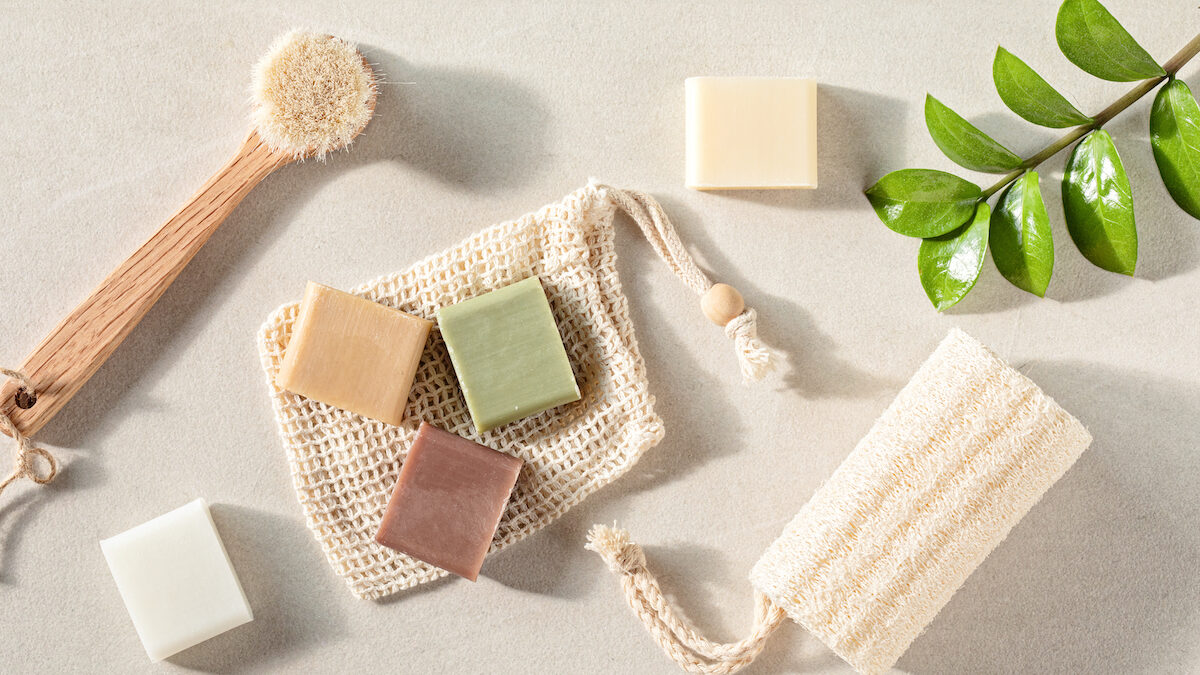
In a video published on Instagram, the Dr Marie Jourdan account recalls a simple idea: solid cosmetics can have ecological benefits, but they are not automatically gentler on the skin. To choose well, you must above all look at its formula.
Solid, natural, organic: these are not guarantees of tolerance
A bar of soap, a solid shampoo, a deodorant stick or a water-free balm can give the impression of a “healthier” product. This is precisely the trap pointed out by the expert: the form of the product does not say much, in itself, about its effect on the skin.
“It’s not the form that counts, it’s the formula.“
This nuance is important, because a cosmetic is evaluated as a finished product: its ingredients, pH, surfactants, stability, microbiological quality and conditions of use all matter. In other words, a solid product can be very well formulated… or not at all suitable for your skin.
Same logic for the word “natural”. It does not mean “harmless”. Certain perfumes, plant extracts or essential oils, including those of natural origin, can irritate or cause a contact allergy in sensitized people. For reactive skin, it is therefore better to focus on the ingredients to avoid when you have sensitive skin rather than just the natural argument.
The case of solid soaps: pH and surfactants change everything
In her video, Dr Marie Jourdan takes the example of bars of soap. Some traditional soaps can dry out the skin, especially when they are too astringent or when their pH is too alkaline compared to that of the skin. Conversely, well-formulated dermatological bars or syndets may be better tolerated, especially by dry or sensitive skin.
However, pH is not the only criterion. The type of surfactants, the presence of lipid-replenishing or humectant agents, fragrances, allergens and intended use also play a role. A rinsed-off product, even enriched with gentle agents, does not necessarily replace a moisturizer left on the skin.
To choose a soap suitable for your skin, the label is more important than the “artisanal”, “clean” or “solid” appearance. Comfortable skin after washing is also a good practical indicator: if it systematically feels tight, it is not necessarily the right cleanser.
How to choose a solid cosmetic without making a mistake
Solid cosmetics often have an environmental benefit: less plastic packaging, more compact format, less water transported in certain cases. The video also reminds us that a product containing little water can limit the development of micro-organisms and therefore require fewer preservatives. But this is not an automatic rule: a regularly wet shampoo or solid soap must remain microbiologically safe.
For the skin, it is better to think like this:
- Look at the type of product: solid deodorant, balm, sun stick, soap or shampoo do not have the same use or the same contact with water;
- Check the formula: pH adapted for a cleanser, mild surfactants, absence of perfume if you are sensitive to it, known allergens to avoid;
- Take into account the area of application: face, scalp, armpits or body do not always tolerate the same formulas;
- Distinguish between rinsed and non-rinsed products: treatment that remains on the skin requires particular attention to perfumes and potentially irritating active ingredients;
- Observe the skin’s reaction: repeated redness, itching, tingling or tightness should prompt you to stop using the product in question and seek advice if it persists.
In the event of eczema, a known allergy, damaged skin or a reaction that lasts, the safest course is to seek the advice of a health professional. The right reflex is not to ban all solids, but not to confuse frequent ecological benefits with better guaranteed skin tolerance.