
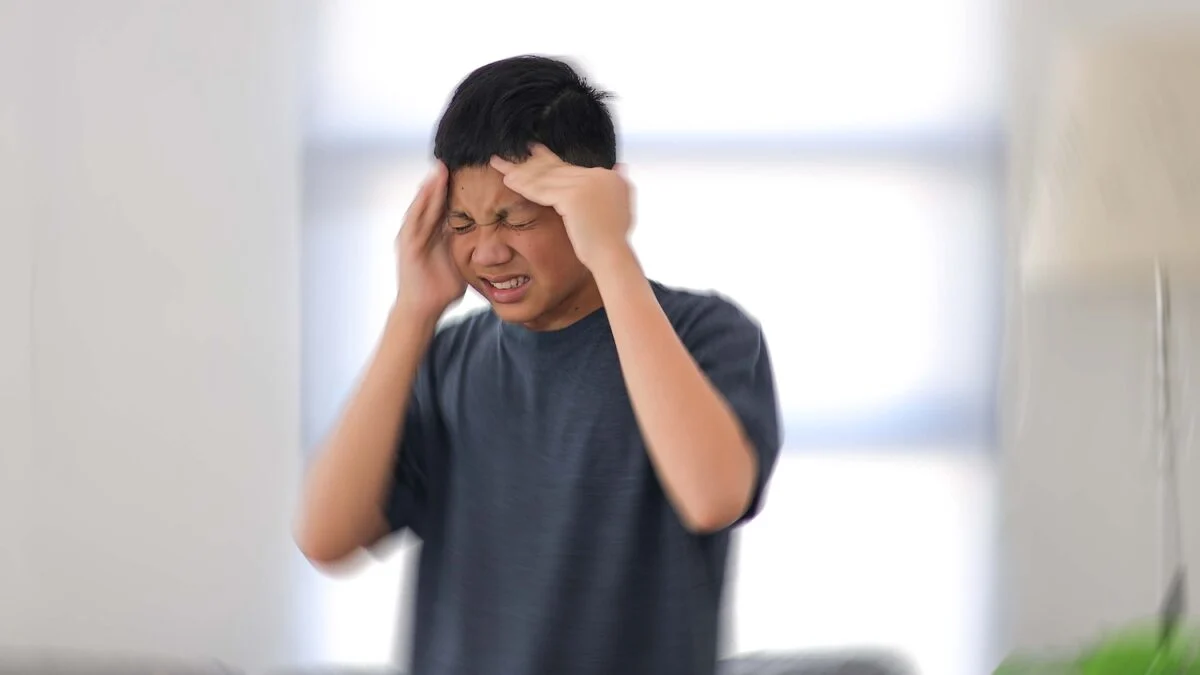
Because behind the fear of the crisis lies another, more silent issue: allowing these children to remain students, friends, athletes, adolescents like the others.
This question that parents dread: “What will happen if he has a seizure?” »
Going back to school can be stressful for any family. For those living with epilepsy, certain questions take on a whole new dimension: What will happen if a seizure occurs in class? In the canteen? On the bus? During sports? Will teachers know what to do? Will treatment be accessible if necessary? And above all: will my child be looked at differently?
These concerns are legitimate. But they should not lead to isolating young people, systematically prohibiting them from certain activities or lowering academic expectations.
Epilepsy-France insists on this need to find the right balance: “Secure without overprotecting, understand without stigmatizing”.
Most young people living with epilepsy can attend school like others and participate in many activities. Adaptations may be necessary, but they must be individualized.
And to avoid fear, there is a simple first reflex:
explain.
A crisis can be spectacular… or almost invisible
Epilepsy is more than just someone falling and having seizures. Some attacks are much more discreet: brief break in contact, fixed gaze, automatic gestures, unusual movements or episodes of confusion. Their diversity can confuse a teacher or worry classmates who do not understand what is happening.
Informing the establishment, teachers and supervisors therefore allows you to know how to react in the event of a crisis.
But information also has another virtue: it can reduce prejudice.
A crisis can impress. However, it says nothing about the intelligence or personality of the person who undergoes it. Epilepsy-France recalls that it “does not define the intelligence, personality or abilities of the person..
And sometimes, what disrupts schooling the most isn’t even visible.
Fatigue, memory, concentration: the invisible handicap that can go unnoticed
A child can be present in class and yet experience real difficulty in following along. Epilepsy or the side effects of certain treatments can cause significant fatigue or even drowsiness during the day. Difficulties with concentration, memory, organization or speed may also appear.
Certain signs should be particularly alarming: unusual drop in alertness, difficulty memorizing or retrieving information, much longer time to complete an assignment, dropping out after a crisis or repeated absences.
Anxiety, withdrawal or refusal from sports and group activities can also be important signals. A sudden change in behavior may also be linked to a change in treatment or its side effects.
The press release also emphasizes that neurodevelopmental disorders, notably autism spectrum disorders and ADHD, can accompany epilepsy in nearly 40% of cases. Their association can then have a greater impact on schooling.
Hence the importance of not too quickly attributing a difficulty to a simple lack of effort.
The right balance: protect, but above all allow you to grow
Faced with the risk of crisis, the temptation to ban everything is understandable. But it can also gradually distance the child from others.
However, physical activity and social life remain essential. Epilepsie-France reminds that any restrictions must be individualized and based on medical advice.
The objective is therefore not to build a protective bubble around the young person, but to allow them to participate in school life in the best conditions.
Several devices can be mobilized according to needs: PPRE, PAI, PAP or PPS, some of which can be combined.
Young people must also be involved in decisions that concern them. Depending on his age, he can choose what he wants to explain and to whom.
This autonomy is essential, particularly during adolescence.
Because before his epilepsy, there was a child
This is ultimately the strongest message carried by Epilepsie-France.
“A child or adolescent who lives with epilepsy remains above all a student, a friend, an athlete, a musician, an enthusiast, a classmate..
Illness may require precautions. Sometimes adjustments. But it should not become an identity.
At the start of the school year, the real issue is perhaps there: learning to protect these children without teaching them that they must be afraid of living.
Better understanding epilepsy allows adults to know what to do when a seizure occurs. But it also means giving young people the opportunity to continue learning, playing sports, meeting their friends and growing up with the feeling that their illness does not decide for them what they can become.