
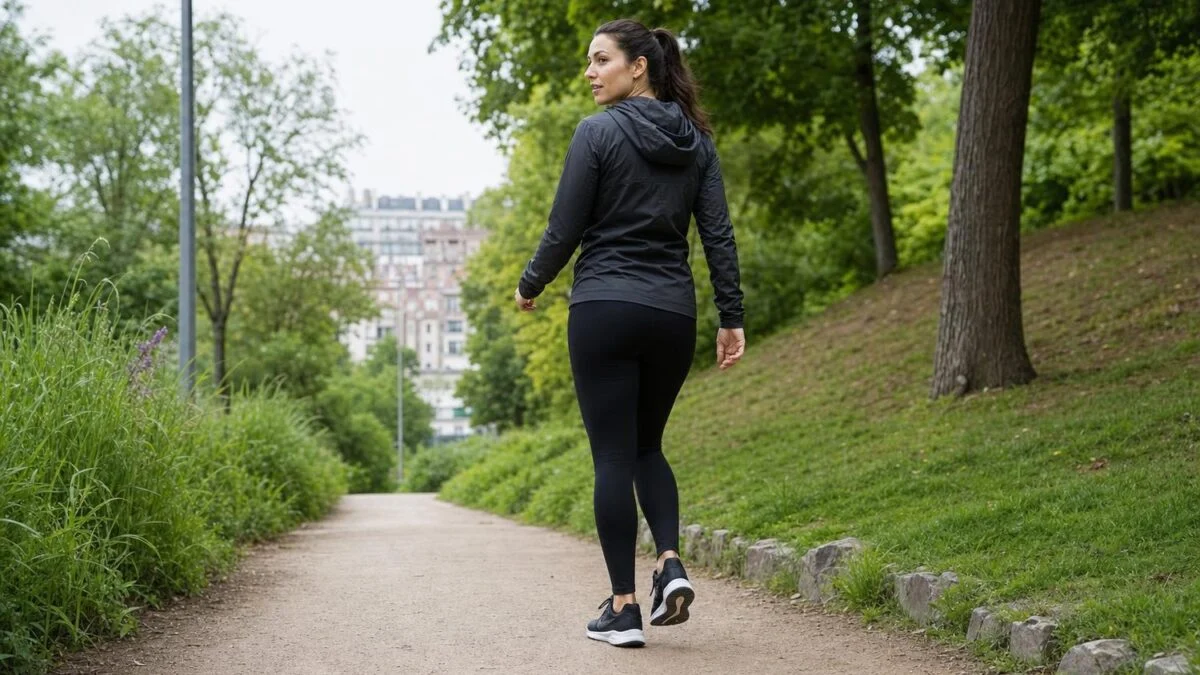
What if, to better control your sugar levels, it was enough to not sit down immediately after a meal? Several studies suggest that a short walk taken right after eating could be more effective on blood sugar than a longer walk taken at another time of the day.
The principle is particularly interesting for people with
type 2 diabetes or at risk of developing the disease. And it requires no gym or special equipment.
Why walking after eating can help blood sugar
After a meal, glucose levels naturally increase in the blood. But when we walk, our muscles use part of this glucose as an energy source.
The timing of physical activity could therefore matter as much as its duration.
A study conducted by George Washington University showed that three 15-minute walks after main meals were more effective in controlling blood sugar than a single 45-minute walk done at another time.
In other words, it is sometimes better to split up your activity rather than concentrate everything in a single session.
Ten minutes after each meal: a simple habit
Another study, conducted by the University of Otago, observed that
10 minutes of walking after each main meal improved blood sugar control in people with type 2 diabetes more than a single 30-minute session performed at another time.
A meta-analysis carried out by Goethe University Frankfurt goes in the same direction: physical activity carried out shortly after a meal seems particularly effective in reducing the rise in blood glucose.
There’s no need to turn this walk into a workout, however. A leisurely walk 10 to 15 minutes can already constitute an interesting habit.
After dinner, is it better to walk than sit straight on the sofa?
This is probably one of the easiest tips to incorporate into your daily life: walk after lunch, take a few laps around the block after dinner, or simply extend the walk before heading home.
The objective is not to replace regular physical activity, but to distribute movements more throughout the dayespecially around meals.
This strategy may be particularly accessible to older people or those who are gradually returning to physical activity.
A simple gesture, but not a cure for diabetes
The available results are encouraging, but they do not mean that a walk of a few minutes alone is enough to prevent or treat diabetes.
The studies cited notably have relatively limited numbers and mainly focus on short-term glycemic control. They therefore do not allow us to conclude that a post-meal walk will alone prevent the onset of diabetes or its complications.
But the message remains interesting: to act on blood sugar levels, each period of activity counts, and the moment you move could be important.
So, after the next meal, rather than immediately settling down on the sofa, 10 minutes of walking could be a simple reflex to adopt.