
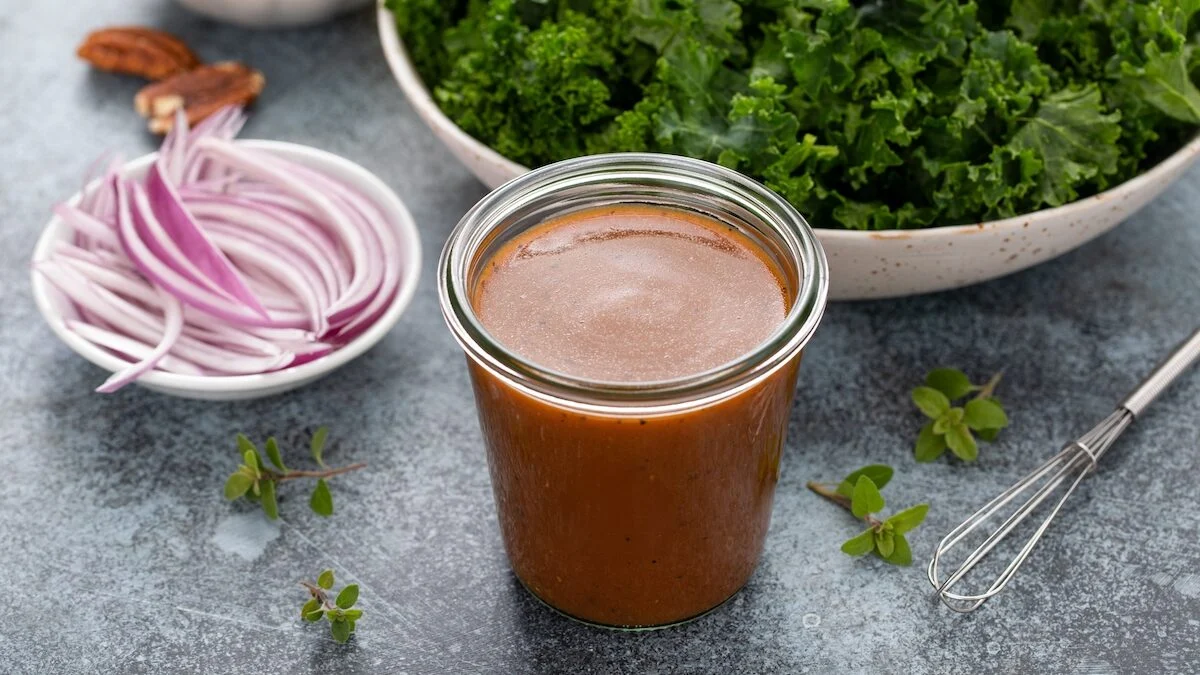
In the still mild temperatures, salads often remain on the menu. But seasoning can quickly turn a light dish into a much higher-calorie meal. The reflex is then to dilute the vinaigrette with a little water to lighten the sauce. A solution which, however, has a drawback: the seasoning quickly becomes liquid, loses its hold and often ends up at the bottom of the salad bowl.
On France Inter, the starred chef Manon Fleuryat the head of the Datil restaurant in Paris, proposed a surprisingly simple alternative: replacing the water with
mixed tomato. Guest of the show We are going to tastehosted by François-Régis Gaudry, she revealed this tip, then used in a recipe published by Marmiton. The idea? Use the flesh of the fruit to add volume and creaminess, while reducing the quantity of oil.
Why tomatoes help lighten a vinaigrette
Unlike water, which simply dilutes the sauce, the tomato provides substance. Its flesh and fibers give more body to the vinaigrette and provide a thicker texture, which adheres better to the salad leaves.
It’s also a simple way to reduce the amount of oil without feeling like you’re eating a bland or too watery sauce. The tomato indeed brings its taste, its acidity and a certain freshness which go particularly well with red wine vinegar.
A point which can be important when monitoring the quantities of fat. Because the pitfall of vinaigrette is precisely there: we don’t always measure what we put on our plate.
“A classic vinaigrette for 4 people with 4 tablespoons of oil, that’s going to be about 360 calories just for dressing the salad,” details Dr Jean Michel Cohen in our pages.
However, there is no question of making oil the enemy of food. Fats have their place in a balanced diet and certain oils are particularly interesting for their contribution of unsaturated fatty acids. Rather, the goal is to find the right balance between quantity, pleasure and composition of the seasoning.
Manon Fleury’s express recipe
To reproduce this vinaigrette at home, the chef starts by world two tomatoes. After having lightly incised them, simply immerse them in boiling water for a few moments before removing their skin.
The flesh is then mixed with three tablespoons of red wine vinegar and two tablespoons of olive oilthen seasoned with salt and pepper. All that remains is to mix again until you obtain a homogeneous and well emulsified sauce.
For a particularly fragrant vinaigrette, choose very ripe and juicy tomatoes. Their flesh provides more flavor and makes it possible to obtain a sufficiently thick sauce.
No blender on hand? The flesh can also be grated or crushed very finely with a fork, before being mixed with the vinegar and oil using a whisk. The texture will be less smooth, but the desired effect will remain the same.
A tip to use as you wish
This base can easily be adapted. For an even fresher sauce, you can slightly increase the proportion of tomatoes or add a squeeze of lemon juice. Conversely, a little extra olive oil will make a richer dressing, ideal with grilled vegetables or cold fish.
Tomatoes are particularly suitable for summer salads: lettuce, cucumber, fresh tomatoes, red onions, chickpeas, feta or mozzarella. It can also enhance a salad of cereals or cooked vegetables.
And if you simply want to lighten up a traditional vinaigrette, there is no need to eliminate the oil completely. Reducing its quantity and supplementing with lemon, vinegar or a yogurt base already allows you to obtain a less rich sauce, without sacrificing taste.
The main thing therefore remains less to ban vinaigrette than to
better control the quantities of oil. And with this tomato tip, it becomes possible to keep a delicious, fresh and thick sauce, without having to drown it in water.