
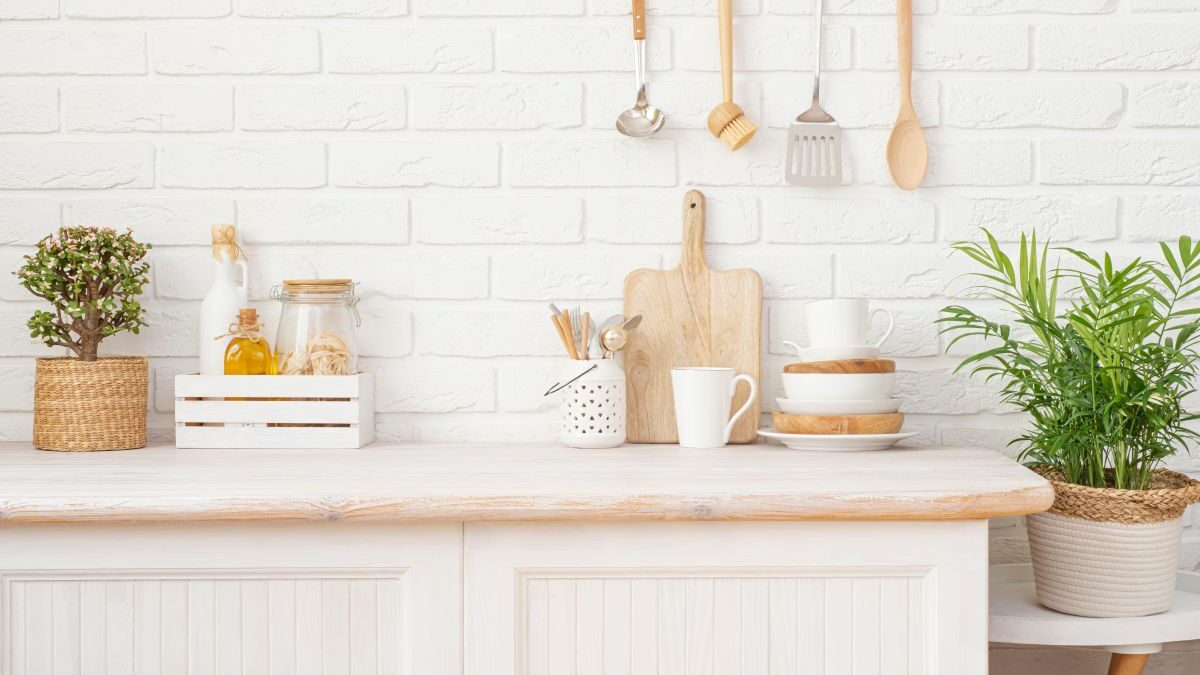
Between hot pans and sauces boiling over 70°C, our spoons and spatulas are on the front line. Tests cited by UFC-Que Choisir showed that 10 polyamide utensils out of 33 released too many substances at this temperature. These doubts lead us to choose wooden utensils, which are more reassuring for our health.
The essential advantage of wooden utensils is that they remain stable when hot and are easy to clean. “After traditional cleaning, bacteria do not grow more quickly on wood than on plastic”specifies Bernard Petit, chemical engineer and head of campaigns for the Health Environment Network (RES). Something to reassure those who still feared the wooden board.
Why choose wooden utensils
UFC-Que Choisir reminds that plastic spoons and spatulas should never be left in a simmering pan. “So don’t let them heat up in pots, pans and pans while your dishes are cooking.”.
At high temperatures, some plastics can release toxic compounds like PFAS. While wood tolerates heat well and does not melt on contact with the bottom of the pan.
Wood also has properties that are naturally unfavorable to bacteria, while remaining gentle on fragile coverings. A wooden spatula does not damage a non-stick pan and prevents scratches where grease is lodged. When it is well dried after use, the wood does not retain humidity. The latter actually favors germs.
Choosing your wooden utensils
For everyday cooking, it is better to choose spoons, spatulas and boards made of solid wood, with a tight grain, without flaking varnish. “We must favor wood over plastics, which come from non-renewable fossil oil sources.”indicates the expert.
“Publications from INRA (presented at the 2017 General Conference on Food) also indicate that wood can store CO2 and reduce greenhouse gases, compared to oil production.”
In terms of shape, we can favor thick handles that are easy to grip, and rounded edges so as not to scratch the pans. A wooden cutting board must remain very smooth. At the slightest chip or deep cracks, it is better to replace it, because these hollows retain juice and residue. Wood that is too light, full of splinters or that smells strongly of solvent should also be avoided.
Maintaining your wooden utensils
For maintenance, the golden rule remains simple: hand wash, hot water, a little dishwashing liquid, then dry immediately while standing. The dishwasher causes the wood to swell and crack, which weakens it and traps bacteria.
Margaux, from the Transition Green Instagram account, occasionally recommends a hot water bath with one or two tablespoons of crystals or baking soda to thoroughly degrease.