
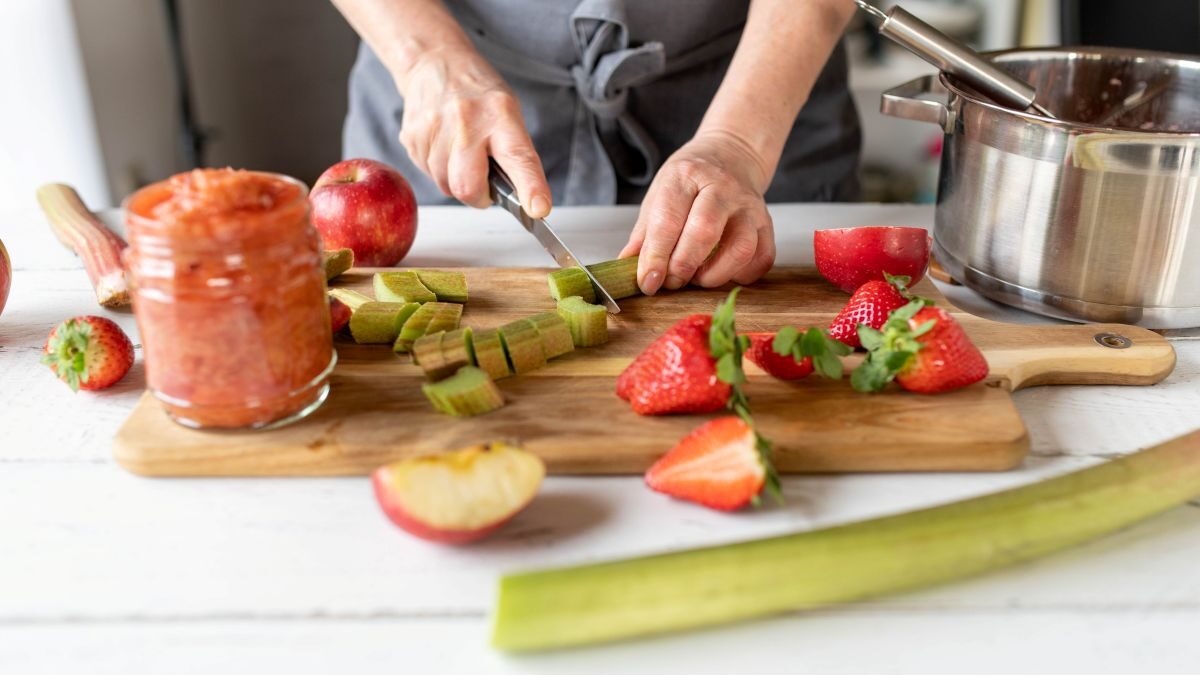
This large tangy stem vegetable that we slip into pies is actually a special case in our vegetable gardens. Originally from Asia, it only arrived in Europe in the 16th century and was only really cultivated for the table from the 19th century. Behind its image of grandmother’s fruit hides three very surprising pieces of information about its identity, its benefits and the real precautions to take.
This fruiting vegetable is rhubarb, or Rheum rhabarbarumperennial plant of the Polygonaceae family. According to the Ministry of Agriculture, the rhubarb season extends from April to July. However, its very water-intensive cultivation raises questions during periods of repeated droughts.
Rhubarb: a false fruit of which only the stem can be eaten
The first surprise is that rhubarb is a vegetable, even though it is cooked like a fruit. The Ministry of Agriculture describes it as a stem vegetable with a very tangy taste, perfect for pies, compotes or jams. Moreover, before the 19th century, it was mainly used in pharmacopoeia, far from our family desserts.
Second surprising information: we only eat the petiole, that is to say the fleshy stem. Marmiton specifies that the rest of the plant contains oxalic acid, a toxic substance. The University of Montreal Hospital Center also classifies rhubarb as one of the foods rich in oxalates, to be avoided by people prone to kidney stones.
Benefits of rhubarb: fiber, vitamin K and deceptive color
As a reminder, 100 g of rhubarb provides approximately 92 g of water and 2.47 g of dietary fiber, for very few calories. The National Pomology Center also emphasizes its vitamin K content and several minerals. Used in a slightly sweet compote or in a savory chutney, it can therefore help to create light but satisfying dishes.
Third piece of information that often surprises: the color of the stems, red or green, does not change the toxicity or really the taste. Marmiton explains that differences in acidity come mainly from cultivars, not from color. According to the National Horticultural Society of France, it is best to harvest from May to July to avoid overly fibrous stems.
Finally, the University of Connecticut also warns that after a strong frost, oxalic acid can migrate to the stems, which are then best kept out of your diet.