
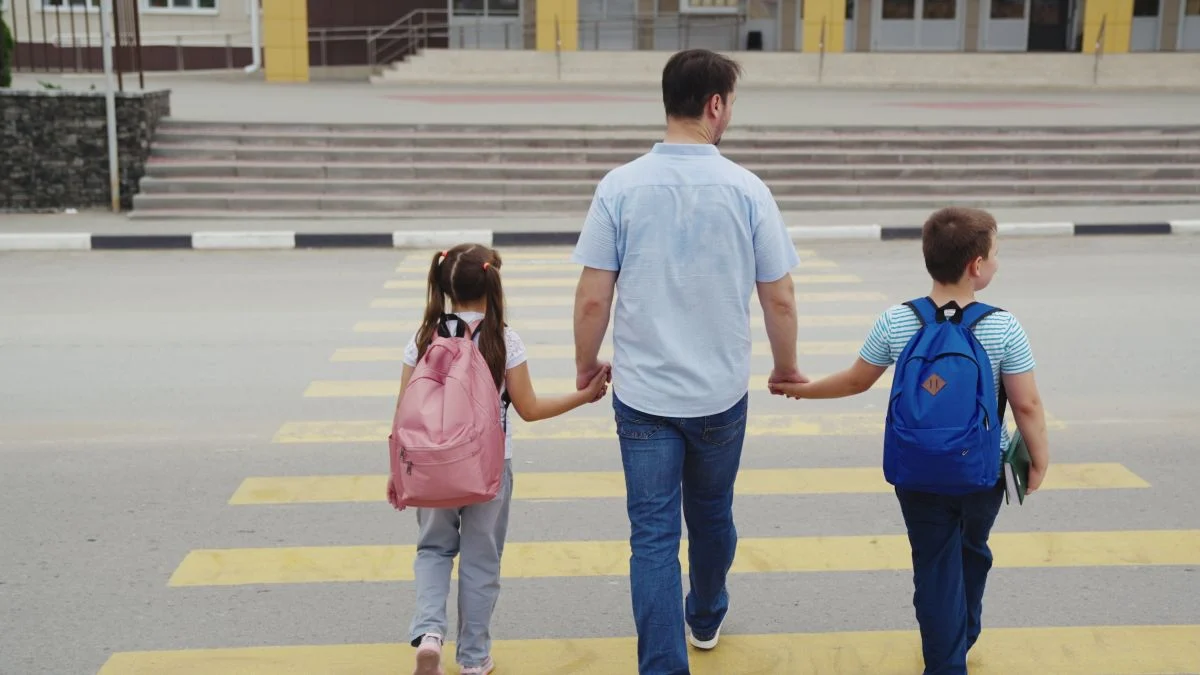
Amid the noise of engines and urban stress, interactions between pedestrians and drivers are sometimes tense. According to the National Interministerial Observatory for Road Safety (ONISR), 439 pedestrians lost their lives in France in 2023, most of the time in urban areas.
In this context, sending a small sign of thanks to the driver who stops goes beyond simple politeness: it is a real micro-communication tool with unsuspected benefits.
What this small gesture of gratitude says about your personality
On a psychological level, raising your hand to thank a motorist shows great empathy. Referring to the famous Big Five personality model, specialists often associate this behavior with Agreeableness and Conscientiousness traits: a sense of social harmony, attention to others and spontaneous respect for the rituals of living together.
By making this gesture – even though the Highway Code requires the car to give way to you – you recognize the person behind the wheel.
As the Spanish authorities of the General Directorate of Traffic (DGT) point out, a raised hand breaks the anonymity of the street, transforms a potential obstacle into an identified human being and immediately defuses the situation.
Courtesy while driving: a virtuous circle for road safety
This reflex is not only pleasant, it is also protective. Research in social psychology (notably that of Adam Grant and Francesca Gino) proves that expressing gratitude increases the chance that a person will repeat their altruistic gesture by 15%. Transposed onto the road, this “thank you” would encourage the motorist to give way again to the next pedestrian.
The European Commission and the European Transport Safety Council (ETSC) also observe that countries where courtesy is anchored record fewer urban accidents. When mutual recognition enriches simple respect for the law, prudence and cooperation naturally take over.
Should we feel guilty if we never do this sign?
No way ! Not raising your hand when crossing does not mean that you lack politeness or human warmth. This type of reaction strongly depends on your temperament, your level of shyness or simply the local culture.
Additionally, as a pedestrian, your top priority remains watching the roadway and ensuring your own safety. This little ritual should remain a spontaneous pleasure, never an obligation.
In short, by humanizing pedestrian crossings, the hand sign establishes itself as a benevolent micro-habit, excellent for relieving the stress of cities. The next time a driver stops to let you pass, don’t hesitate: a simple gesture of gratitude can literally make someone’s day!