
In 2024, around 2.3 million new cases of cancer worldwide, i.e. one in eight cancershave been attributed to infections, according to the International Agency for Research on Cancer (IARC), an agency of the World Health Organization. This estimate, published on September 28, 2026 in The Lancet Oncologydepicts a disconcerting reality: a significant proportion of these cancers linked to microbes remain potentially preventable.
IARC teams have compiled GLOBOCAN 2024 data for 12 infectious agents classified as carcinogenic: the bacteria
Helicobacter pylorihuman papillomavirus (HPV), hepatitis B and C viruses, Epstein–Barr virus (EBV), HIV and several rarer viruses or parasites. “Findings highlight major role infection control can play in reducing global cancer burden“, says Dr. Harriet Rumgay, scientist at IARC.
One in eight cancers due to infections: who are the main culprits?
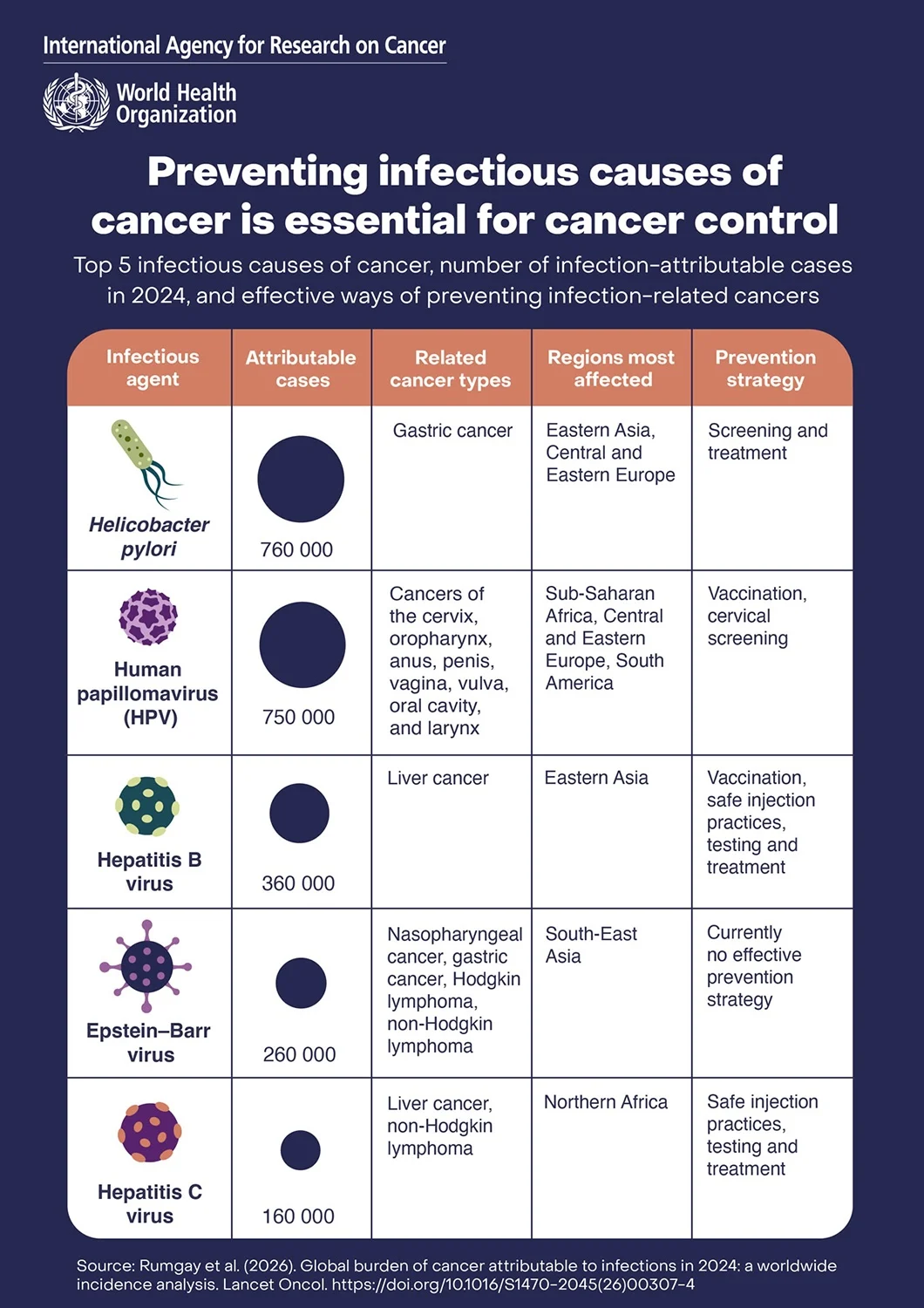
These 2.3 million cases represent 12% of all cancers diagnosed in 2024, out of approximately 20 million new cases worldwide. Being “attributed” to an infection means that, without this agent, cancer would be very unlikely. Five infections concentrate almost the entire burden: Helicobacter pylori (760,000 cancers), the HPV (750,000), hepatitis B virus (360,000),Epstein-Barr Virus (260,000) and the hepatitis C virus (160,000).
According to the IARC, H. pylori mainly causes stomach cancers, HPV causes almost all cervical cancers and several anogenital or ENT cancers, while hepatitis B and C mainly cause liver cancers. EBV, now the fourth infectious cause ahead of HCV, is linked to nasopharyngeal carcinoma, various lymphomas and a fraction of gastric cancers. “The landscape of infection-related cancers continues to evolve as scientific knowledge advances“, observes Dr. Gary Clifford.
 © IARC – CIRC
Cancers linked to infections especially in the poorest countries
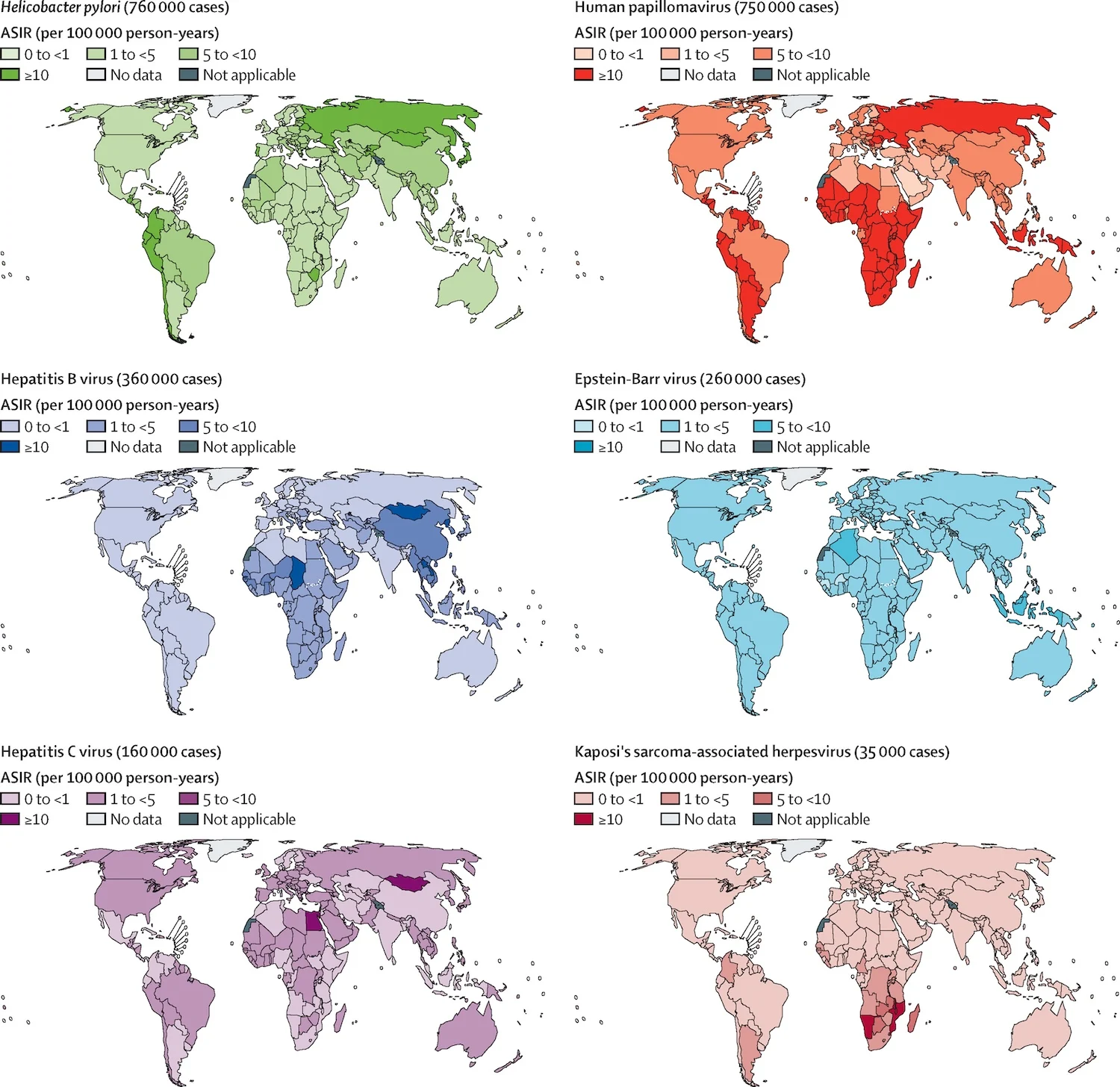
The analysis reveals strong inequalities. East Asia concentrates 990,000 cancers attributable to infections, or 42% of the world total, driven by H. pylori and the hepatitis B virus. Sub-Saharan Africa, marked by HPV, the virus associated with Kaposi’s sarcoma and HIV, reaches an incidence rate of 28.5 cases per 100,000 inhabitants. In total, 77% of these cancers occur in low- and middle-income countries.
 © The Lancet Oncology
Compared to 2018, when around 2.2 million cancers (13%) were attributed to infections, the relative share changes little but the absolute number increases with aging and population growth. The role of EBV is becoming more apparent, particularly in East and South-East Asia where this very widespread virus is linked to nasopharyngeal and stomach cancers and certain lymphomas.
Preventing infection-related cancers
Most infection-related cancers can already be prevented through proven public health measures, including vaccination against HPV and hepatitis B, screening and treatment for H. pylori infections and viral hepatitis, HIV prevention and management, and screening programs for HPV-related cancers. “However, these interventions remain underutilized in many parts of the world due to persistent financial, political and systemic barriers.” recognizes the IARC in its press release.
In addition to the investments required to strengthen current prevention and treatment methods, IARC also emphasizes the importance of continuing to invest in the development of new tools, including vaccines against the Epstein-Barr virus and other carcinogenic infections for which effective preventive measures do not yet exist.