
As we approach forty, staying in shape becomes a daily challenge. If the West multiplies private regimes that are often ineffective in the long term, Japan relies on Shokuiku. What does this consist of?
Shokuiku: food education rather than deprivation
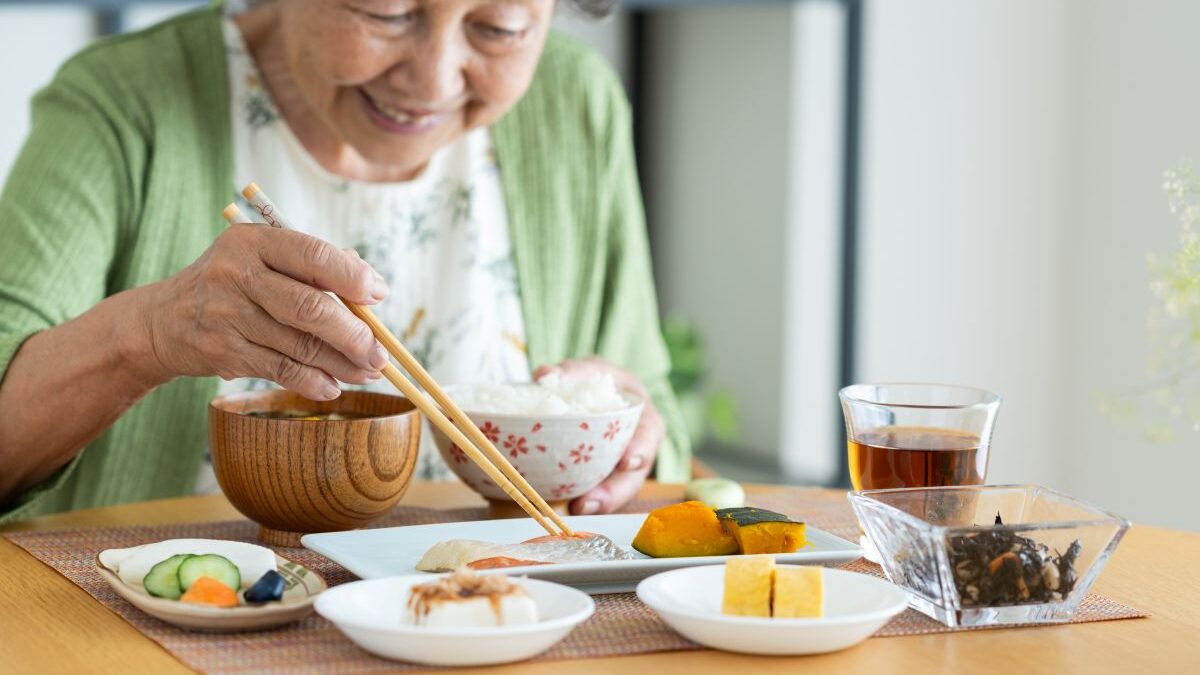
Formalized by law in 2005, this nutritional education is based on the traditional Ichijū-sansai model. The latter dictates that your meals consist of a bowl of rice, a soup and three separate dishes. Which constitutes a meal composed of proteins, vegetables and a seasonal side dish.
A study published in 2022 in the Journal of Nutritional Science and Vitaminology confirms that this systemic approach has made it possible to stabilize the obesity rate in the Archipelago.
By understanding how their body works, fans develop an instinctive rejection of ultra-processed products… and they escape the marketing of miracle methods.
The 3-dish rule: scientifically proven effectiveness after 40 years?
Beyond culture, research is closely interested in the metabolic effects of this meal structure. A controlled trial published in the Journal of Obesity shows that adults trained in Shokuiku maintain their ideal weight for more than two years.
In 2024, a study published in Frontiers in Nutrition
even made the link between following this model and a slowdown in epigenetic aging in mature men.
In practice, the systematic presence of fiber (vegetables, algae), proteins (fish, soy, white meats) and complex carbohydrates helps to counteract the natural decline in metabolism. This framework limits insulin peaks and protects against metabolic syndrome as well as abdominal fat gain.
The dietician’s eye: “There is nothing very new on the nutritional level”
If science praises its merits, what is the opinion of a health professional? For dietitian Claire Trommenschlager, the observation is more nuanced.
“The combination of animal or vegetable proteins with vegetables and starchy foods constitutes the very basis of a balanced diet. There is nothing revolutionary on a purely nutritional level.” It also recalls an important cultural parameter. “In certain Asian countries, there is a fairly strong culture and pressure to be thin which can influence the composition of meals..
On the other hand, the major interest of this method perhaps lies elsewhere: in the psychology and the speed of tasting. Multiplying containers changes meal behavior.
“Separating the meal encourages you to take more time to eat and chew, which promotes satiety and improves digestion. The advantage is psychological: it forces you to have your portion of vegetables, to be more aware of what you are eating and to arouse curiosity thanks to the fun side of small dishes” underlines Claire Trommenschlager.
You understand: Shokuiku is not a miracle diet, but a philosophy of life. Separating your food into three dishes is not metabolic magic, but offers a structuring and visual framework that helps you eat mindfully and slow down your fork eating. An excellent source of inspiration to rebalance your plate sustainably, without giving in to restriction.