
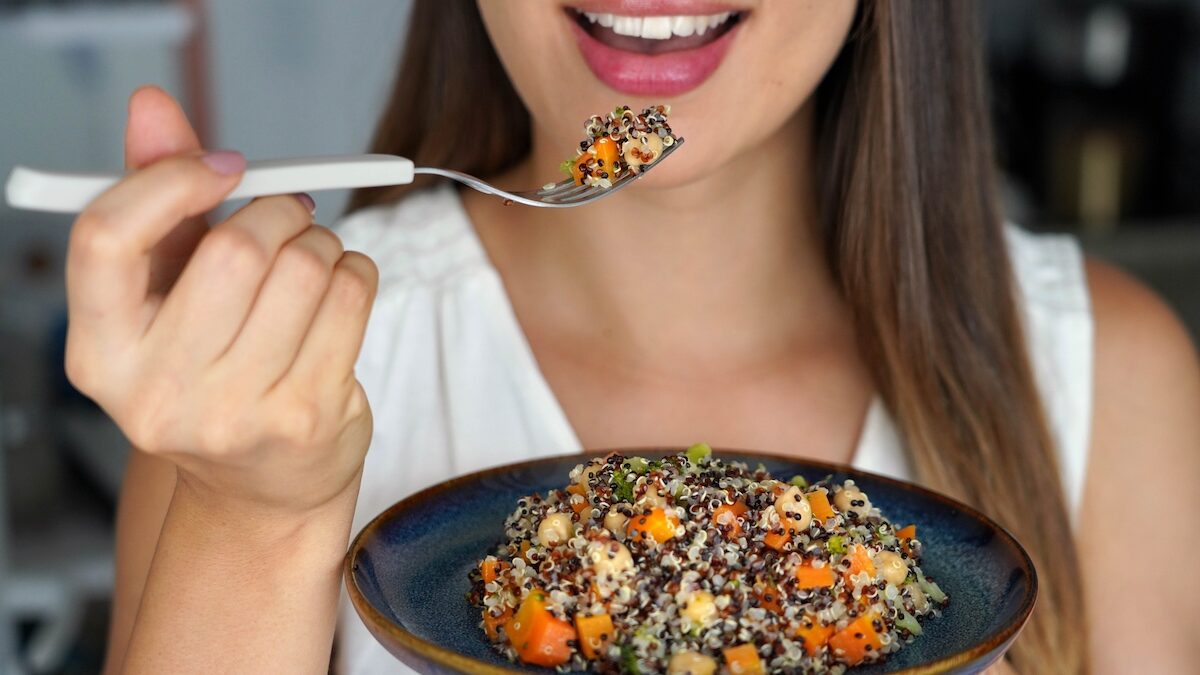
Associated with healthy recipes, light dishes and sports diets, quinoa carries the image of a “healthy” cereal par excellence. So much so that it is often recommended as part of weight loss. But does this food really have a particular effect on our extra pounds? Update with our expert.
What exactly is quinoa?
Before giving it slimming benefits, let’s start by recalling what quinoa is. Originally from South America, this seed belongs to the Chenopodiaceae family, like beetroot or spinach. Even though it is not a cereal in the botanical sense of the term, it is consumed as such and is part of the “pseudo-cereal” family.
On the plate, it is therefore used as a starch, in the same way as rice or pasta. But it stands out for its particularly interesting nutritional composition. It provides protein, fiber, vitamins and minerals, as well as good quality fats.
Another advantage: quinoa is naturally gluten-free. It can therefore constitute an interesting alternative for people with celiac disease or hypersensitivity to gluten, provided they check the absence of cross-contamination when purchasing.
Quinoa and weight loss: why is it interesting?
So, can we really count on quinoa for weight loss? The response from Pauline Pied, dietitian nutritionist, is nuanced: “NWell, quinoa is not a miracle food that will make you melt. But it can have its place in a weight loss process.”
The main reason is its ability to satiate more than certain other starchy foods.
Quinoa stands out in particular for its protein content. For 100 g of cooked quinoa, it provides around 5 g of protein, compared to around 3 g per 100 g of cooked rice, according to the data used by the dietitian.
This difference may seem modest, but it helps make the meal more filling. And this is precisely an important element when trying to lose weight. “This little extra protein makes you feel more satisfied,” underlines Pauline Pied.
More fiber to last better between meals
Another interesting characteristic: quinoa also provides more fiber than rice.
The dietician thus estimates its content at nearly 4 g of fiber per 100 g cooked, compared to around 1.4 g for rice. Here again, fiber contributes to the feeling of satiety and allows you to last better between meals.
“So a little more protein, a little more fiber, ultimately makes quinoa a little more filling than rice”summarizes Pauline Pied.
A significant benefit when hunger returns quickly after a meal and can encourage snacking. When losing weight, looking for meals that are sufficiently filling allows you to avoid constantly feeling hungry.
Quinoa can therefore be one ally among others, particularly when it replaces a starch less rich in fiber and protein.
Can we eat more than rice?
Another feature highlighted by the dietician: cooked quinoa provides slightly fewer carbohydrates than rice.
“As there are a little less carbohydrates, we are at 27 g per 100 g cooked compared to 33 g for rice, we can eat a little more, which means that we will increase our food volume”she explains.
This difference obviously does not mean that we should eliminate rice or consume quinoa as much as we want. But it allows us to consider quinoa as an interesting starchy food for creating a satiating plate.
But quinoa does not make you lose weight on its own.
However, be careful with the shortcut: eating quinoa is not enough to cause weight loss.
No single food can, on its own, make the pounds disappear. Quinoa can simply help make meals more filling and nutritionally interesting. Weight loss depends on diet, lifestyle habits, physical activity and, more broadly, individual context.
Systematically replacing pasta or rice with quinoa is therefore not necessary. The main thing is to vary the sources of starchy foods, to combine meals with vegetables, a source of protein and quality fats, while respecting your feelings of hunger and satiety.
Quinoa can thus find its place in a balanced diet, but it must not become a new “forbidden” or obligatory food as part of a diet.
How to incorporate quinoa into your meals?
Its advantage is also practical: quinoa is relatively easy to cook and can be used in many preparations.
In salad with vegetables, mixed with chickpeas and raw vegetables, served hot with roasted vegetables or used as the base of a bowl, it allows you to vary meals. It can also occasionally replace rice or pasta in a recipe.
And to promote satiety, the idea is above all not to eat it alone: a portion of quinoa accompanied by vegetables, a source of protein and a little quality fat constitutes a more complete meal base.
A precaution if you are starting out
Finally, there is a reservation. Quinoa is generally well tolerated, but its introduction can sometimes cause bloating or digestive discomfort, especially in people who are not used to consuming a lot of fiber. It is therefore better to gradually increase the quantities and drink enough.
An unusual reaction after consumption, including significant digestive symptoms or skin manifestations, deserves to be taken seriously and discussed with a healthcare professional.