
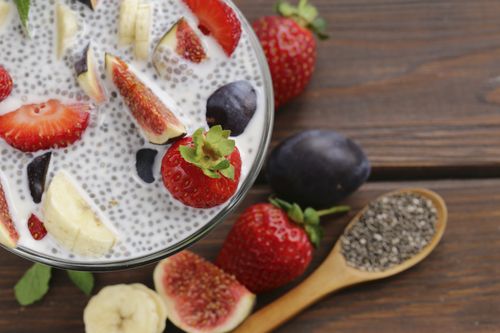
On TikTok, the “chia water” trend promises a flatter stomach and perfect transit with a simple glass of water filled with swollen chia seeds. But behind the promises of “detox” and weight loss, what are these little seeds really worth? Rich in fiber, protein and omega-3, they have several nutritional benefits. Provided, however, that you consume them correctly.
Chia seeds: what effects on digestion?
The main advantage of chia seeds remains their richness in fiber. “They look so small, but don’t be fooled, they are full of fiber“, underlines Valentina Cartago, nutritionist.
For 2 tablespoons, or 28 g, the British site The Independent indicates almost 10 g of fiber. On contact with water, the seeds form a gel which can help facilitate intestinal transit. They can particularly be useful in cases of constipation.
But their ability to swell requires some precautions. Valentina Cartago advises consuming them in a wet food, especially for people who have difficulty swallowing, called dysphagia.
Chia seeds also provide ALA-type omega-3 fatty acids, antioxidants and several minerals. These nutrients are particularly interesting for cardiovascular health.
But be careful of overly good promises. The Harvard University website, Harvard TH Chan – The Nutrition Source, points out that studies have not shown that chia seeds alone significantly lower cholesterol or blood pressure.
Do chia seeds make you lose weight?
With around 138 kcal per 28 g, chia seeds remain quite high in calories. But this same portion provides about 5 g of protein and almost 10 g of fiber, which can promote satiety, according to the American site Healthline.
In chia pudding, yogurt or porridge, they can help you feel less hungry between meals.
This is also why they are sometimes included in weight management programs. But they don’t magically make you lose weight. The data cited by the Harvard University website suggest a modest effect.
Their interest comes mainly from their richness in fiber and their satiating effect. They can also replace, in certain meals, foods richer in sugar or fat.
Chia seeds: are they good for the skin?
Chia seeds contain omega-3 and antioxidants. According to Dr. Simon Ourian, these nutrients could notably help limit inflammation and skin irritation.
Here again, there is no need to wait for a miracle effect. Chia seeds can be part of a balanced diet, but they do not replace appropriate care in the event of a skin problem.
Chia seeds: what precautions?
Chia seeds should not be eaten dry. Their ability to swell can, in certain situations, pose a problem.
The Memorial Sloan Kettering Cancer Center notably reports the case of an obstruction of the esophagus after ingestion of a tablespoon of dry chia seeds, followed by a glass of water.
It is therefore better to swell them before consuming them or mix them with a sufficiently moist food. An amount of around 2 tablespoons per day is often recommended.
Finally, if you are taking treatment for diabetes or hypertension, ask your doctor for advice before consuming it regularly. Chia seeds can have their place in a varied diet, but they are neither a miracle food nor a “detox” solution.