
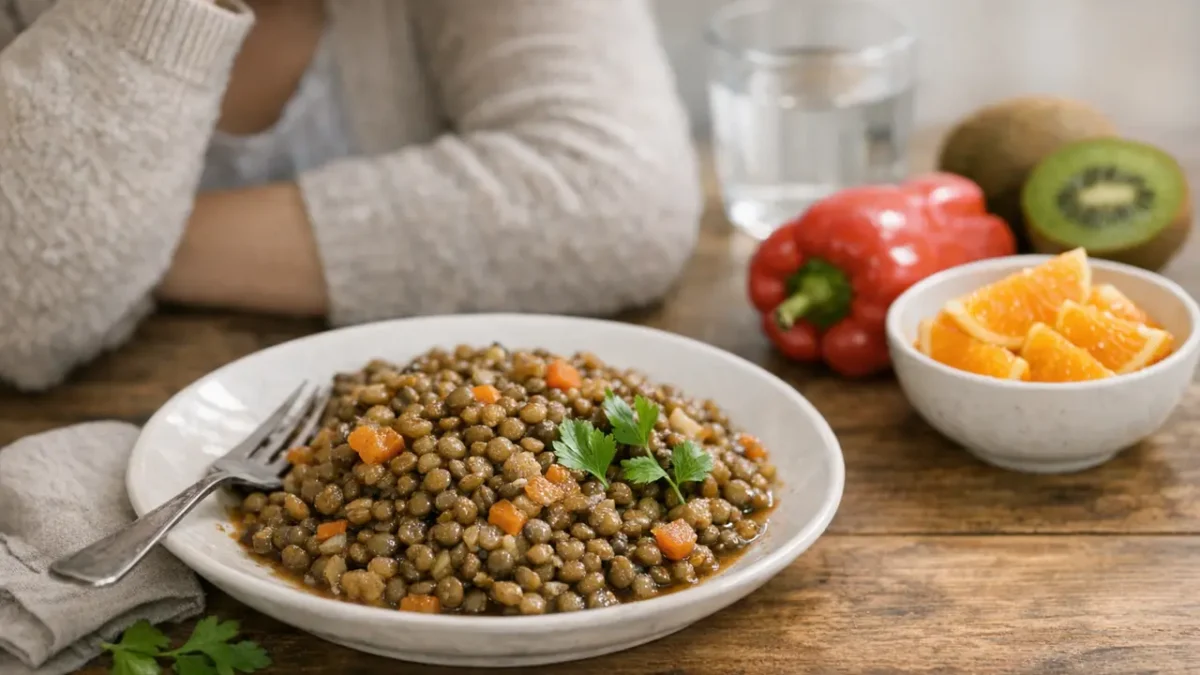
In a lentil salad, the detail that changes everything is not necessarily the sauce. This is sometimes what we add on the side: a pepper, a citrus fruit, a kiwi, parsley or a squeeze of lemon. Lentils provide vegetable iron, but this form is less well absorbed by the body. Associating them with a source of vitamin C at the same meal can promote its absorption.
This is not a new study to announce, nor a promise against anemia. It is a useful nutritional reference to better compose a daily plate.
Why is iron from lentils absorbed less well?
Lentils are one of the foods of interest for their iron intake. But not all dietary iron behaves in the same way once on the plate and then in the body.
The iron in lentils is non-heme ironthe form present in plants and fortified foods. Conversely, heme iron, especially present in animal products, is more bioavailable. In other words, it is generally better absorbed.
This difference does not mean that the lenses would be a bad choice. It simply reminds us that a food is not limited to its displayed nutrient content: what accompanies it also counts. For non-heme iron, ascorbic acid, that is to say vitamin C, is a favorable factor, because it increases its bioavailability during the meal.
The good news is that the gesture is very simple. It’s not a question of calculating your plate down to the milligram, but of thinking about lentils with a partner rich in vitamin C.
What to wear with lenses to benefit from this effect?
The easiest reflex is to slide bell pepper in a lentil salad. It provides vitamin C and works well with fresh herbs, vinaigrette and lentils served cold or warm.
Another option: save the fruit for the end of the meal. An orange, clementine, kiwi or other fruit rich in vitamin C can contribute to the same objective, since the desired effect concerns the absorption of non-heme iron during this meal.
Lemon and parsley can also find their place in a plate of lentils. For example: warm lentils, parsley, lemon squeeze; or cold lentils, pepper and fresh herbs. The idea is not to transform the dish into a nutritional prescription, but to add a simple reference to an already familiar recipe.
Conversely, certain compounds can decrease the absorption of non-heme iron, including phytates and certain polyphenols. This is not the same as banning tea or coffee. But if we are looking to optimize a meal rich in plant iron, it is better to avoid immediately systematically accompanying it, especially in the event of a known or suspected iron deficiency.
Is this enough in case of iron deficiency?
This is the point of vigilance not to lose sight of:
improving iron absorption during a meal does not guarantee an increase in reserves. This lentil-vitamin C combination helps to better utilize plant iron, but it does not replace either a diagnosis or treatment when a deficiency or anemia is possible.
Unusual fatigue, shortness of breath during exercise, heavy periods, pregnancy, a strict vegetarian diet or a deficiency already mentioned justify seeking medical advice. A biological assessment may be necessary before any supplementation, because iron is not taken “just in case”.
For the everyday plate, the guideline nevertheless remains easy to apply: lentils + vitamin C in the same meal. A pepper in the salad, a citrus fruit or a kiwi for dessert, parsley or lemon in the seasoning: these are small choices that help to take better advantage of vegetable iron, without complicating the menu.