
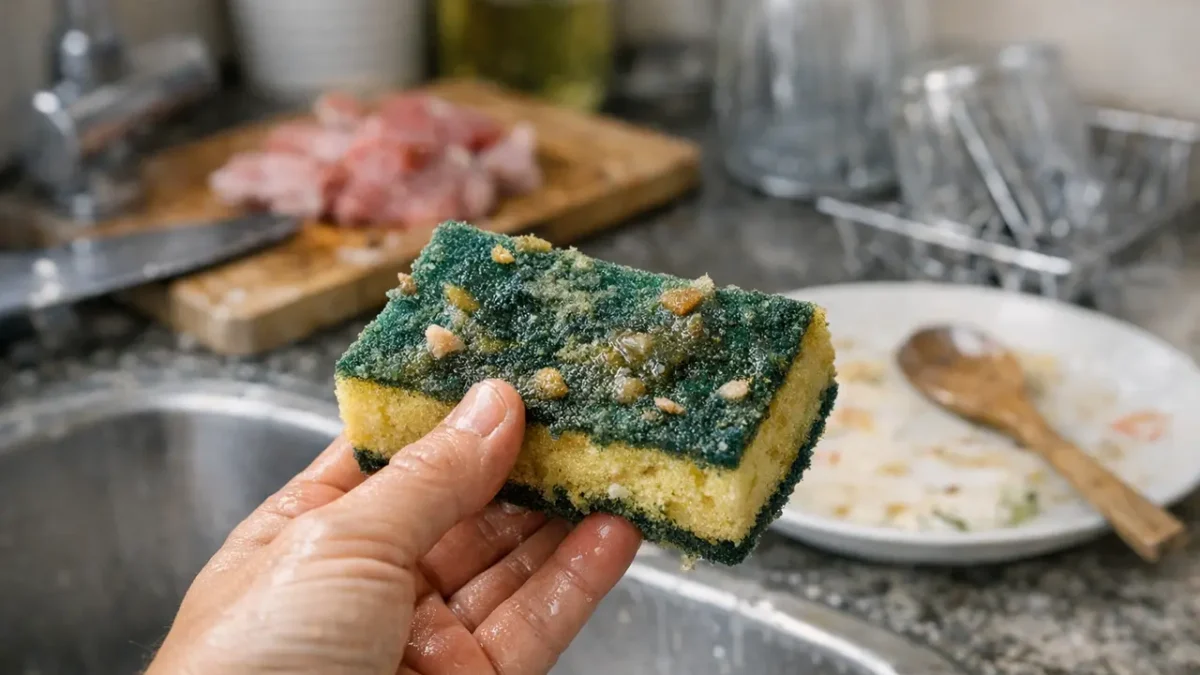
On Instagram, Océane Sorel, doctor in Virology and Immunology (better known as @thefrenchvirologist) reminds us of a simple point: the kitchen sponge can become a reservoir of microbes. The right reflex is not to panic, but to limit cross-contamination: dry, separate uses, avoid raw meat juices and maintain the sponge frequently.
Why a sponge can become a bad ally
A sponge is used to clean, but it also brings together several conditions favorable to micro-organisms: humidity, relative heat of the kitchen, small food remains stuck in the fibers. This is one of the messages put forward by thefrenchvirologist: the problem is not only that the sponge can contain a lot of bacteria, but that it can then move them.
In other words, a damp and soiled sponge can cause transfers to the hands, the work surface, utensils or certain foods. This is what we call the cross contamination. A study published in
Scientific Reports showed that used kitchen sponges could be heavily colonized by micro-organisms, which confirms the benefit of not treating them as simple “clean” accessories by nature.
However, one important nuance must be kept: the presence of germs does not mean that every contact makes you sick. The risk depends on the type of microorganisms, foods handled, hand hygiene and how surfaces are cleaned. But in practice, the sponge is definitely an object to watch out for, just like tea towels or cutting boards. This is also one of the reasons why the kitchen sponge can promote cross-contamination when it remains damp and loaded with residue.
Simple reflexes to limit cross-contamination
The virologist insists on very concrete actions, which have the advantage of being easy to apply on a daily basis. The goal is not to have a sterile kitchen, but to reduce the opportunities for germs to move from one place to another.
- Wring the sponge well after each use
and let it air dry, rather than leaving it waterlogged in the bottom of the sink. - Don’t use the same sponge for everything helps limit transfers: if possible, keep uses separate between washing dishes and cleaning surfaces.
- Do not wipe raw meat juices with a sponge reused elsewhere. After contact with raw meat or poultry, it is best to immediately clean the surface with hot, soapy water and avoid spreading these juices to other areas.
- Wash, disinfect or heat treat sponges, dishcloths and cleaning utensils frequently, as recommended by health authorities.
- Replace the sponge when it is worn, very soiled, damaged or smells bad, without waiting until it is clearly unusable.
These actions complement good hygiene reflexes in the kitchen: washing hands, separating raw and cooked foods, cleaning surfaces after preparation. They are particularly useful when handling raw meat, a time when avoiding cross-contamination with raw meat becomes essential.
Microwave: useful, but not just any way
In her message, Océane Sorel mentions the regular disinfection of the sponge and cites microwaving. This avenue does exist in the ANSES recommendations, but it must be regulated: 2 minutes in the microwave at maximum power only concerns non-metallic sponges, largely soaked in water.
You should therefore not put a dry sponge, a sponge with a metal part or a sponge whose material is not compatible in the microwave. The sponge can also be very hot after heating: it must be handled with care to avoid burns.
Another important point: the microwave does not sterilize the sponge forever. It can reduce the microbial load, but it does not replace regular maintenance or replacing the sponge when it is too damaged or very soiled. As a precaution, changing sponges ideally every week can be a good domestic benchmark, without making it an official threshold valid in all situations.
Finally, it is better not to rely on unvalidated “homemade” solutions to sanitize a sponge. The recommendations identified instead favor washing, disinfection according to the instructions for the product used, or heat under specific conditions. The most effective is often the combination of simple actions: a well-rinsed, well-wrung sponge, which dries quickly, used in the right place, and replaced regularly.