
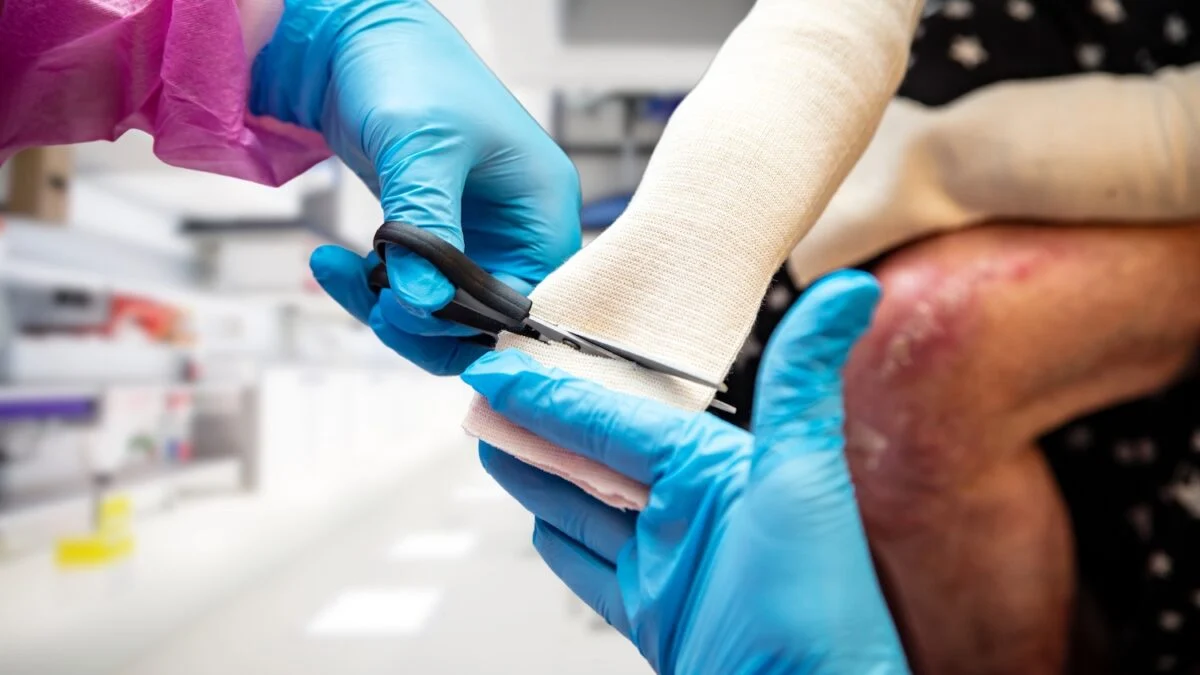
On his Instagram account, Dr Sermed Mezher describes a situation that is difficult to imagine: skin that can become covered in bubbles after simple friction. This is epidermolysis bullosa, also called “butterfly disease”: a rare genetic disease, with very variable forms, which is not limited to fragile skin.
Why does skin become so fragile?
Epidermolysis bullosa does not designate a single disease identical in all patients, but a group of rare diseases, most often hereditary. Their common point: the skin, and sometimes certain mucous membranes, are poorly resistant to mechanical stress. Blisters, erosions or sores may then appear.
Dr. Sermed Mezher explains that the layers of the skin have difficulty holding together, due to mutations affecting structural proteins, such as certain keratins or certain collagens. The image is useful to understand: these proteins play an “anchoring” role between the different skin layers.
However, this simplification must be qualified. The exact level of detachment varies depending on the type of epidermolysis bullosa : it can be located at different depths of the skin. This is one of the reasons why forms of the disease vary so much from person to person.
The term “butterfly disease” comes from this extreme fragility, often compared to that of a butterfly’s wings. But it should not make us forget the medical reality: wounds can be painful, take a long time to heal and require specialized care. To better understand the forms, symptoms and diagnosis, our file on epidermolysis bullosa looks in detail at this rare disease.
What this changes on a daily basis
The doctor emphasizes a concrete point: it is not just about blisters like those you can get after a long walk with shoes that are too tight. In some affected people, bubbles may appear after minimal friction or traumasometimes without obvious cause.
The possible manifestations vary greatly. They can affect the skin, but also the mucous membranes in more severe forms. Concretely, this can translate into:
- Blisters or skin sores, sometimes on highly stressed areas such as the hands or feet;
- Frequent care, including dressings, which can be time-consuming and painful;
- In some forms, damage to the mouth, throat or esophagus, which can make eating or swallowing difficult.
Dr Sermed Mezher also talks about ordinary actions, such as showering or taking a bath, which can become a source of pain. This is one of the most difficult aspects to perceive from the outside: the disease can affect very simple daily actionsnot just on the appearance of the skin. TO find out more, discover Julien’s testimony on True Medical.
However, not all affected people experience the same development. Some forms are more localized, others much more severe. This variability requires avoiding generalities: severity depends on the type of epidermolysis bullosa, the extent of the lesions and associated damage.
There is no overall cure for epidermolysis bullosa. This does not mean that there is nothing to do. The care aims in particular to protect the skin, treat wounds, relieve pain, prevent complications and support nutrition when eating or swallowing becomes difficult. For certain forms, more targeted treatments can also be discussed in a specialized setting.
In the event of repeated bubbles, unusual wounds or damage to the mucous membranes, the issue is not to make a diagnosis yourself, but to seek medical advice. Monitoring is generally the responsibility of teams familiar with rare skin diseases. A patient’s testimony about living with epidermolysis bullosa also shows how much support and recognition of pain matter in everyday life.