
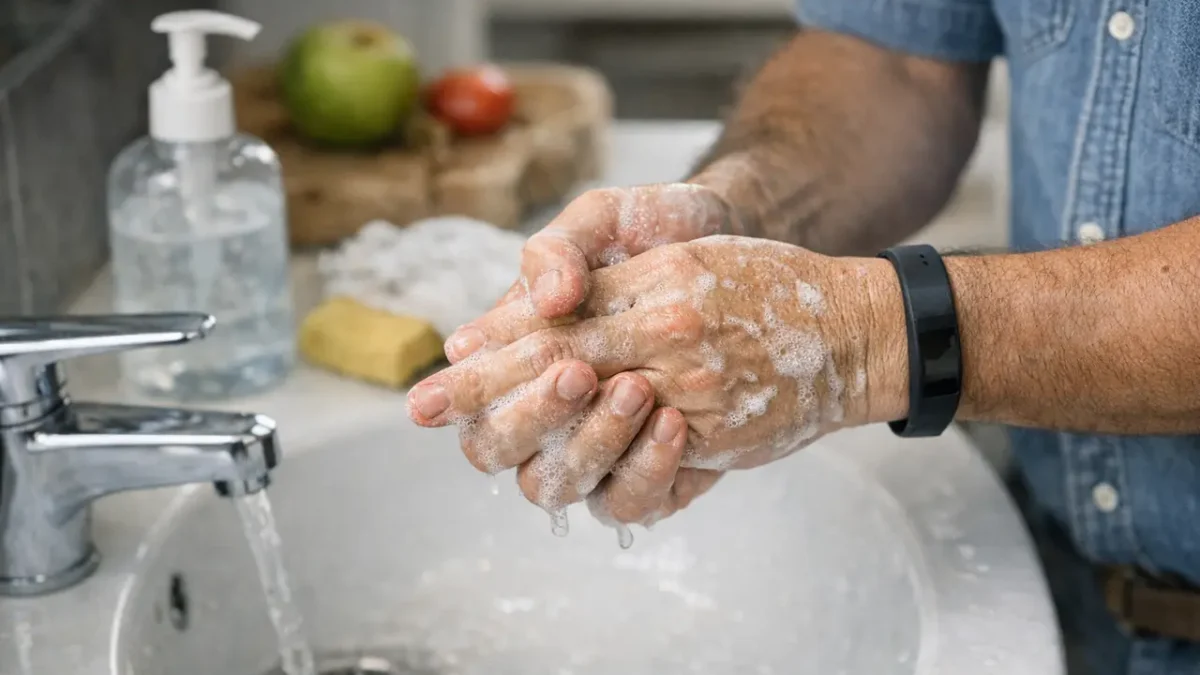
Do you wash your hands often, but for long enough and at the right time? In the program “Advice from Doctor Kierzek”, the emergency doctor recalls that this action reduces the transmission of microbes provided it is done correctly: water, soap, rubbing, rinsing and drying.
Effective washing lasts 30 seconds, not seconds
Dr. Gérald Kierzek presents hand washing as a simple, inexpensive and useful barrier gesture, especially when viruses circulate more as winter approaches. His reasoning is concrete: the hands touch door handles, telephones, bus bars or tickets, then return to the face. This is how viruses responsible for colds, flu, Covid, bronchiolitis or certain gastroenteritis can circulate. Washing is not guaranteed to prevent infection, but it
helps limit transmissionlike other effective barrier gestures against viruses.
Its protocol is in a few words: water, soap and about 30 seconds of scrubbingwhich is enough time to sing “Happy Birthday” twice. The key point is not to use a fancy product, but to not go too fast and cover the whole hand. The areas to be rubbed are always the same:
- Rub your palms together;
- Pass over the back of each hand;
- Insist between the fingers;
- Clean your thumbs, which are often forgotten;
- Rub fingertips and nails;
- Go up to the wrists.
These steps overlap with French basic hygiene recommendations. They avoid several common mistakes when washing your hands, such as simply passing them under water or forgetting less visible areas.
Washing doesn’t stop at scrubbing. It is also necessary
rinse then dry your hands wellwith a clean towel or single-use hand towel. Drying matters because it leaves hands ready to touch up surfaces without staying wet.
When hand washing is a real game changer
Dr. Kierzek also emphasizes “right timing.” Washing your hands only when they appear dirty is not enough: many germs are not visible. Priority moments are those when there is a risk of bringing germs home, contaminating food or transmitting them to a more fragile person.
During the day, the most useful situations to remember are:
- Wash your hands when you get home;
- Do it after transport;
- Do it after going to the toilet;
- Do it after blowing your nose, coughing or sneezing into your hands;
- Do it before cooking or eating;
- Do this before caring for a baby;
- Do this before visiting a fragile or hospitalized person.
For infants, hospitalized people, fragile people or those being monitored for a particular illness, these benchmarks remain general: if a healthcare team gives specific instructions, they take precedence.
The gel helps, but does not always replace water and soap
Hydroalcoholic gel has its place, especially when traveling, when there is no water source. Dr. Kierzek says it clearly: it’s practical. But when water and soap are available, he advises favoring them. The nuance is important:
the gel is not uselessbut it is less suitable for visibly dirty, damp or soiled hands.
Another limit to be aware of: for certain gastroenteritis, notably those due to norovirus, washing with soap and water remains preferable to gel alone. If you are looking to prevent infectious diarrhea through hand washing, the most useful reflexes remain the same: after using the toilet, before meals and before preparing food.
Should you choose an antibacterial soap? For everyday use at home, ordinary soap is enough if the gesture is well done. Antibacterial soaps intended for the general public have not demonstrated any additional benefit in preventing illness compared to conventional soap. This rule does not concern care protocols, where specific products may be requested.
Dr Kierzek finally adds two practical details: keeping nails rather short and removing bulky rings or bracelets before cooking helps to wash your hands better and limit food contamination. If you are sick, protecting others also involves simple actions : cough into your elbow, use disposable tissues, wash your hands after blowing your nose and wear a disposable mask if the situation is appropriate.