
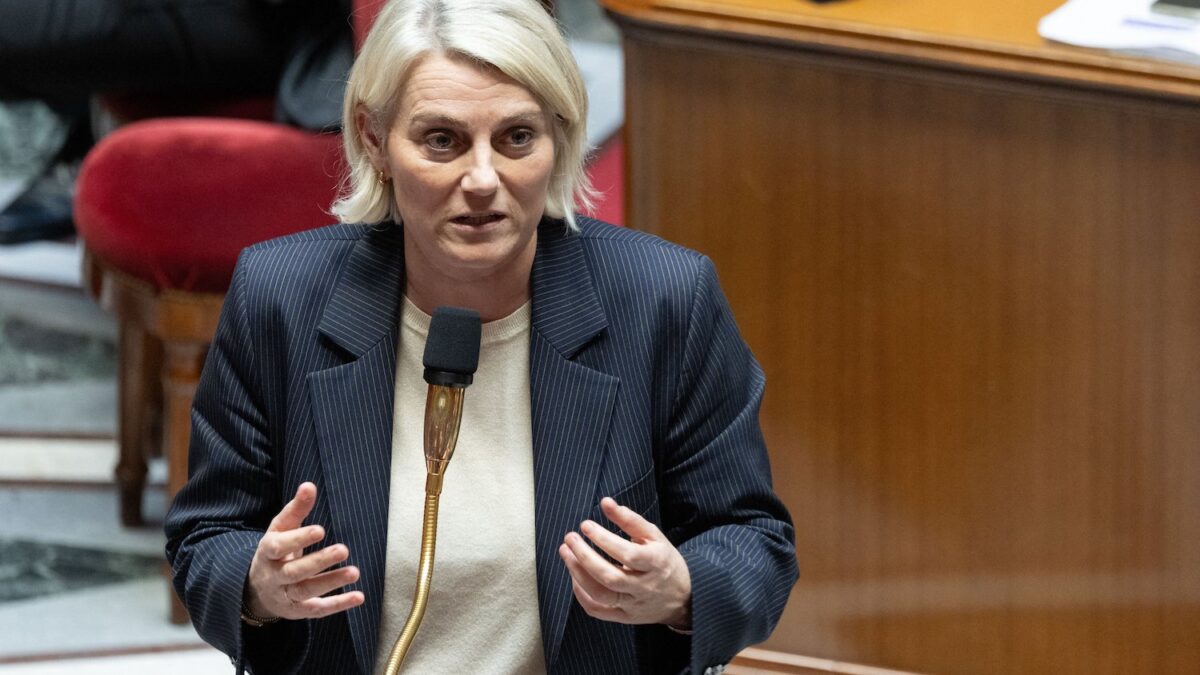
Fake news on mammograms, promises of miraculous natural treatments: for the Ministry of Health, these rumors are no longer anecdotes. During a press conference on Wednesday October 21, 2026, Minister Stéphanie Rist judged that “Health misinformation is a slow, deadly poison. It is one of the main threats to our public health“, before announcing the creation of a new Health Misinformation Observatory
responsible for organizing the response.
This device, carried by the Ministry of Healthmust “document the phenomenon”, “detect emerging signals” and share “reliable scientific information”. It delivers on a promise made in April 2025 by former minister Yannick Neuder and taken up ten months ago in the national strategy to combat disinformation. Its launch comes as an online survey carried out from March 6 to 12 shows that 38% of French people say they are exposed to false health information at least once a month.
How the Health Misinformation Observatory wants to organize the response
According to Stéphanie Rist’s office, theHealth Misinformation Observatory will exercise continuous monitoring, supported by independent scientific expertise. It will publish barometers and research work and may bring together thematic working groups, for example on vaccination, cancer or diet. An “infovigilance system” will complete this base: regional health agencies and research institutes will report “weak signals” identified on social networks or in the field.

Once a rumor is deemed dangerous, experts will produce reasoned responses, broadcast on the site Santé.fr and on social networks. The Ministry of Health chose TikTok, which “collects the most cases of disinformation”, with a dedicated account called “Le CheckUp” or “Le Check-up”. These short contents will have to deconstruct viral videos, or even respond “almost directly” in the comments to posts conveying misinformation, including around breast cancer and mammograms.
On Santé.fr, an interactive quiz should help users distinguish fact from fiction, understand cognitive biases and better identify the role of algorithms in the distribution of content.
Alarming figures on medical disinformation in France
The survey presented by the ministry and relayed by AFP shows that nearly four in ten French people, or 38%, think they are exposed to false health information at least once a month, and 18% at least once a week. Three in ten say they have already followed an erroneous recommendation, leading to the interruption of treatment in 32% of cases and a delay in consultation in 34%.
In the middle of Pink October, the ministry highlights the risks of false statements about breast cancer “whether screening, mammograms, treatments, side effects or alternative practices”. According to Stéphanie Rist, social networks have “provoked the industrialization of the lie factory”.
No resources for yet another monitoring structure… A strategy to review?
According to the ministry, the observatory will operate without a dedicated budget, integrated into the communications department.
Faced with these announcements, pharmacologist Mathieu Molimard, one of the authors of a report on health misinformation, submitted to the government in January and recommending 10 measures, sees “nothing new” and judges that “it is an obsolete idea, especially without means”. He particularly regrets the absence of a reporting platform intended for all health professionals and of a “jurisdictional response” to sanction misinformation.
“The disinformation observatory risks becoming yet another monitoring structure or agency, dedicated to chasing false information that circulates at high speed on social networks.” adds Dr Gérald Kierzek, emergency physician and medical director of True Medical. And also warns: “Be careful not to create an additional censor! Scientism fuels conspiracy. The challenge is to go into the field: listen to doubts, respond without contempt and restore trust between patients, caregivers and institutions. Because disinformation is fought less through surveillance than through proximity: an available doctor, clear information and credible public words are better than ten press releases.