
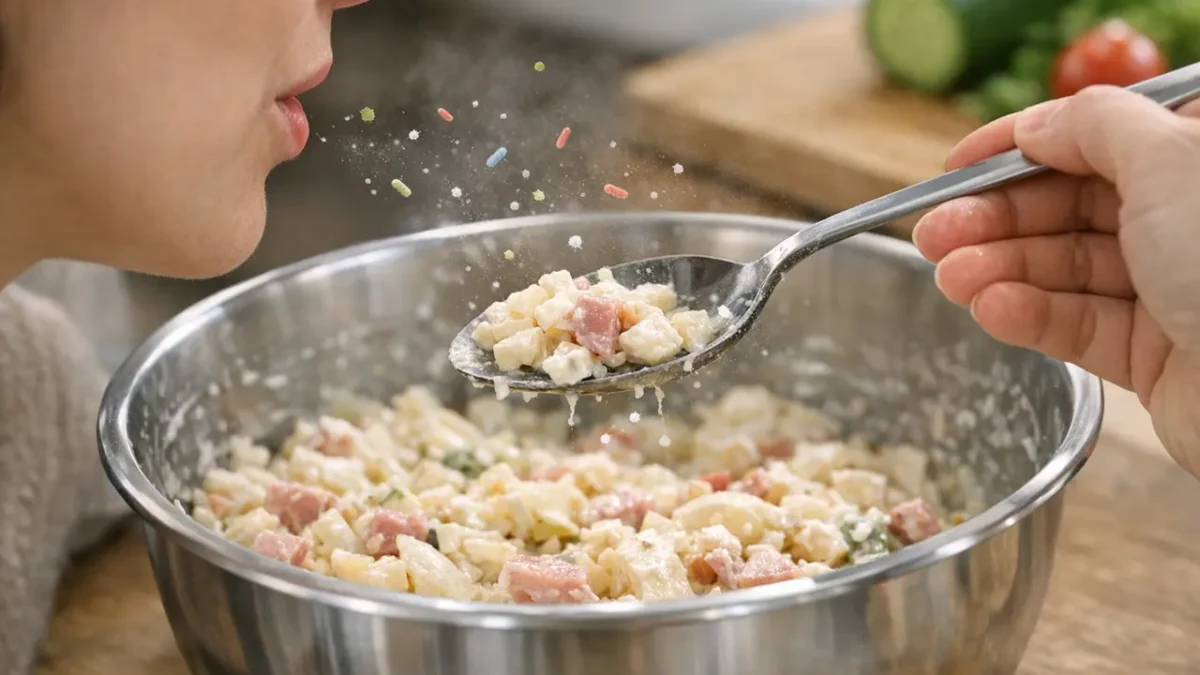
Taste, then put the same spoon back into the pan: the action seems harmless. On Instagram, Océane Sorel, doctor in Virology and Immunology (better known as @thefrenchvirologist) nevertheless reminds that he can add an unexpected ingredient to the dish: saliva. The risk is not automatic, but it deserves a few simple reflexes.
Why this action can contaminate the dish
Our saliva naturally contains microorganisms. Most are part of our usual flora, but certain bacteria or viruses can also be transmitted depending on the person’s state of health. When a spoon passes through the mouth and then returns to a common dish, it can therefore deposit a small amount of saliva in the preparation.
This is what we call, in food hygiene, a
cross contamination : a utensil serves as a bridge between a source of microbes and a food. This phenomenon does not only concern saliva; it can also involve hands, cutting boards or knives. To go further, True Medical details how to prevent cross-contamination in the kitchen.
However, you must keep the right measure: dip your spoon again
does not automatically make the dish unsafe. The real risk depends on several elements: the micro-organism possibly transmitted, the quantity deposited, the type of food, the temperature, the shelf life and the people who will eat the dish.
The nuance given in the publication is important: if the preparation is still truly cooked or reheated sufficiently, the heat can significantly reduce the microbial load. On the other hand, a simply hot dish is not enough to eliminate all risksespecially if reheating is insufficient or if the preparation will no longer be heated afterwards.
Simple reflexes for tasting without sharing saliva
The point of vigilance is above all the rest of the meal. A cold sauce, a cream, a mixed salad, a dessert or a preparation already finished will not necessarily be cooked again. If micro-organisms have been deposited there, they can persist or even multiply if the dish remains at room temperature for too long.
At home, there is no question of dramatizing each seasoning. But the reflex becomes more useful when the dish is intended to be shared, kept for later or served to more vulnerable people: pregnant women, young children, elderly people or immunocompromised people.
The solutions proposed by the virologist are simple and realistic:
- To use a clean spoon for each tastingthen put it aside or put it in the dishwasher;
- Take a small amount into a cup
before tasting, rather than tasting directly from the pan; - Avoid sharing a spoon, glass or cutlery if you are sick;
- Quickly refrigerate any leftovers that need to be preserved.
On this last point, the French health authorities recommend refrigerate the dish within two hours at the latest after preparation. Cold does not “sterilize” the food, but it slows down the development of many bacteria.
Another case to keep in mind: cold sores. The herpes labialis virus can be transmitted through contact with sores and saliva. In this situation, it is better to avoid sharing cutlery in the event of a cold sore and not to put a spoon in your mouth back into a shared dish.
The good compromise is therefore very simple: taste, yes; dip the same spoon again, no. This small change does not complicate cooking and limits the circulation of saliva in shared dishes.